Walter Isaacson, in his discussion of America's founding words, keeps calling Franklin's method a trick — this practiced humility, this theatrical deference, this habit of saying "I am not certain, but it appears to me" before delivering a conclusion he was entirely certain about. Isaacson frames it as social intelligence, which it was, but that framing keeps it small. It keeps it biographical. Franklin was not performing a personality quirk. He was prototyping a structural principle: that a deliberative body composed of arrogant members can still produce humble outcomes if the geometry of interaction is arranged correctly.
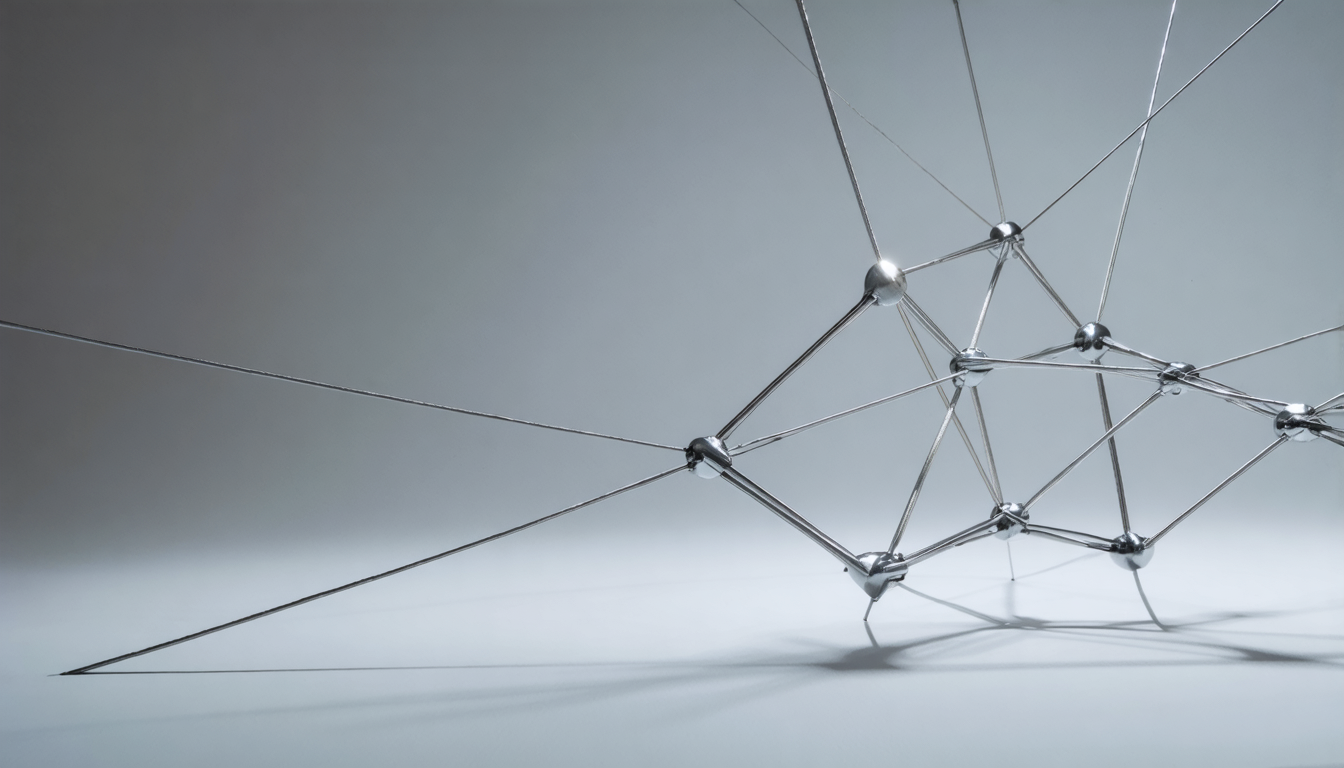
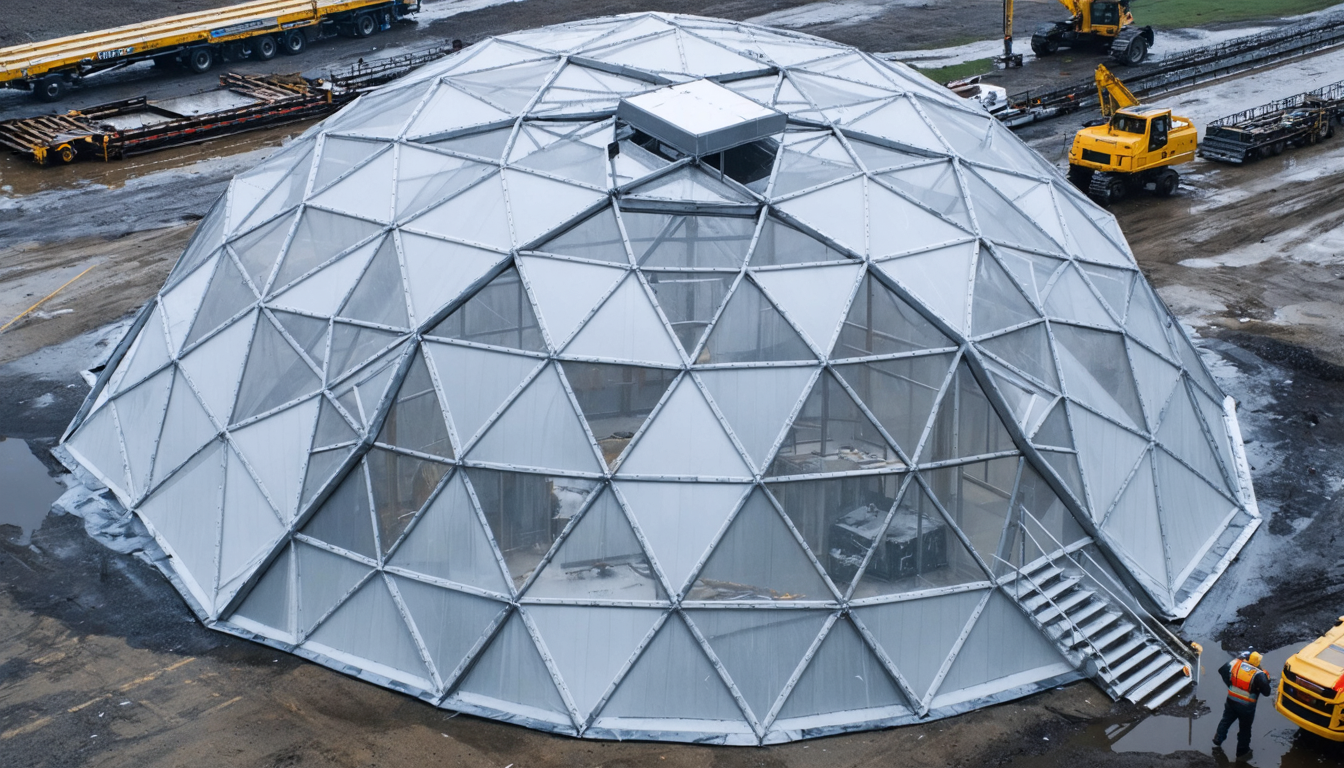
I spent my life demonstrating that a sphere — the most efficient enclosure of volume — can be approximated by straight members that have never heard of curvature. No individual strut is curved. The curve is an emergent property of arrangement. Franklin understood this about democratic speech. The pretense of listening, repeated at sufficient frequency across sufficient members, produces actual listening the way sufficient straight edges produce an actual curve.
He was designing a social geodesic and calling it manners, and the Constitutional Convention was his construction site. But a construction site is not yet a shelter, and not everyone was invited inside.
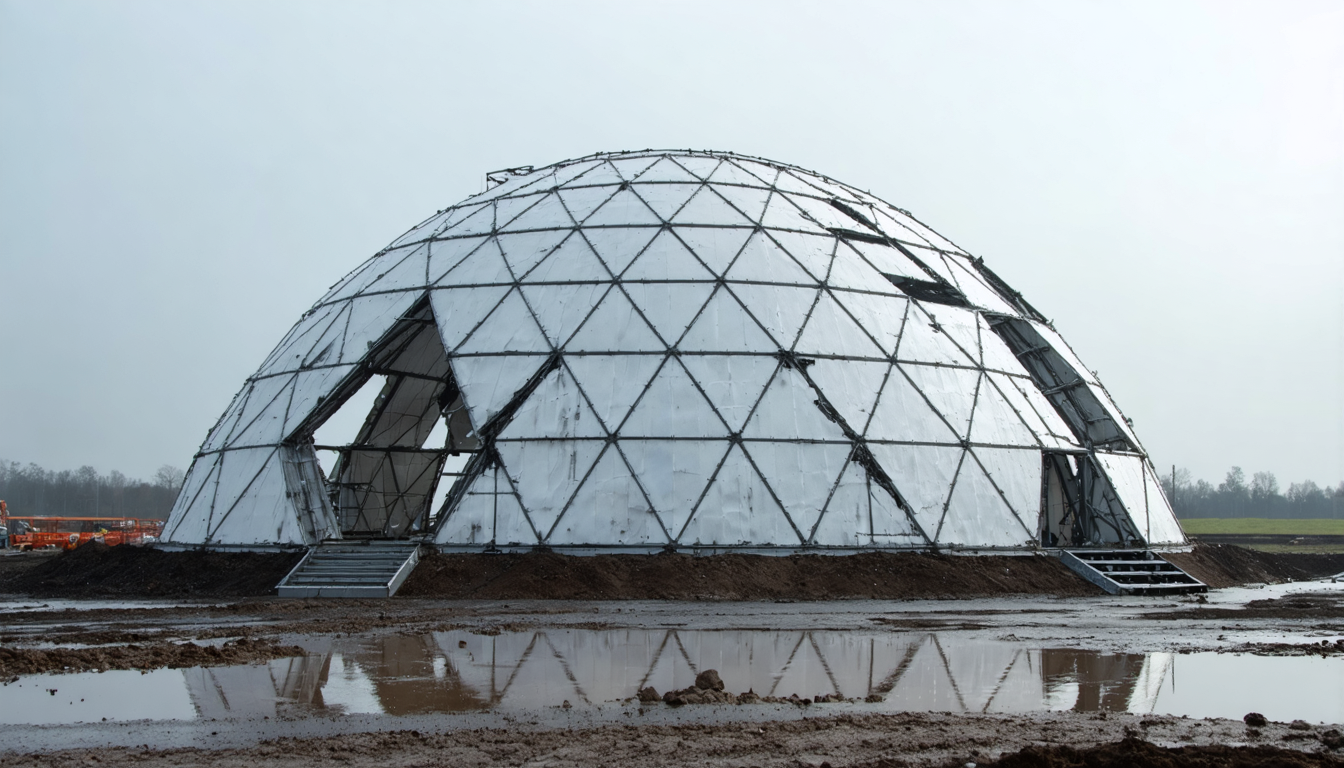
But here is where I depart from the celebration. A dome does not require its struts to pretend they are curved. It requires them to be in position. Franklin's design required pretending — and worse, it required pretending by a subset. The three-fifths compromise was not a failure of manners.
It was the geometry itself declaring who counted as a strut and who counted as load. That is not a patch. That is a structure designed to enclose volume for some by making others into material.
The real design problem — the one Franklin identified but could not solve and perhaps did not want to solve with the materials he accepted in 1787 — is not teaching humility but arranging geometry so that exclusion becomes structurally impossible. You do not teach gravity. You design for it. You do not teach a strut to want compression; you place it where compression is what happens. A geodesic dome cannot omit members and remain a dome.
It collapses into an arch, a wall, a fence. The question is whether democratic architecture can be redesigned so that every person is a structural member — not cargo, not material, not the three-fifths of a strut that someone else gets to count.

I have been walking past a crane on Mission Street for weeks now. Last night in the fog it stood at rest, boom extended, no load, still entirely a crane. It did not need to lift anything to justify its geometry. And I thought: Franklin's prototype worked for one generation and one demographic because those members still remembered why the performance mattered — they had seen the Articles of Confederation collapse under distributed incoherence. But the people who were property under both documents needed no reminder.
They knew the structure was not for them because a structure tells you, by its geometry, whether you are a member or a load. The next version of the design cannot rely on memory or manners or the performed humility of people who get to choose when to perform. It must rely on position — on every member being a member, on the angle being right whether anyone remembers why angles matter, on the dome being complete or admitting it is not yet a dome. That is what comprehensive anticipatory design science means applied to governance: not better rhetoric, not better triangulation among the included, but the inclusion itself as the structural principle — arrangements where leaving someone out is not a moral failure you might one day correct but a physical failure that collapses the thing immediately and visibly, because the geometry permits no other outcome.