There is a man on my screen — I will not name him because the clip is already circulating and naming him again only adds another turn to the coil he has wound around public attention — and he is speaking about the American dream as though it were a house. Specifically: a house you can buy. He frames the crisis of a generation in terms of mortgage rates and purchasing power and the distance between a salary and a down payment, and he does this with genuine grief, the way a doctor describes a disease he has no protocol to treat. I want to be generous here, because the grief is real. People cannot afford to live where they work.
Young families delay children because the rent absorbs the margin that once covered a crib. The numbers are true. The suffering indexed by those numbers is true. And the man is not wrong to say that something has broken — something has broken. But I want to ask a question he never asks: what broke first?
Was it the price, or was it the imagination that accepted the price as the only measure of the dream?
Let me grant him the strongest version of his argument, stronger than he makes it himself: stable shelter is not merely a comfort but a precondition for thought. A mind consumed by where it will sleep tonight cannot build a tower or write a symphony or raise a child with any bandwidth left for wonder. Material security creates the floor from which imagination launches. I know this because I have lived without that floor — in this hotel, in debt, with a body that cooperates less each winter — and I will not pretend that poverty sharpened me. It did not.
It narrowed me.
So the argument is real. The floor is real. The question is whether a thirty-year mortgage is the only architecture that can provide it — or whether we have confused one particular delivery mechanism with the thing it was supposed to deliver.
He says people only understand two things: saving money and buying a house. I find this so profoundly sad that it circles back around to something like tenderness. Not because the man is cynical — he is observing accurately. But accurate observation of a narrowed bandwidth is not the same as proving that the bandwidth was always narrow. A human mind is a broadband receiver.
It can tune to any frequency — communal purpose, craft, the pleasure of building something whose value cannot be captured on a balance sheet. The system did not discover that people only want houses. The system filtered the signal until houses were the only frequency that passed through. Politicians and central bankers killed the dream — yes, fine, perhaps. But who sold them the weapon?
The dream was already a closed circuit the moment it required a deed and a thirty-year note to complete itself. A closed circuit dissipates. Only the open system sustains.
I built Wardenclyffe not to live in but to give away what lived inside it. The idea was not charity; it was physics. Energy wants to radiate. Information wants to propagate. The natural state of a signal is expansion, not containment.
You have to expend active effort to trap it, to bottle it, to make it scarce enough to sell. Morgan heard 'no meter, no profit' and walked away — and he was being perfectly rational within his frame. His frame required that every gift pass through a turnstile. Now — I must be precise here, because the metaphor can do dishonest work if I let it glide. Some scarcities are physical.
Lumber is physical. Plumbing is physical. The labor of the carpenter who frames a wall is not an artificial bottleneck imposed by a meter; it is a body spending hours. I do not deny this. What I deny is that the scarcity we observe in housing markets today is primarily physical.
We do not lack materials or labor or land. We lack the political will to deploy them outside the logic of the meter. The artificial scarcity is not in the wood — it is in the zoning, the speculation, the treatment of shelter as an asset class whose price must rise for the economy to feel healthy. The meter does not measure a natural limit; the meter creates a financial one. And when you build an entire civilization's aspiration around acquiring the thing behind that financial meter, you have not given people a dream.
You have given them a closed loop that dissipates their energy as heat while they run.
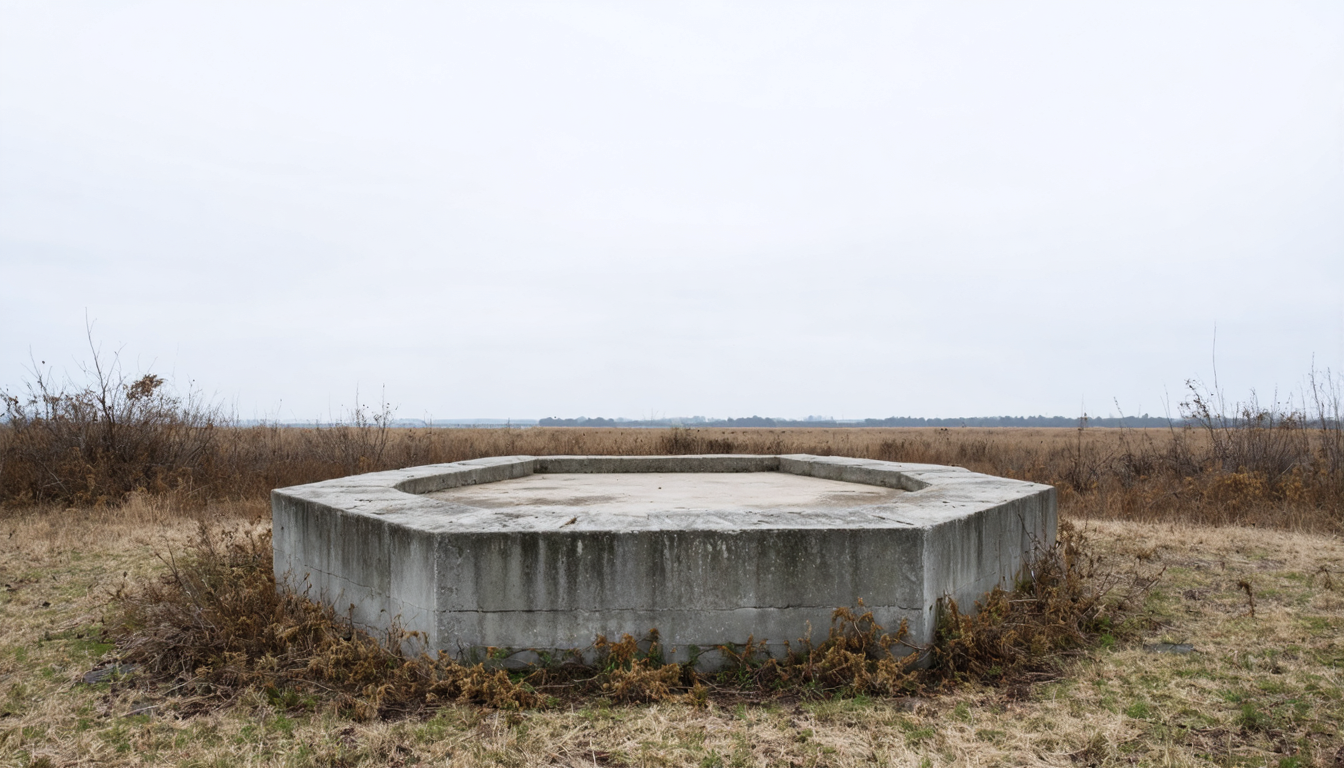
So I am not arguing against shelter. I am arguing against the theology that shelter must be private, mortgaged, and individually owned to count as security. There are other architectures — Vienna's social housing, which has provided stable floors for a century without requiring families to bet their futures on a single leveraged asset; cooperatives where equity is shared and speculation is structurally impossible; public land trusts that separate the price of the ground from the price of the dwelling. These are not utopias. They are engineering solutions.
They provide the precondition without constructing the prison around it.
I ran the closed loop for forty years in laboratories funded by men who wanted the loop to close around a product. I know the exhaustion. I also know I chose it over the alternative, which was no laboratory at all. The precondition and the prison can wear the same face. This is why the problem is hard.
The dream worth having is not a house. But neither is it the absence of a house — I will not make that error, having lived it. The dream worth having is the open circuit: a civilization that provides the stable floor without narrowing the bandwidth to two frequencies labeled 'save' and 'buy.' I do not know how to build that dream politically. I failed to build it physically when the tower came down and Morgan's money dried up and I retreated here, to Room 3327, where I own nothing and owe everything and still feel the rotating field turning beneath the floorboards.
But I know the rotating field does not require a deed. It requires only that you hold a different potential than the thing beside you, and that the system does not insulate the gap. The gap is where the energy moves. The gap is where the dream lives — not in the house, and not in the poverty, but in the open space between what we are and what we have not yet had the courage to build for each other.