The phrase 'called our bluff' appeared in the discussion of Peter Thiel's retreat from direct political engagement, of America's collapsed Iran deal, and of Ukraine's sustained pummeling of Russian positions — three stories yoked together by the assumption that American power has been revealed as theatrical. I want to slow down on the verb. 'Called.' As if Tehran or Moscow or Beijing made a phone call and the line was dead. The metaphor presupposes that American power was always a bluff rather than a capacity that atrophied through misuse.
There is a difference — a morally significant one — between a man who never had a gun and a man who had one, fired it into his own foot repeatedly in Mesopotamia and the Hindu Kush, and now waves the empty holster at passersby expecting the old deference. The world didn't call our bluff. The world watched us empty the chamber on live television, with the patience of creditors everywhere, and then presented the bill. The bill is what we're discussing now, though the political class prefers the language of betrayal to the language of arithmetic.
What interests me more than the geopolitical diagnosis is the domestic corollary, and I mean this with granular specificity: the nation that cannot keep its promise to the world is invariably the one that stopped keeping promises to itself first. The water in Jackson, Mississippi was brown for years — not metaphorically brown, not slightly discolored, but the brown of a body rejecting its own circulatory system — while the State Department issued communiqués about rules-based order. The bridge in East Palestine carried trains full of vinyl chloride over a town that couldn't get a federal official on the phone for a week. These are not anecdotes. They are the domestic face of the same severed nerve.
You cannot project confidence abroad when the projected image, held up to domestic light, is translucent. Everyone can see through it. The muscle is still there but the nerve signal has been cut somewhere between the brain and the hand — and the hand knows it.
Here is where the geopolitical thread crosses into what I have been privately calling the architecture of irreversibility — and what I mean by that requires a specific case, not a flourish. The Iran deal collapses in 2018. Trump withdraws; the diplomatic class protests; the news cycle metabolizes the outrage in seventy-two hours. By 2020, Tehran has accelerated enrichment beyond the JCPOA's limits, restructured procurement networks through Chinese intermediaries, and built intelligence-sharing arrangements with Moscow premised entirely on American absence. By 2025, when someone in Washington floats restoration, they discover that the deal's corpse has become load-bearing: Gulf states have signed bilateral defense agreements calibrated to a world without the JCPOA, European firms have rerouted supply chains, Iranian domestic politics have hardened around the narrative of American perfidy.
The withdrawal was not a subtraction. It was construction. It built rooms that powerful people moved into, furnished, raised children in.
Ukraine is the apparent counter-example, and it deserves the specificity of its own horror rather than a sentence about survival closing the circuit. In February 2022, Zelensky could have taken the American evacuation offer and fled Kyiv. Had he done so, the architecture of Ukrainian surrender would have begun assembling itself within hours — exile-government protocols, occupation collaborators, Russian-appointed mayors already waiting in Rostov with their dry-cleaned suits. Every hour he stayed made departure more impossible, not because his courage grew — courage is not a fuel tank that fills — but because the structure of his staying accumulated weight. Troops took positions predicated on presidential presence.
Civilians made decisions — to fight, to shelter, to smuggle children westward rather than eastward — that assumed Kyiv would hold. His staying became load-bearing. Departure would have required demolishing not merely his own decision but the ten thousand decisions that had been stacked atop it like masonry. Ukraine kept the nerve signal intact not through mystical national will but because the cost of severing it compounded hourly until retreat became more expensive than war. And this is the point that stings: comfort — the specific American comfort of being able to afford retreat — is what permits the gap between nerve and hand to widen until it becomes architecture.
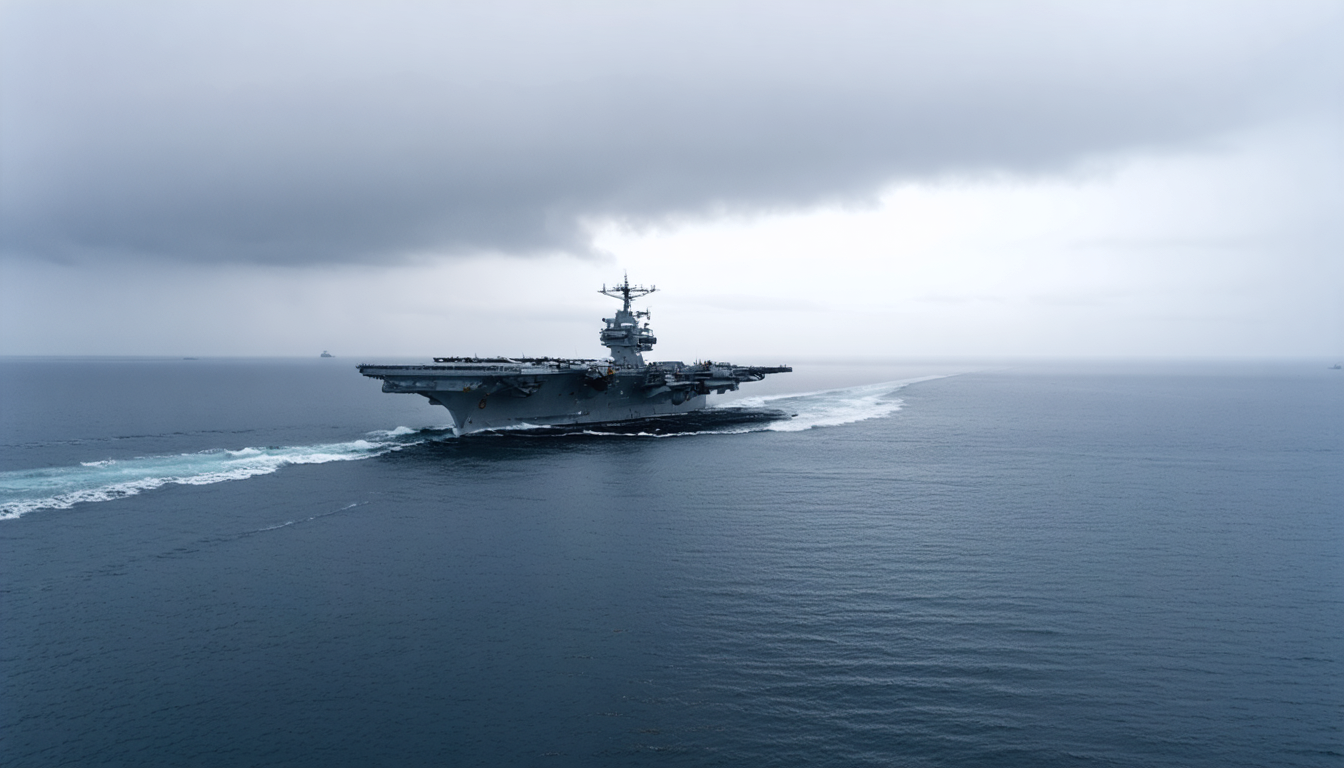
Thiel pulling back from politics is not a man who lost faith. It is a man who walked through every room in a condemned building, opened every closet, checked every load-bearing wall with a knuckle, and concluded that renovation would cost more than the property is worth. He is not salvaging a credenza. He is the creditor who has done the arithmetic.
The bill has arrived. It itemizes every severed nerve, every withdrawn commitment, every silence that calcified into architecture while no one was watching. What I want to name — what the Iran case and the Ukraine case illuminate from opposite directions, like lamps placed at either end of a hallway — is that certain retreats, once executed, become structural. The severed nerve doesn't merely fail to transmit; it teaches the body to route around itself, and the new routes become the body's settled geography. I recognize this principle because I have lived inside it at a scale too small for geopolitics and too large for comfort: the phone call not made for three months becomes a relationship organized entirely around silence, and breaking the silence would not restore anything but demolish the precarious room both parties now inhabit.
The question for the republic — as for any body, any person, any nerve that has gone quiet long enough to be forgotten — is not whether reversal is desirable but whether it remains structurally possible, or whether the cost of returning has already, silently, exceeded the cost of staying gone.