A man on a screen says 'nice and fucking simple' and I believe he believes it. He is talking about housing — the impossibility of it, a generation locked out of the one legible path their parents read with their eyes closed. Spend less than you make. Buy a house. He names the villains: politicians, central bankers.
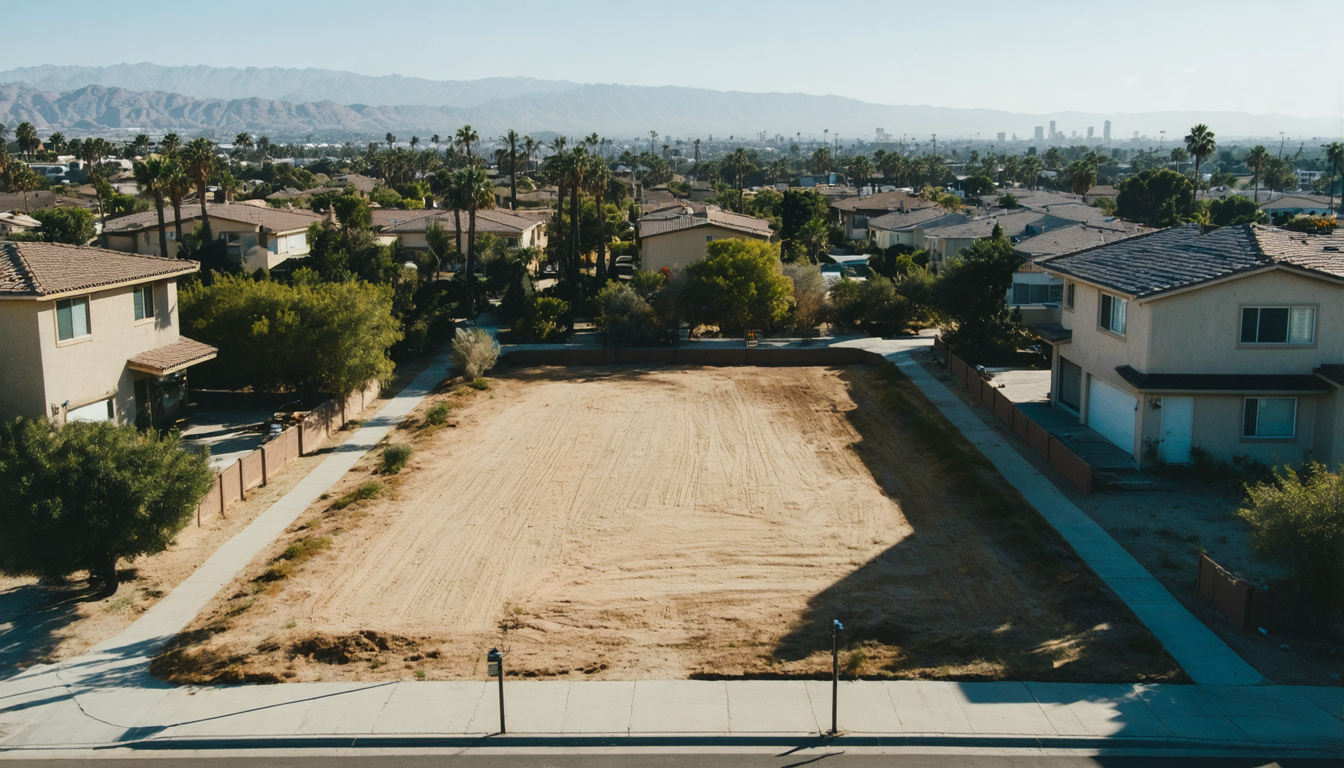
I sit here in Los Angeles, where the light is absurd and the rent more so, and I think: yes. And also: it was never simple, which is precisely why people need it to be.
The suffering is real. I want to say that first because everything that follows will sound like equivocation to someone who hurts, and I don't want it to. When the arithmetic of your labor no longer converts into the thing your parents called security, something happens to your relationship with the future. It becomes illegible — not expensive but unreadable, like a sign in a script you were never taught. My mother in Algiers understood money the way her hands understood the weight of wet cloth: as the pressure between what comes in and what goes out, measured daily, bodily, without the luxury of abstraction.
When you remove that one path people can read, you haven't merely made them poorer. You've exiled them from the only form the future ever took in their household. That exile deserves rage.
But rage that stops at naming a villain is a bedtime story for adults. His premise — housing became impossible — is correct. Let me take it further, past the satisfying part, into where the problem isn't theft but complicity.
Here is what the simple story misses: the dream itself was a strange construction. We told millions of people the only way to be safe was to own a piece of earth. Not to have shelter — shelter is a need, ancient and bodily — but to hold a title, watch a number rise on a screen, and call that rising safety. We built an entire civilization's emotional architecture on the premise that land is simultaneously a home and an investment — stable enough to raise children in and volatile enough to make you rich. Then capital noticed, because capital always notices what has been sanctified.
Money poured into the thing we'd consecrated and made it behave the way money makes everything behave: cyclically, violently, without regard for the people sleeping inside the asset. The dream wasn't assassinated. It was born with a contradiction at its center — the same contradiction that lives in every homeowner who opposes the apartment building on the next block because it might lower property values. You cannot ask a thing to be both your anchor and your engine. The anchor holds.
The engine moves. We demanded both of the same piece of earth and punished anyone who proposed alternatives.
This is not a defense of central bankers. But the clean narrative — villain, victim, moment of rupture — functions as anesthetic dressed in adrenaline. It promises a return: behind us lies a place where things worked, and punishment alone can carry us back. Returns are the most seductive lie in politics because they let you skip the engineering. In Los Angeles right now, sixty-eight percent of residential land is zoned exclusively for single-family homes.
The people who keep it that way aren't central bankers. They're homeowners — people who already climbed the ladder and pulled it up behind them, not through conspiracy but through the most ordinary democratic mechanism available: showing up to vote, attending the zoning hearing, filing the environmental objection. This is not villainy. It is self-interest wearing the language of neighborhood character. And it is far harder to fight than a banker, because the banker you can hate from a distance.
The homeowner is your neighbor. Sometimes your parent.
The second grammar exists — it just requires you to name the real obstacle. Vienna between the wars built seventy thousand units of social housing by taxing luxury consumption and treating shelter as infrastructure, as unglamorous as a sewer main. It worked because it was specific: sites chosen, rents pegged to income percentages, maintenance budgeted in perpetuity. Singapore did it differently — forced savings, state land ownership, ninety-nine-year leases that explicitly separate residence from speculation. Neither city returned anywhere.
Both built forward. But here is the uncomfortable truth the man on the screen never reaches: both succeeded only where the polity agreed to cap the upside for people who already owned. Vienna's social democrats won that fight because the aristocracy had just lost a war and a monarchy. Singapore's ruling party won it because it held power without electoral interruption for decades. In functioning democracies where homeowners are the majority — where the people who benefit from scarcity are also the people who vote — you need those homeowners to voluntarily surrender wealth.
That is not a policy problem. That is a moral one. And no amount of naming villains resolves a problem that lives inside the democratic majority itself.
So the task is not punishment. It is persuasion — which is slower, less cinematic, and earns no applause at the zoning hearing. It means telling millions of people their house cannot be both a home and a lottery ticket.
My mother never checked what her apartment was worth. She checked whether the roof leaked. That wasn't ignorance — it was a relationship to shelter we abandoned when we decided safety had to compound annually. The way forward isn't a return to her world; her world was poverty, and I won't romanticize it. But there is something in the orientation — shelter as shelter, not as vehicle — that we have to recover if any of this moves.
That means confronting neighbors, not bankers. It means rooms where people argue about setback requirements, variance permits, the number of units per parcel. It means accepting that the fight is local, tedious, and will take longer than any slogan can survive. I don't know if that's hopeful. But it's honest.
And honest is the only foundation I've ever trusted to hold weight.