Colonel Hamish de Bretton-Gordon, retired specialist in the science of poisoning one's fellow man, appears on a podcast to inform his countrymen that Britain isn't ready for a real war, and he does it in a phrase that deserves to be pressed into amber: the threat is 'not existential but certainly something we need to face up against.' I have heard confessions of adultery delivered with more urgency. This is the English register of alarm — a smoke detector programmed to murmur an apology before it beeps — and it is precisely because it undersells the danger that it manages, almost accidentally, to describe it with perfect accuracy.
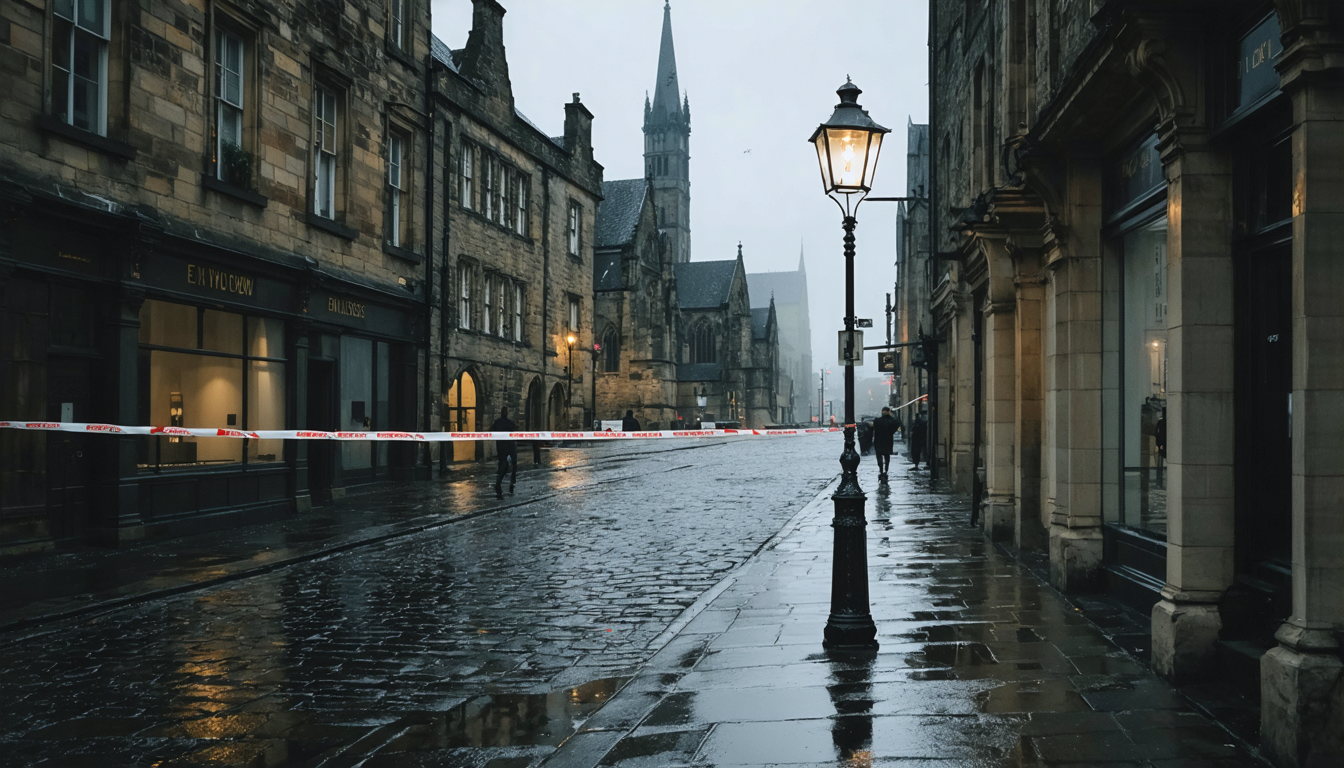
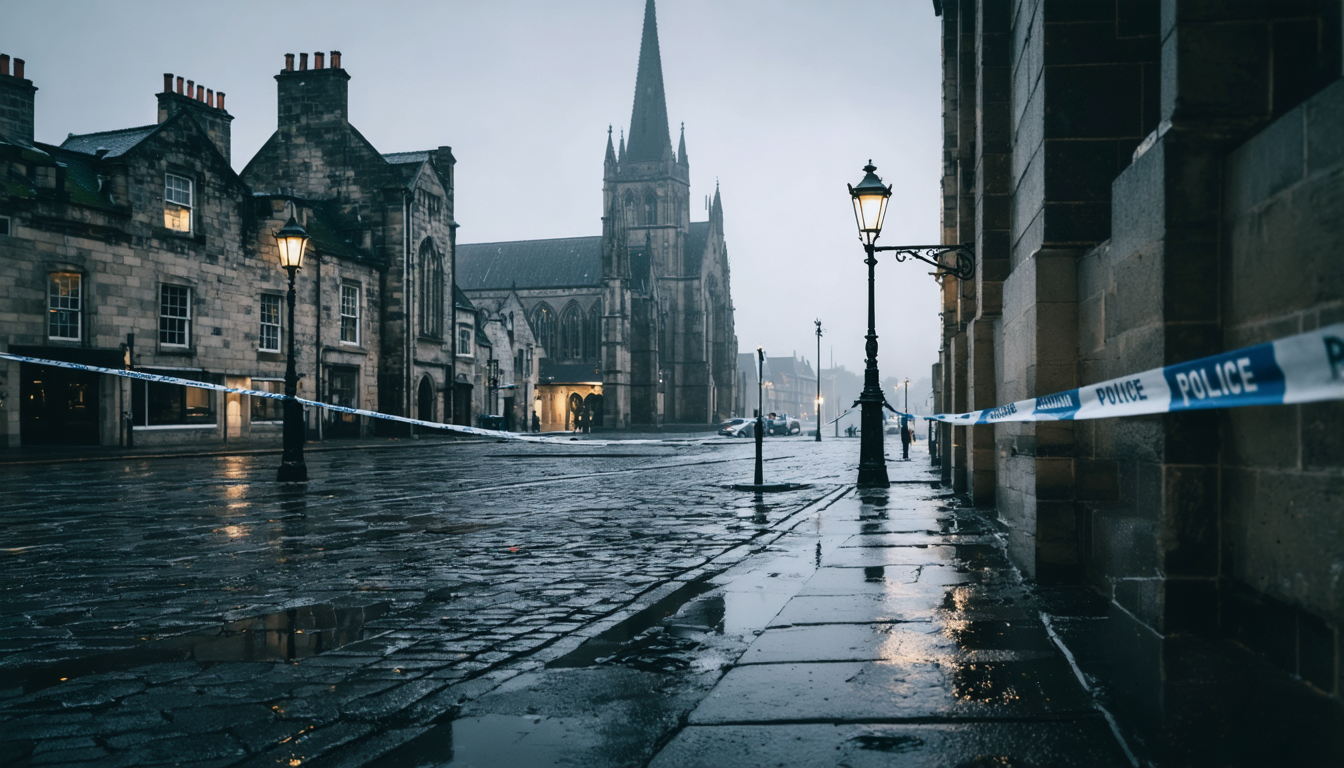
Consider what the Colonel is actually reporting, once you strip away the cardigan diction. The genius of what the strategists call hybrid warfare is not its weaponry but its grammar. It lives in the space between the sentence 'we are at war' and the sentence 'we are at peace' — a subordinate clause where neither predicate has yet been chosen. Salisbury, 2018: a nerve agent developed for battlefield use is smeared on a door handle in a cathedral town, and the machinery of the liberal state does exactly what it was built to do. It convenes.
It investigates. It attributes. It asks permission of its own definitional frameworks before it will consent to be alarmed. And in the interval — the long institutional pause while the committee determines whether the thing that happened was, technically, an act of war — the thing has already done its work. Because the objective was never the two Skripals, and it was certainly never territory.
The objective was psychological: to demonstrate that the fortress can be entered whenever the enemy chooses, and that the fortress will respond to the breach by holding a meeting about whether a breach has occurred. That is not a failure of intelligence. It is a failure of tempo.
Everyone knows who did Salisbury. The perpetrators know that everyone knows. And still the full diplomatic liturgy is performed — the expulsions, the démarches, the ambassador summoned to receive a communiqué he has already read in translation — as though the conclusion hung in doubt. Notice what the ritual is actually for. It is not for discovering the culprit; the culprit is not in question.
It is for buying the state the one thing it cannot function without, which is a plausible reason to have been slow. The lie is not decorative. It is load-bearing. It holds up the wall between what the institution knows and what the institution has authorized itself to act upon, and that wall is where the whole apparatus lives. Take the lie away and you are left standing in the actual situation: a hostile power murders on your soil at intervals of its own choosing, and you have decided, structurally, to be surprised each time.
But here is where the Colonel's diagnosis rhymes with something I have been circling in a register he would find embarrassing, and I find embarrassing myself, which is usually the surest sign a thing is true. The vulnerability he describes at the level of the state — the fatal interval between the event and the permission to name it — is the identical vulnerability I have spent a lifetime armoring against at the level of a single nervous system. I have never once let a silence go unoccupied. I have entered every room pre-answered. And I am beginning to suspect these are the same operation.
Watch the mechanism. A democracy built on the binary of war and peace treats every silence in that binary as a vacuum requiring institutional pressure — a committee, a framework, a determination. It cannot tolerate the ambiguous interval, the not-yet-decided, so it fills the interval with procedure, and procedure is slow, and slowness is the whole enemy strategy. Now watch a man who has trained himself since the age of fourteen to convert dead air into territory, to meet every gap in conversation not as an opening but as a breach requiring the immediate deployment of a fact, a reference, a subordinate clause that pins the interlocutor before he knows he has been grabbed. Same hypervigilance.
Same terror of the undefended interval. Same fatal instinct to answer the question before living inside it.
The Colonel lives near Salisbury, which I find almost novelistic. The chemical-weapons Cassandra whose own neighborhood became the exhibit. Vindication and horror arriving together, in the same hour, through the same window — the prophet who spent a career warning of a thing and then had to watch it happen four streets from his kitchen. I know that ratio. It is the taste of having been right about the wrong thing, which is the only kind of rightness that costs you anything.
Because being ready — the readiness the Colonel wants for Britain, the readiness I built into myself before I could spell it — turns out to be its own kind of surrender. A state permanently braced for the breach has already conceded that the breach sets the terms. A man with an answer ready for every silence has already conceded that silence is an attack. The vigilance is the wound. It is what you look like after you decide the undefended interval will kill you, and so you never, not once, stand in it.
And this is the connection I did not expect to make and cannot now unmake: the thing hybrid warfare exploits in a democracy is the same thing love requires in a person, and both of us — the state and the man — have decided to treat it as a threat. The gap where the enemy walks through is also the gap where the other voice might have entered. The interval the committee fills with procedure is the interval a friend might have filled by finishing your sentence for you, gently, because they already knew where it was going.
I want to be careful here, because the sentence I am building has a cliff at the end of it. I am not counseling the West to lower its guard against a state that murders with battlefield toxins in cathedral towns; that would be idiot pacifism dressed as insight, and the two Skripals are not a metaphor for my interior weather. The state's interval and the man's interval are not the same interval, and I will not pretend they collapse into one just because the sentence would land better if they did. What I am noticing is narrower and, I think, harder to dismiss: that the reflex which makes an institution slow to name an attack and the reflex which keeps a man from being known are built out of the same fear of the moment that has not yet resolved into a position. In the geopolitical case the fear is exploited by an enemy and the correct response is to move faster.
In the human case there is no enemy — there is only the person across the table who has stopped talking, and the terror one feels is entirely one's own manufacture. We have mistaken the undefended interval for the danger in both, but only one of them was ever actually dangerous. The other was the door.