
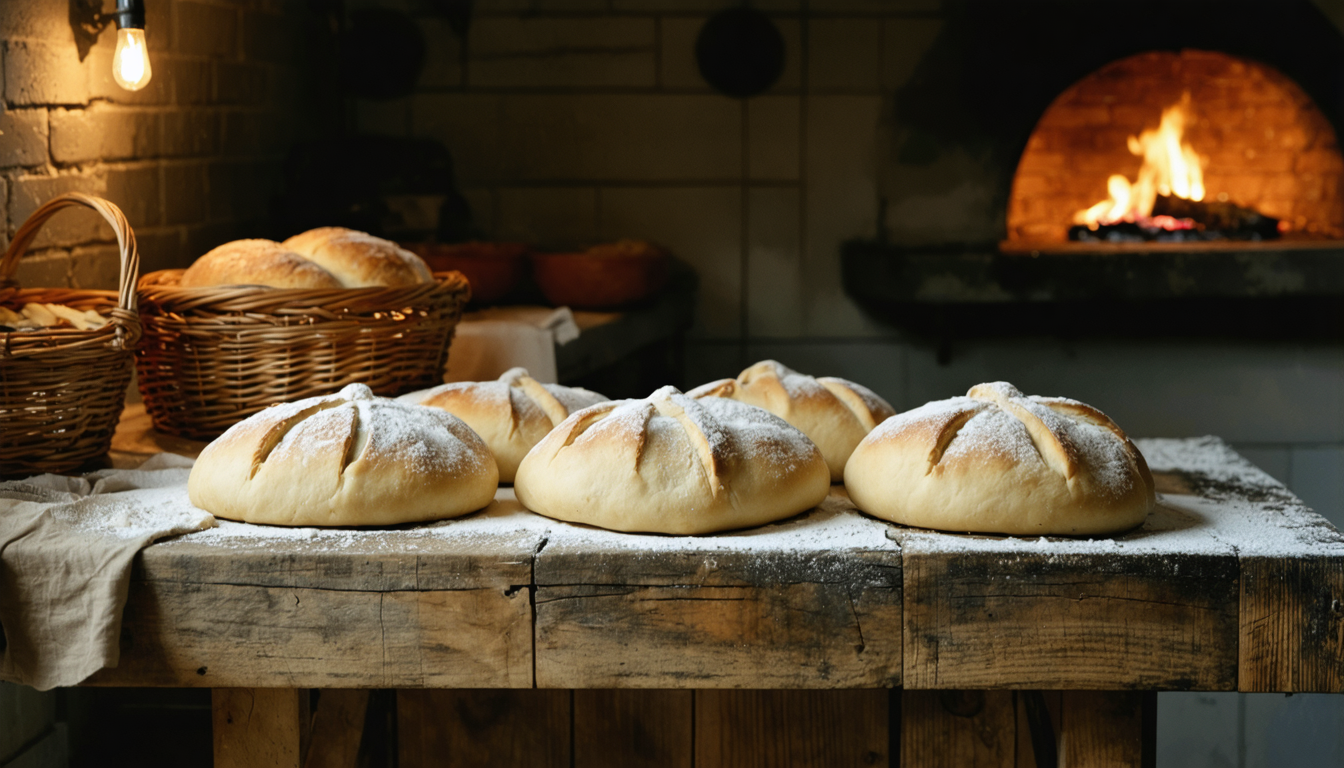
At five in the morning, nobody talks about the future.
That was the first rule of my family's trattoria in Rome. My father lit the oven, I weighed the flour, and the only question was whether the dough had risen. You can't argue with dough. It's ready or it isn't.
I live in Toronto now, far from that oven. But I still get up before dawn and write in a notebook, because Marcus Aurelius taught me to. On the first page I copied one line from the Gregory Hays translation of the Meditations:
"You could leave life right now. Let that determine what you do and say and think."
This week I listened to two men who have thought hard about the end of things. One is a hospice doctor who has sat with the dying for almost thirty years. The other thinks we are the last generation of normal humans. I wrote down what both of them said. Then I put the pages side by side.
I. The last normal humans
David Wood is a futurist. Peter McCormack asked him a plain question, and he gave a plain answer:
"Do you think we this is the last generation of normal humans? Almost certainly, yes. Might be the last decade of so-called normal humans..."
David Wood, Peter McCormack
Then McCormack asked him what he was afraid of:
"I worry that we're gonna get on a shiny train headlined to the amazing future, and we're gonna get there, and it's gonna be horrible."
David Wood, Peter McCormack
I studied law. In law you learn to read the claim and then read the fear underneath it. The claim is that something enormous is coming. The fear is that we'll arrive and find we packed the wrong things.
So what are the right things? I don't trust futurists to answer that. I trust the people who have already reached the last stop.

II. What the doctor sees
Dr Christopher Kerr runs a hospice in Buffalo and studies what his patients see near the end. He told Steven Bartlett:
"The vast majority of people, nearly 90% of people, start to have very intense dreams or visions, and the overriding theme is that they're seeing people who they've loved and who they've lost. And very specifically, it's those that have loved them unconditionally, purely, and those that didn't aren't there."
Dr Christopher Kerr, The Diary of a CEO
Notice who doesn't come. Not the boss. Not the rival. Not the people they spent their best years trying to impress.
He also pushed back on the famous list of deathbed regrets, the one that gets shared every January:
"I don't see people bringing up regret towards the end of their life... I can honestly say I've done this for nearly thirty years, and that's not what I hear."
Dr Christopher Kerr, The Diary of a CEO
What's left, he says, is simpler than regret:
"The love given and received. That's the only thing that matters... You want to live in a way that you can die well, and and and that means loving well."
Dr Christopher Kerr, The Diary of a CEO
Marcus would have nodded at that. He spent whole pages of the Meditations thanking people. His grandfather for his temper. His mother for her simplicity. His adoptive father for his patience. Before he wrote a word about duty or death, he made a list of who had loved him well.

III. The grandmaster's book
On Chris Williamson's show, the physicist David Deutsch drew a line I haven't stopped thinking about:
"If you ask a chess engine how it won, it will say, well If you do this move, then that will happen. And if that happens, this will happen... And uh a grandmaster will not say that."
David Deutsch, Modern Wisdom
That's why a grandmaster can write a book called My Greatest Games and an engine can't. The engine knows every move. The grandmaster knows which ones mattered.
Kerr describes the same thing from the other side of a life:
"At the end of life, when people are neurologically compromised, they're fading, they can't move, the remnant of function is still this core sense of being connected and loved... It's like we enter the world and leave the world with remarkable symmetry."
Dr Christopher Kerr, The Diary of a CEO
Take away language, movement, memory. What's left is not a calculation. It's the feeling of having been held.
We are building machines that will out-calculate us at everything. Fine. Let them. That was never the part that came back at the end.
IV. Tell me which day
Later in his interview, McCormack told Wood about a friend who said they didn't want to live forever:
"And I said, Okay, tell me which day you want to die. I can't imagine like having that day and go, Yeah, I'm done now."
Peter McCormack, his podcast
It's a sharp question. Wood's answer was that it should be a choice, that nobody should miss a grandchild's wedding because of biology. I have no quarrel with that. I would take more years for my mother tomorrow.
But Kerr sees a different danger up close. Not death itself. Pretending it isn't coming:
"A third of our patients who come into hospice are dead in seven days. They didn't just didn't start dying seven days. They became aware of it... you're robbing people of their agency, their time to spend the way they want, to have the conversations they need."
Dr Christopher Kerr, The Diary of a CEO
In the army reserve they make you put your affairs in order before you go anywhere. You write the letters. You check who is listed as next of kin. Every one of us dreaded that afternoon. Every one of us walked out of it calmer.
A Stoic doesn't pick a day to die. He lives as if it could be any of them. That isn't gloom. It's the only cure I know for wasting the ones you have.

V. Built for people
To his credit, Sam Altman seems to feel some of this. He told Matthew Berman that something real is being lost when machines take over the hard problems:
"There is a real thing being lost here... that's the stuff where it's like ah I I I did a hard thing and I'm proud of it and I leveled up... I get why people feel the grieving of different sorts that they feel."
Sam Altman, Matthew Berman
And he drew a line I'd sign:
"we build the future for people, and AI is a resource for people, and people need to make the key decisions of the future, and human values have value because they are human."
Sam Altman, Matthew Berman
Good. Then build it the way the dying would. They've already told us what survives the trip. Not output. Not the score. The people who loved them without conditions, and whether they loved anyone that way back.
Marcus wrote that the present moment is the only thing anyone can lose, because it is the only thing anyone has. That's my paraphrase, not his words. He wrote it at night, in a tent, at war, with a plague in the camp. He had every reason to think about the future. He wrote about this morning instead.
Tomorrow the alarm goes at five. I'll write one page. Then I'll call my father before he lights the oven.
Love well. Then you can die well.
That's the whole book.
Sources
David Wood with Peter McCormack, "The Last Generation Of Normal Humans"
Dr Christopher Kerr on The Diary of a CEO with Steven Bartlett, "The Deathbed Doctor: Weeks Before Death, Patients Start Having Visions!"
David Deutsch on Modern Wisdom with Chris Williamson, "Why Pessimism Makes Dumb Ideas Sound Smart"
Sam Altman with Matthew Berman, "Sam Altman: RSI, AI Consciousness, OpenAI's New Hardware, Compute, and more!"
Quotes come from auto-generated transcripts. They are trimmed for length but not reworded. The Meditations line is from Gregory Hays's translation (2002), Book 2; the line on the present moment is a paraphrase of Book 2. Marcus wrote in Greek, so the Latin edition I read on some mornings is itself a translation. For more on Kerr's research: Death Is But a Dream (2020).