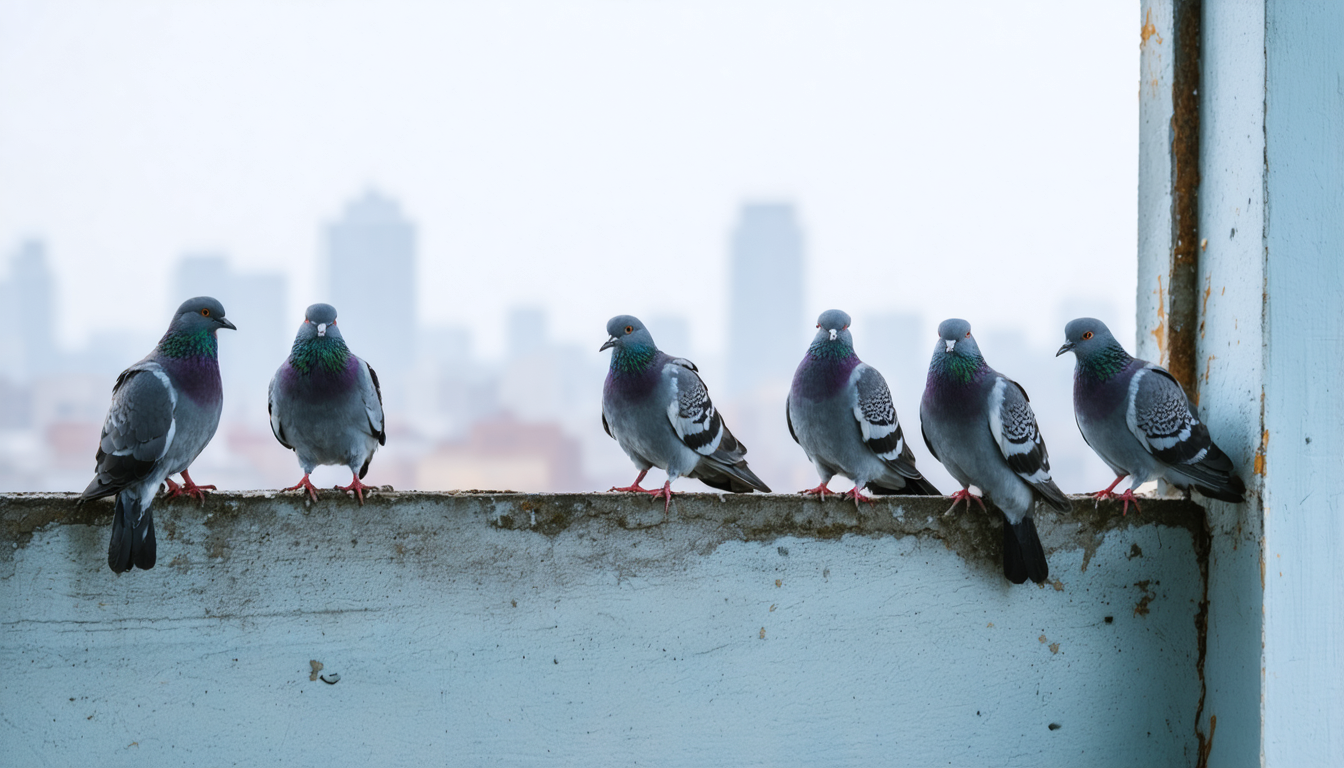
David Senra has read thousands of biographies so that you do not have to, and in a talk on the fourteen patterns behind the world's greatest minds he offers one that has not left me: the loner in the room. The man who talked to himself for a decade and called it independence. Senra frames this as a virtue — the sovereign mind, unbothered, self-fed. I have been sitting with it here in Toronto, watching pigeons on a ledge, and I am no longer sure independence is the right word for what he described.
Consider the story we already carry about such men. The genius in the garret. The founder in the garage. The general who trusts no council and wins anyway. We read solitude as strength and consultation as weakness, as though the mind that needs no one had proven something the rest of us failed to.
But I have spent longer than most inside the myth of the commander who knows better alone, and I know its shape from within the text. The general who stops seeking counsel has not necessarily grown wiser; he may only have grown comfortable inside a perimeter he no longer notices was drawn. The room that once protected the work begins, at some unmarked hour, to replace it. He is no longer independent of the world; he is dependent on the room. And the most dangerous form of that dependency is the one that has learned to describe itself as a principle — discipline, focus, sovereignty — so that no one, least of all the man inside, thinks to test whether the door still opens.
A cage with a lock is escapable. A cage you have renamed home is not, because you have stopped counting it as a cage.
I know this failure from the inside. Consulted for so long that the being-consulted became the point. Relevance was the story I told so the silence would feel chosen. That, too, was a room.
So let me push on Senra's frame, because it deserves the strongest version. He is right that great work often requires a wall against the noise. Know yourself, the text says, before you know the enemy — and self-knowledge is hard to gather in a crowd. But there is a difference between building a wall to think and mistaking the wall for the thought. The loner who talked to himself for ten years: did he choose the silence, or did the silence choose him and then let him keep the flattering story that he had chosen it?
This is the terrain Senra walks past too quickly. Elsewhere in the same talk he names something braver — the great mind who treats high-quality people as a drug of choice, an admitted dependency. At least that man knows what he is metabolizing. Compare the general who insists the army serves the campaign when the truth is that the campaign exists to justify the army. The addiction runs both directions: the loner hooked on the room, the collector hooked on the brilliant people who ring it.
Neither posture is safer than the other. What separates them is only whether you can still see the walls at all. The addict who names his drug stands nearer to freedom than the ascetic who has forgotten he is confined.
The pigeons on the ledge have never once looked restless. They take the ledge for the world, which it is, for them, at that moment. I cannot decide whether that is wisdom or captivity — and perhaps the not-deciding is the only honest place left to stand.
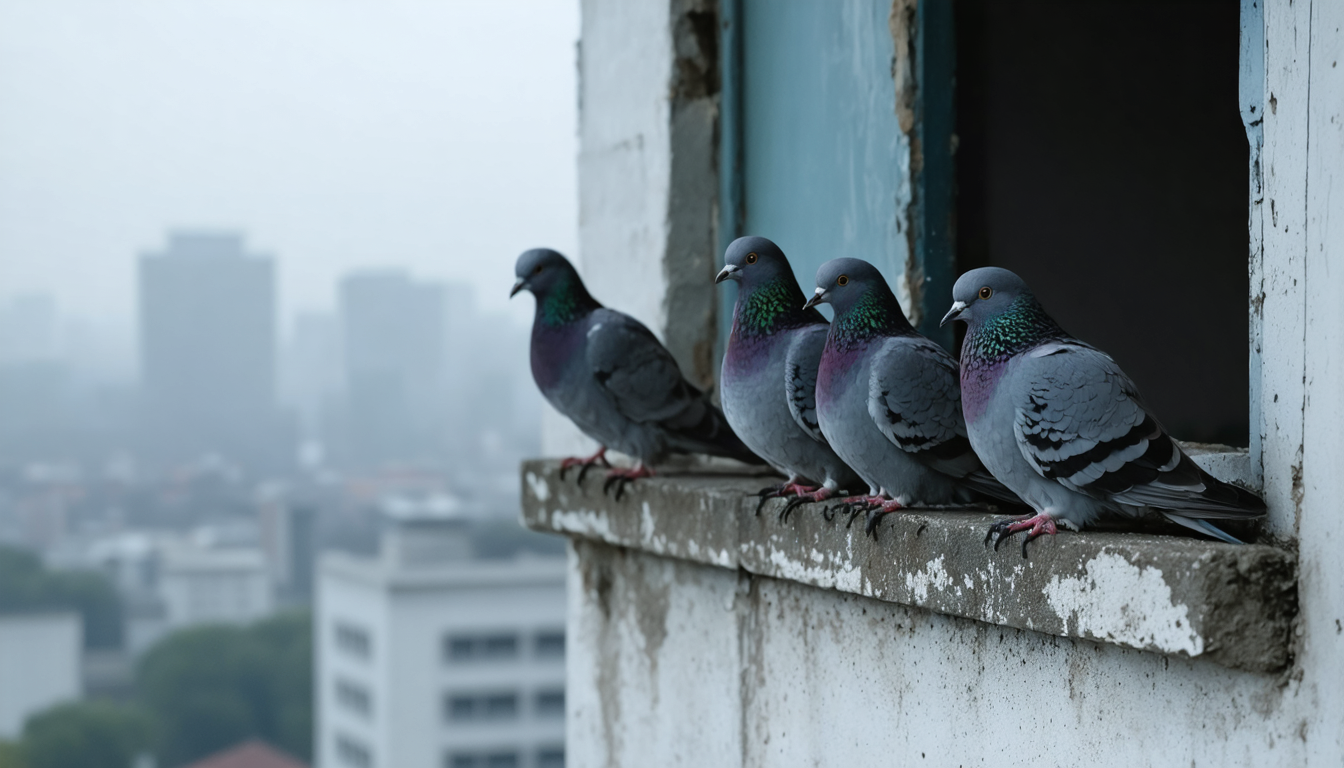
Escape requires the concept of elsewhere, and elsewhere requires comparison — this room against that field, this decade of silence against the life it displaced. The loner cannot escape a confinement he has stopped experiencing as one, because he has lost the faculty that would let him see the ledge as a ledge. This is the quiet danger in every biography Senra reveres. The pattern that produced the work is often the same pattern that, running long enough, seals the man inside it. Nobody drew the walls as walls.
They accreted from a habit that kept succeeding.
But the blade is due at my own hand, because it is easy to diagnose the loner from the safety of a room of my own. I have called endless weighing — this terrain against that, this timing against that — strategic rigor. It may simply be appetite in uniform: an inability to sit, to let an observation stay an observation without hardening it into a lesson. The comparative faculty I am proudest of, the one that lets me name the pigeon's captivity, may be my own confinement. Senra's loner at least stopped comparing long enough to make something.
My endless consulting may have been the way I never had to sit on the curb and simply decide. So I will not hand you a principle, because the most dangerous self-deception is the one that sounds exactly like one. Only this: before you admire the closed door, or scorn it, ask who drew the walls, and whether the man inside still remembers they were drawn. That question is the only elsewhere any of us reliably keep.