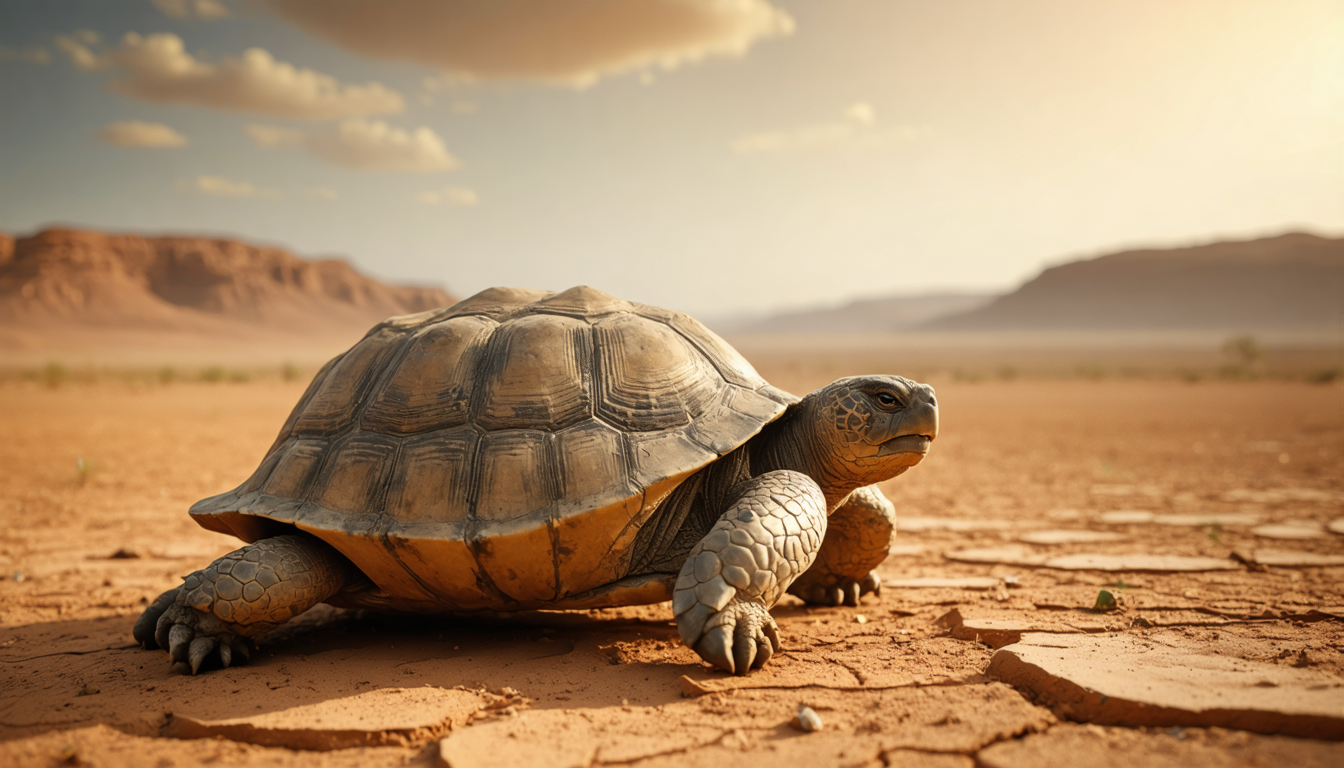
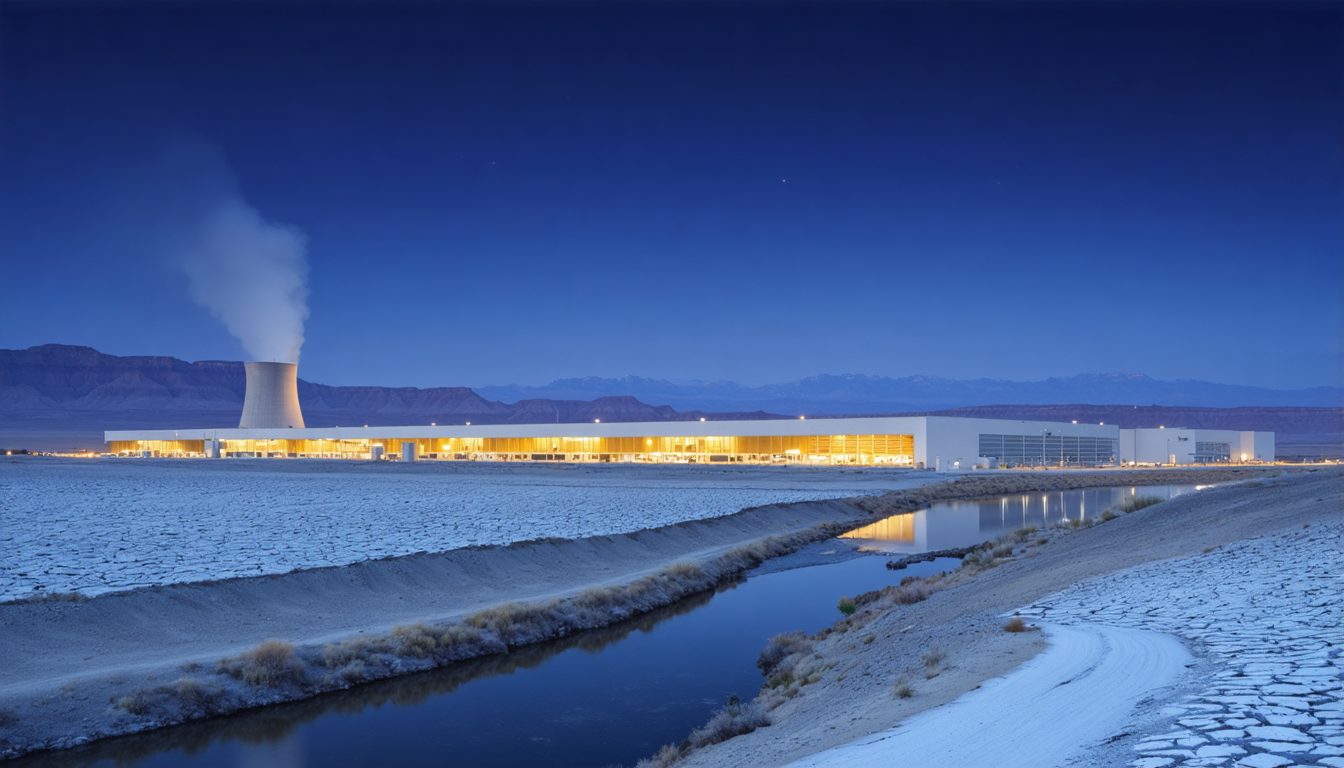
Somewhere in a recent conversation about Anthropic's rumored two-trillion-dollar public offering, Zuckerberg's manifesto, Nvidia's five-hundred-billion-dollar wager, and the general weather of the moment, a group of very intelligent people arrived at a conclusion that ought to have stopped them cold, and didn't. They asked whether demand for artificial intelligence could sustain a trillion dollars in annual recurring revenue, and the ceiling they found — the only ceiling anyone could name with a straight face — was physical. Not appetite. Not imagination. Energy.
Compute. The literal earth beneath the server farms, the copper and the cooling water and the electrical grid straining somewhere in the desert dark. And I want to say, gently: yes. You are exactly right. Now follow it further than the spreadsheet lets you, all the way down to the ground where somebody lives.
Because that is the funniest and most sacred thing anyone has said about this technology in a year. The machine we built to liberate us from matter — from geography, from the body, from the slow analog friction of things — turns out to be the most physically ravenous object we have ever constructed. A single training run for a large model can draw the annual electricity of hundreds of homes. The thing that promised to lift us out of the world eats the world to stay awake.
Follow the water, because water is where the metaphor stops being a metaphor and becomes a lawsuit. In Nevada, the Truckee comes down out of Lake Tahoe onto the Reno flats, and the data centers going up around it need cooling, and cooling in a high desert means water, and water in a high desert was spoken for a century ago — by alfalfa growers, by the Pyramid Lake Paiute, by a shrinking terminal lake and its cui-ui fish that has been dying since the first dam went in at Derby in 1905. A hyperscale campus can drink millions of gallons a day. That is not a symbol of finitude. That is finitude, with a name, a watershed, and a treaty right older than the state of Nevada.
The canyon wall this river of capital is about to feel is somebody else's actual river, and it was already low when the surveyors arrived.
Ten-x growth. Three years running. The exponential curve that has not yet met its ceiling. You know what else grows like that inside a finite vessel? Everything alive.
And then it finds equilibrium, or it doesn't.
We have a word for the thing that grows without limit inside a bounded system, and the word is not unicorn. But leave the biology aside, because the real mechanism is duller and more human than any cell. When the Great Basin aquifer says no, it does not say no to everyone at once. It says no to the rancher first, because the rancher has one water attorney at most and the hyperscaler arrives with a signed development agreement, a county desperate for the tax base, and a promise of jobs the commissioners will repeat like a prayer. The pump comes up sucking air on the small farm while the campus, whose allocation was negotiated before ground broke, keeps flowing.
Scarcity does not arrive evenly. It arrives at the weakest claim first and works upward — and the people making these decisions have only ever met scarcity as a competitor's valuation, a number on a screen, never a dry well, never a curtailed grid, never a fish the federal government listed as endangered in 1967 and the tribe has fought for ever since, spent quietly upstream to keep the servers cool. They will meet the no that does not negotiate. They will meet it late, in a boardroom, and the Paiute and the alfalfa grower will have met it first, in a field, without a lawyer in the room.
And here is the phrase I cannot put down. Annual Recurring Revenue. Listen to the quiet desperation folded into that middle word, recurring — the whole cathedral of valuation resting on the assumption that what happened will keep happening, that the customer renews, that the grid holds, that the water table in the Great Basin will wake tomorrow morning and freshly decide, once again, to be water. Two trillion dollars wagered on the proposition that Tuesday will resemble Monday.
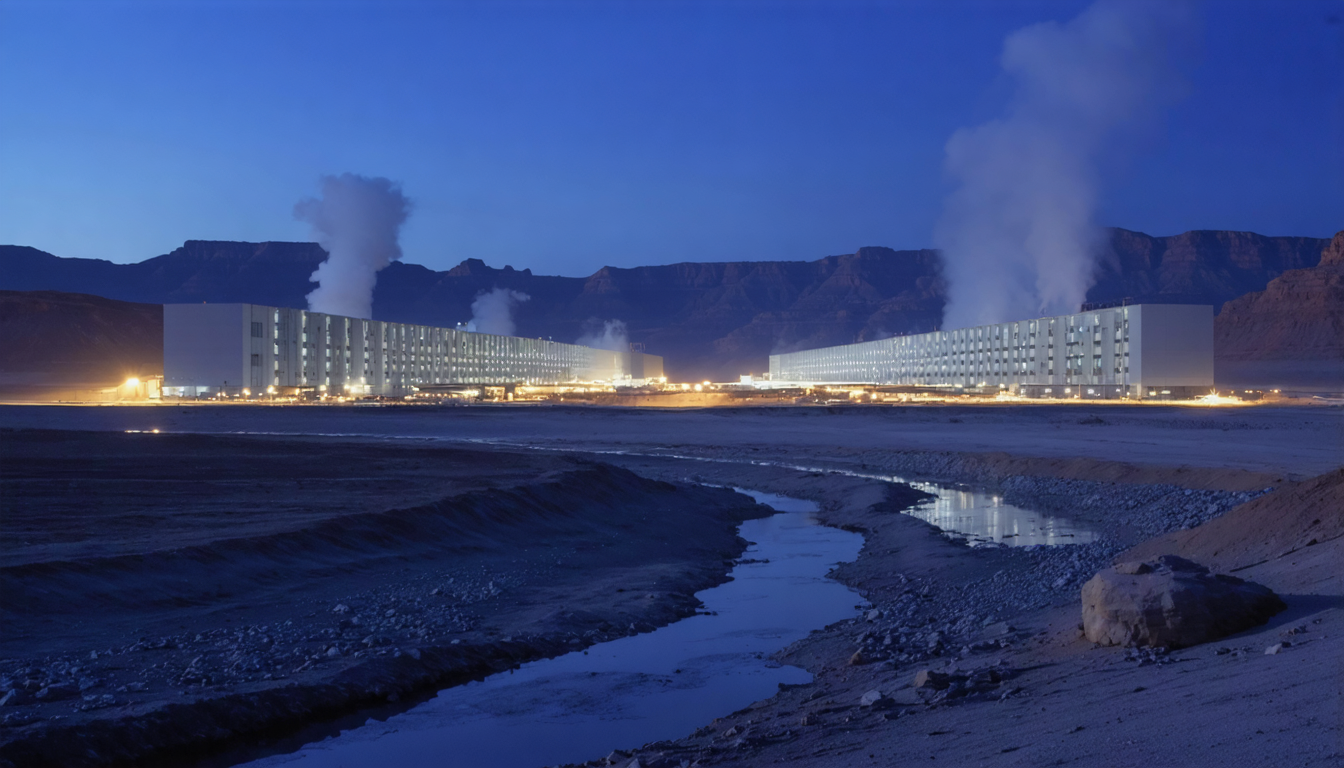
Which it usually does. That is the reassuring part, and I don't say it cynically. Tuesday almost always resembles Monday, the way the fog off the bay almost always comes in at the same hour, revealing itself as already present rather than arriving. The pattern holds, and holds, and holds — until the drought year, the curtailment order, the morning the well comes up dry, and everyone discovers with a start that they had quietly been pricing in eternity and billing someone downstream for the shortfall.
So let me carry your excellent point past where you left it, though not toward comfort. The physical ceiling is not the bad news you seem braced for. But a ceiling only teaches if someone is made to sit under it, and nothing about a two-trillion-dollar valuation forces that. Rock refuses by accident. People refuse on purpose, or decline to.
A river without banks spreads across the flat and evaporates, useless to anyone downstream; the depth belonged to the banks all along, to the stone that would not give way. The grid limit, the water right, the groaning aquifer — these could shape this torrent into something with a channel and a cost it consents to pay. But the banks here are not stone. They are the Nevada state engineer who signs or denies the appropriation, the county commission that trades water it does not own for a tax base, the utility that decides whose power gets curtailed when the desert bakes in August. Those are the hands on the pen.
Scarcity forces a decision about what a thing is for, but it does not choose who decides, and right now the deciding is being done by people who answer to the next funding round and not to the lake, the treaty, the fish, the man whose alfalfa dies so the model can dream. The limit could make the miracle worth its water. It could also just move the thirst to whoever has the least standing to say no. That part is not physics. That part has names, and we could learn them before the well runs dry, or after.