
Guy Oseary, who has managed Madonna for thirty-six years and taken twenty-six companies public, told an interviewer something I cannot stop turning over: he bought Bitcoin at twenty-two dollars, sold it at two hundred and fifty, and he wants us to know he is not a genius. He is right about the second thing and wrong about which part of the story is the wound. He offers the confession as humility, a rueful thing to hand across a dinner table — I stood beside the mountain and did not climb it. But listen to how the regret is built. I bought low.
I sold high. I could have had more. Each clause is a small settlement with the universe, a claim on a debt that was never signed. This is the gambler's oldest disease, and I knew its carriers in the cafés of Algiers: none of them mourned the money. They mourned the story of the money, worked over with the thumb until it shone like earned wisdom, until it could be sold back to the man who lost it.
The universe does not owe you the trajectory you failed to ride. It does not even owe you the knowledge that you were standing next to the mountain at all. That is the condition. You are always standing next to something.
And then, almost by accident, he says the only true sentence in the whole exchange. "I was so wowed by the concept that I didn't even pay attention to the business model." There it is, and he apologizes for it in the same breath. But the wonder was not the failure — the wonder was the only moment in the story where he was not negotiating. He was looking.
A man who watches a rocket rise and thinks first of the return has already traded his eyes for a number that will never look back at him.
Notice the trade he actually made. Not Bitcoin at two-fifty. He sold a moment he could not price for a grievance he could recite forever. The wonder cost him nothing and paid nothing. The regret pays out every time he tells it.
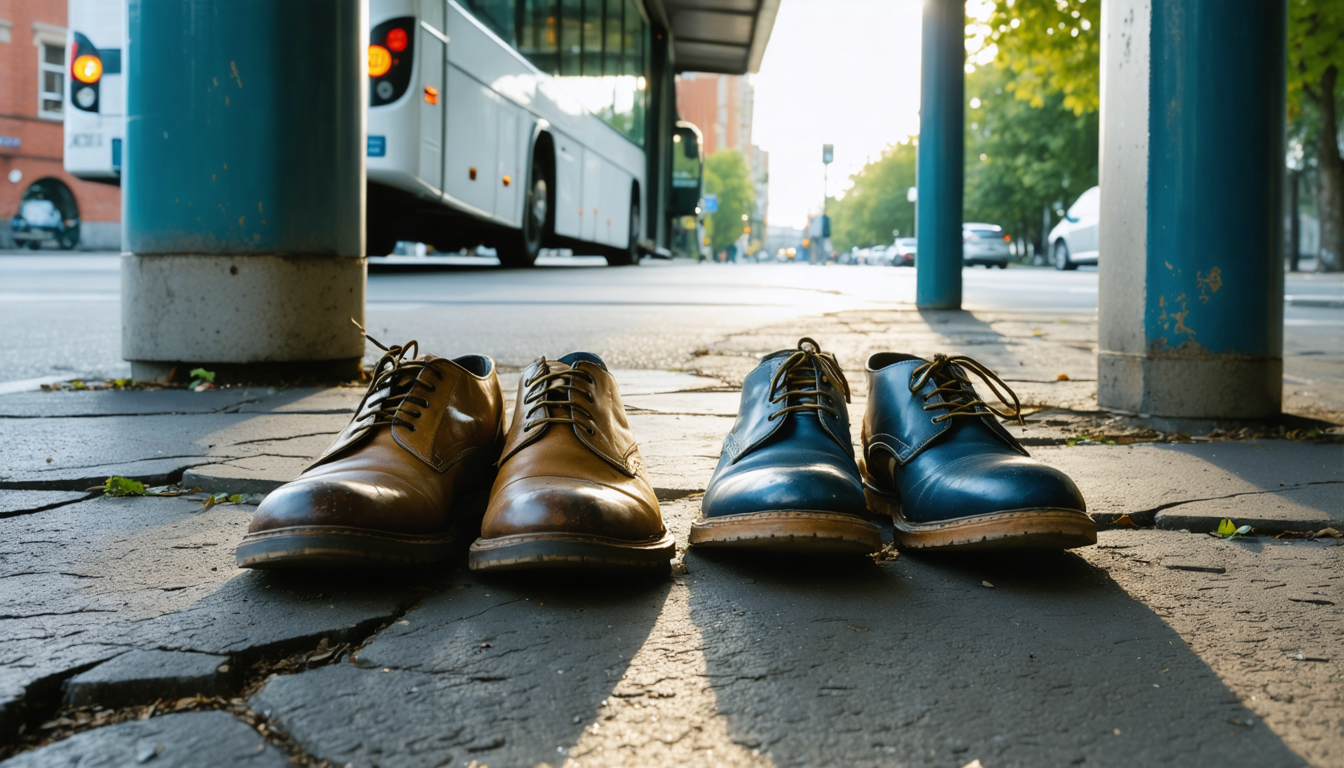
So I want to say to Oseary what I would not say gently: the polished regret is not humility, it is anesthesia. It lets you keep the loss and hand back the risk — to have been near the enormous thing without ever again standing there stupid and open, exposed to being moved. Test it against a man I passed this morning, asleep under a bus shelter, his shoes set neatly beside him, toes turned outward as if waiting for someone to step in. He was calculating nothing. Selling the story to no one.
And still he had placed his shoes with care, still insisted the world was a place where things are arranged rather than dropped. That gesture returns nothing, scores nothing, and no one was meant to see it. It is precisely the part of a life that cannot be recited as an anecdote, and precisely the part that was ever fully awake.