Miss Jacobsen has done us a service, though not the one she intended. On Mr. Ryan's podcast she reports, with the hushed reverence of a woman who has seen the seventh seal broken, that a determined amateur can now assemble the machinery of biological murder from a laptop and a mail-order kit. "That sounds alarmist," she says, and then, before the objection can draw breath: "It's true." And it is true. I will not pretend the vial in her account is a phantom.
A man can now order the wet materials of a plague to a suburban address, and no monk stands at the gate. I grant this without reservation, and I will go further than she did, because going further is the only honest form of agreement. Here is the part she stopped short of, the part that pays no royalties: this is not new. It is the newest costume on a very old body.
Grant the horror its full weight before you set it in its lineage. A synthesized pathogen does not argue; it does not require a man's consent to kill him, and it does not care whether he is clever. That is a genuine terror, and I decline to wave it off with an epigram. But observe what the phrase "knowledge is dangerous" confesses once you set the anthrax aside. It confesses that the danger was never in the spore.
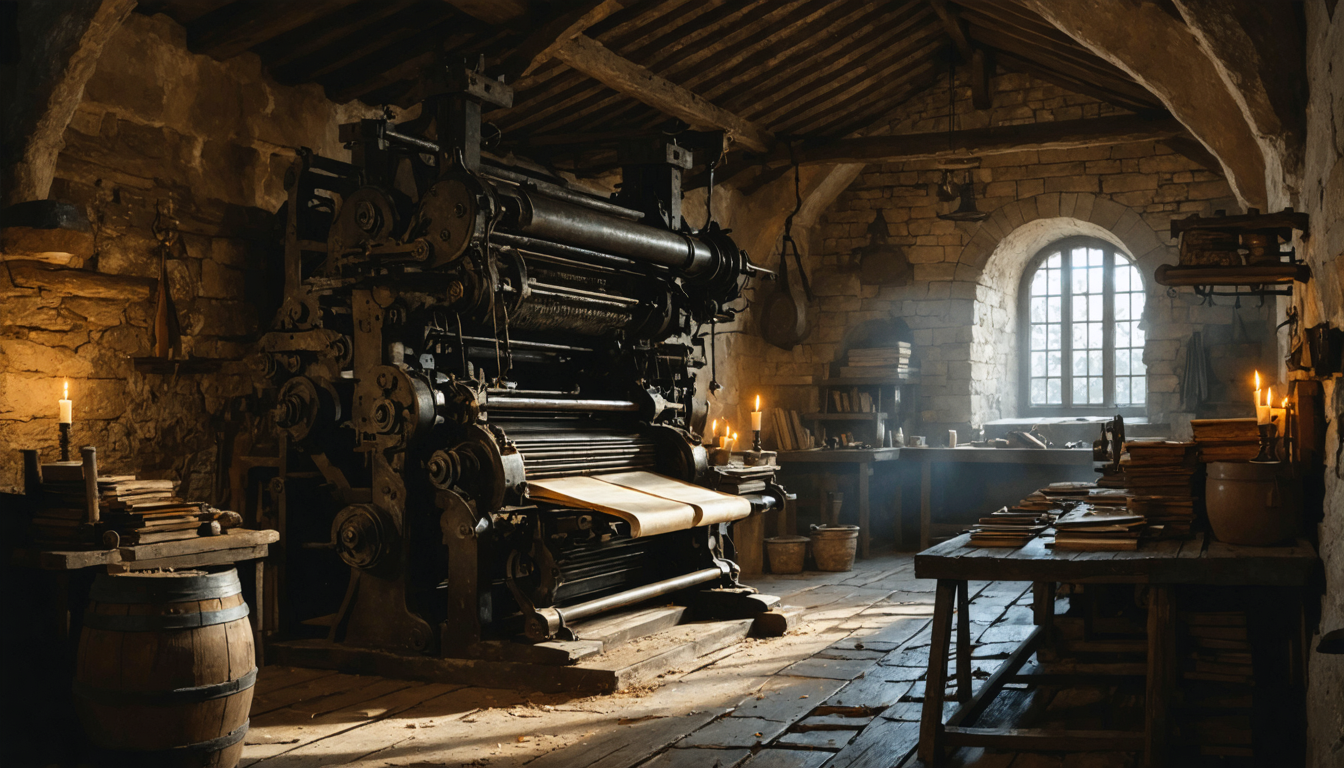
It was in the human capacity to arrange means toward ends — the identical capacity that laid the Baltimore water main and wrote the sermon that empties the collection plate. The synthesis machine that alarms our authors is a printing press with a wetter output: it copies a set of instructions and lets the copy do the work its author will never see. Consider the true parallel. When Gutenberg's Bibles began rolling off the press, the men who governed the one contagion that has never failed — the idea — felt precisely Miss Jacobsen's dread. The recipe had escaped the monastery.
Any peasant with his letters could now brew heresy in his kitchen. They were right; heresy came, and the Thirty Years' War buried a third of Germany behind it. But no edict, no index of forbidden books, no burning ever put the letters back. That is the lesson she omits. The escape is not the emergency.
The escape is the mechanism, and the mechanism has no reverse gear, and never did.

The honest question, then, is not how to un-know the pathogen but how a species that cannot relock its own knowledge chooses to live beside it. Miss Jacobsen never reaches that question, because it pays nothing. "High school has come a long way," one marvels. "I was dissecting frogs." The frog is dead; the future they failed to anticipate is not.
Their fear is not foolish. It is only misfiled — entered in the ledger as reconnaissance when it is plainly grief.
The antidote they sell is vigilance, which is a calcium deposit marketed as circulation. But knowledge cannot be un-known, only lived with — and living with a thing, unlike fearing it, sells no subscriptions. Which is precisely why no one is peddling it.