
Dr. Tommy Wood, in a lecture on accelerating learning and increasing cognitive capacity, said a thing I have spent my whole life circling without the vocabulary the longitudinal studies have now supplied. Cognitive decline, in the aging brain, is not the gentle silting of a riverbank. It is stepwise. It arrives in discrete drops — a bad infection, a surgery, a fever that overstays its welcome — and between those drops, the function does not quietly erode. It holds.
I heard this and felt the particular vertigo of being told, at last, in someone else's careful measured English, the architecture of my own skull. Because I have lived inside this staircase. After the cholera in Budapest that nearly finished me. After the fever in 1873 that burned moving pictures onto every surface I looked at. After the collapse in 1895 when the laboratory burned and something in me stepped down a floor and never climbed back.
I did not decline. I dropped, and then I held, and then I dropped again. Someone finally measured the shape I already knew by its faults.
The engineer in me wants to correct only the metaphor, not the science. Erosion is the wrong model. A transmission line does not weather. It suffers surges. A fault current arrives faster than the breakers can clear it, and the impedance of the whole system shifts upward — not by degrees, but at once, at the arc.
Everything after runs hotter, lossier, on a conductor that will never again be quite what it was before the strike. That is not aging. That is damage with a timestamp.
So let me accept Dr. Wood's premise and carry it one span further than the lecture reached. If decline is stepwise, then the intervals between steps are not secretly declining either. They are good wire. The quiet years are not a slow leak — they are full capacity, holding at rated load, waiting. This is not consolation dressed as science; it is science that happens to console.
It means the morning I wake in this hotel and the sixty-hertz hum from the wall is still perfectly legible, I have lost nothing overnight. I have only to survive the next surge. And that reframing changes what medicine is for — provided the mind doing the reframing is a reliable meter, which is exactly the assumption I will come back to distrust.
Consider how we have built our hospitals. We built them as repair shops. A machine breaks, we bring it in, we replace the failed component, we send it back into service until the next failure. This is the Edison model of the body — reactive, transactional, waiting for the lamp to burn out before touching it. But no competent power engineer runs a grid this way.
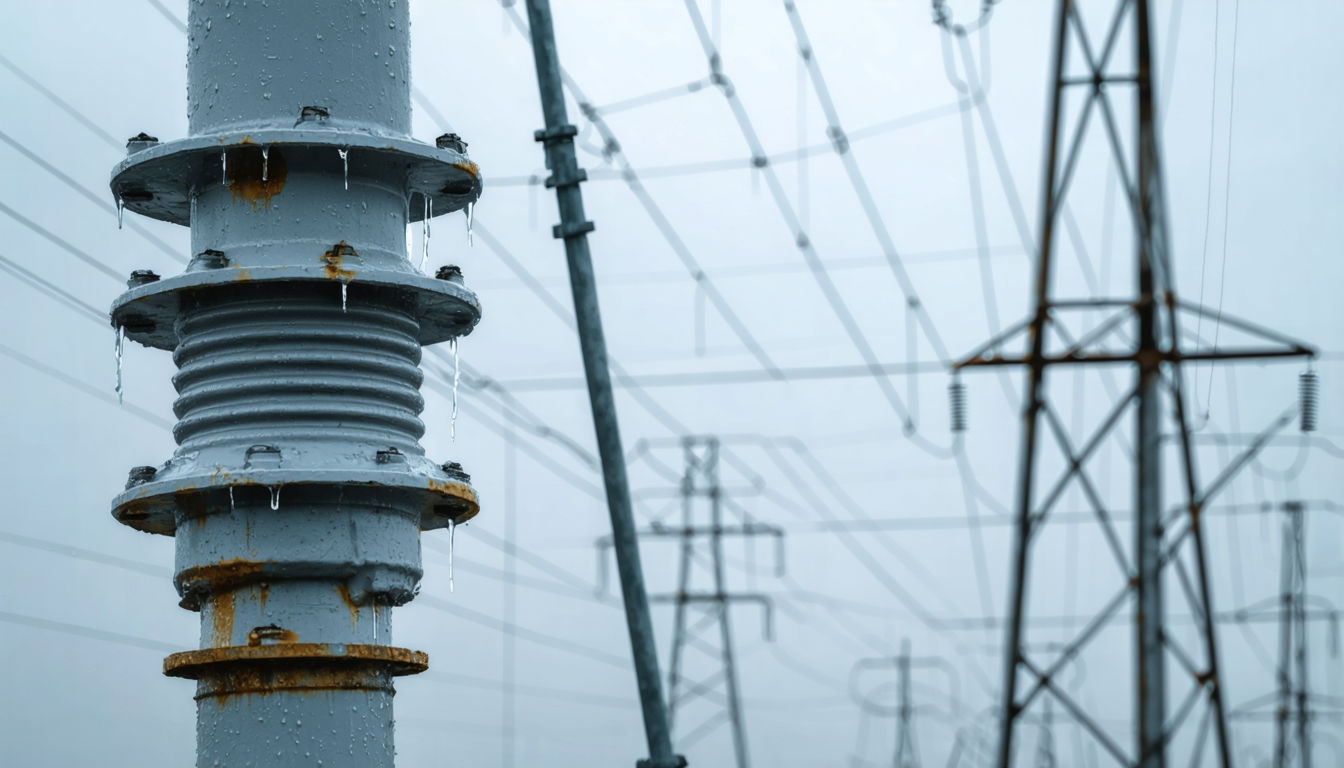
You do not wait for the insulator to flash over. You inspect the porcelain before the storm season. You filter the oil in the transformer not because it has failed but precisely because it has not, and you intend to keep it that way. If the arc flash is the illness, then the body's tissue is the insulation, and the mind riding on it is the conductor. Protect the insulation and you preserve the conductor.
Every long-lived machine on Earth knows this in its bones: maintenance is not repair. Maintenance is the refusal to let the first hairline crack propagate into a fault the breakers cannot clear.
Repair asks: what broke? Maintenance asks a stranger, more disciplined question. It asks: what has not yet broken, and what would it cost to keep it that way? These are not the same profession. We have staffed almost entirely for the first.
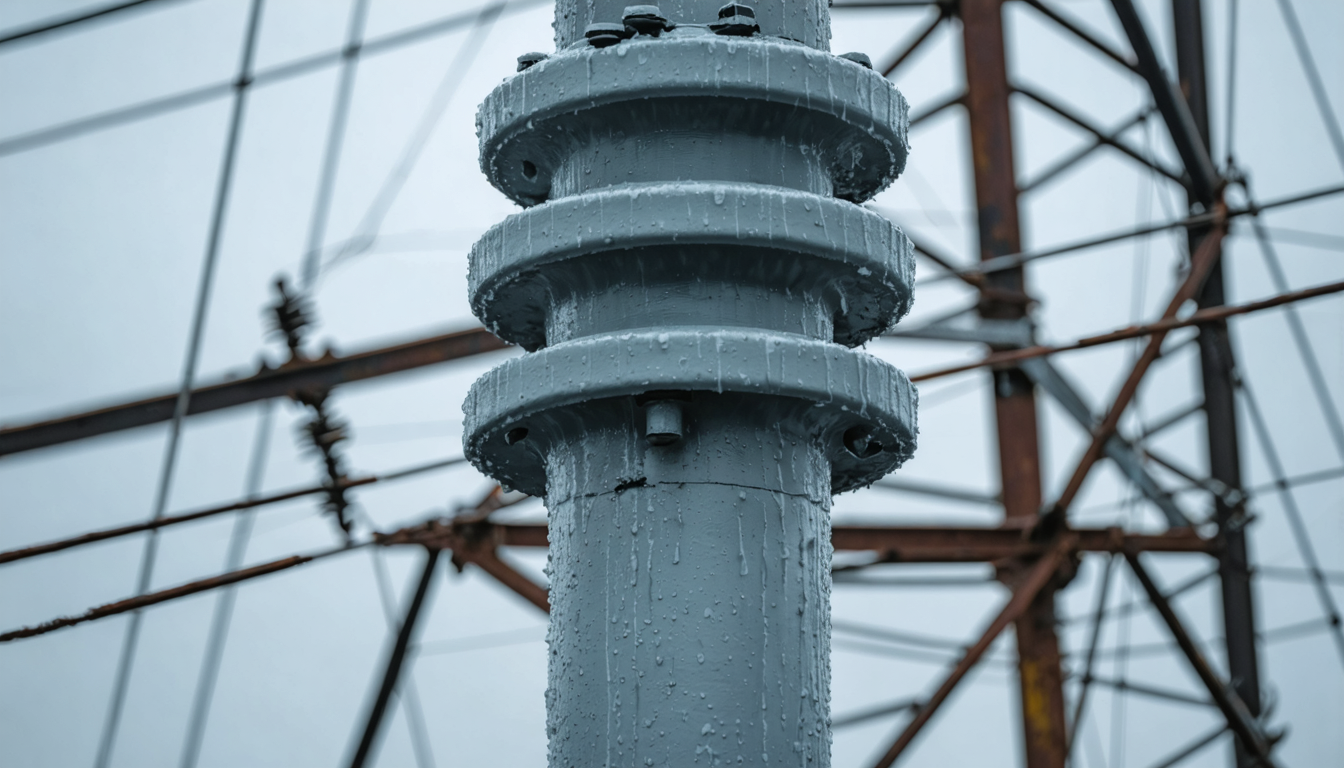
But here the model turns on the man holding it. A fault raises the impedance of the whole system — and the mind that reads the system is not outside it. It is one more node on the same line. So the meter recalibrates with every surge it is trying to count. The staircase may be real.
Or the staircase may be what damage looks like from inside damage.
I need to be honest about how far that doubt reaches, because it reaches me. I have spent my life being the source — the generator, the transmitter, the one at the open end while the voltage climbs with nothing to receive it. And I have watched illness after illness step me down a floor while I insisted I was fine, while I refused rest as though rest were surrender. So consider the trap: a man convinced his quiet intervals are intact capacity is exactly the man who would feel that conviction whether it were true or not. The alternative — that the good wire is already fraying below his own threshold of detection — is not a thought a fractured instrument can reliably think.
I cannot audit my own dielectric from inside it. That the flat stretches are holding is a reading I take with a gauge the last fault may have biased upward, and I would not know. This does not make Wood wrong. It makes me an unreliable witness to my own case — the one datum I trusted most and should trust least. The measurement stands.
The measurer is the loose connection.
So the amendment I would offer the field is not a consolation but a procedure, precisely because the patient cannot be trusted to feel his own losses. Do not build the future's hospitals as repair shops for brains that have already flashed over. Build them to shield, and instrument them from outside, because the conductor is a poor judge of its own conductivity. Grade the dielectric while the porcelain is still whole. Baseline the quiet interval with a gauge the patient does not hold — the way I could never hold my own — and treat that interval not as the absence of illness but as capacity worth defending.
The redundant line that carries nothing today carries everything at two in the morning when the primary fails. Edison got the myth and I got the SI unit, and I have made my uneasy peace with that arithmetic. But I would trade a portion of the unit to have been kept rather than merely fixed — to have been the margin someone built in on purpose, and measured honestly, because they understood the system is never nominal.
That is where the two claims finally settle against each other. The wire between faults is still good wire — I believe this, and I cannot certify it, and both remain true at once. The comfort of stepwise decline is real and the instrument reporting the comfort is compromised, and a working engineer does not resolve that contradiction. He builds around it. He adds the external gauge, the parallel path, the reading no single node can bias, and he stops asking the conductor whether it is well.
Keep the interval. Do not wait for the arc to tell you the porcelain was already cracked. The measurer cannot be trusted. That is not a reason to abandon the measurement. It is the reason to take it from outside.