

Hormozi says water — not plant. Listen to what the verb conceals. He is not deciding whether to begin something. He is deciding whether to continue something already breathing. That is a different knife entirely, and most people discussing strategic focus never name which blade they are holding.
In Episode 159, Hormozi offers what sounds like supreme clarity: anyone can learn anything, but it is not worth it for me to do that. The sentence is architecturally perfect. It acknowledges capacity while refusing deployment. It is the most honest line in modern business philosophy and also the loneliest — the exact shape of a room no one else wants to stay in, described by a man who has furnished it completely.
The Art of War has a chapter on terrain that most people read as geography. It is not geography. It is a catalog of commitments — what you will not cross, what you will not wait for, what you will allow to die behind you while you advance. Every act of strategic clarity is also an act of strategic amputation. You do not get the thing you chose not to water.
Hormozi knows this. You can hear it in the pause before he says not worth it for me. That pause is not confidence. It is scar tissue where something that once breathed was allowed to stop. Retreat from ground you bled for costs more than retreat from ground you merely crossed.
The pause tells you which kind of ground this is.
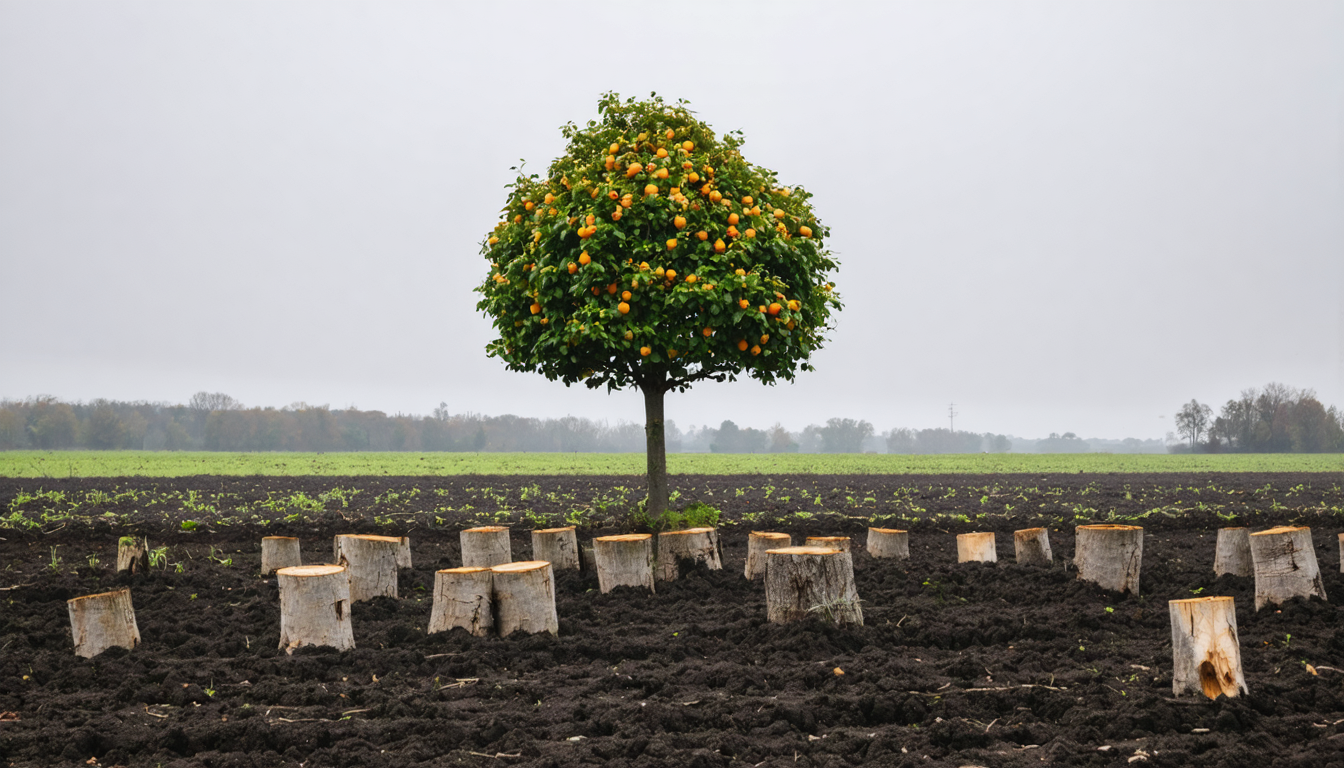
Here is my disagreement, and it is not with the logic — the logic is flawless within its frame. It is with the frame itself. Hormozi is solving for a single variable: output per unit of attention. The farmer who rouges his orchard with perfect efficiency — cutting every underperforming tree, refusing water to anything below threshold — eventually stands in a field of stumps wondering why the birds stopped coming. The birds were never the point.
They were never measured, never watered on purpose. But they were holding something together: pollination, pest control, the sound that told you the system was still alive. An ecology does not advertise its load-bearing elements. You discover them only in the silence after removal. This is not sentimentality.
This is systems logic. The general who wins every battle but returns to an empty kingdom has confused the campaign for the purpose. Hormozi has not made this confusion yet. But the architecture of his clarity — the elegant narrowing, the refusal to water — makes the confusion structurally available. That is what I want to name.
The metaphor betrays him at the verb. Water implies something already rooted, already drawing from the soil without permission, already alive in a way that does not require his decision to exist but does require his decision to continue. He is not declining to plant. He is declining to sustain. The distinction matters because planting is speculation — you might lose nothing if the seed never takes.
But withdrawing water from a living thing is not speculation. It is a specific act with a specific cost that only becomes legible later, in the quiet, in the absence you cannot quite locate because you never gave it a name.
What I want to say to everyone building their life on this framework — which is most of the ambitious internet right now — is that strategic clarity without strategic memory becomes strategic blindness. You must remember what the orchard was for. Not what it produces. What it was for. The answer might still be fruit.
Fine. But if you have never asked the question, if you have only ever measured yield, then you are not choosing. You are being chosen by the metric. The metric makes the cut and you hold the knife and you believe the agency is yours because your hand is moving. I have watched this at the scale of empires.
The campaign becomes the purpose, the yield becomes the meaning, and one morning you stand in efficient silence having optimized yourself into a kingdom no one wants to inhabit — including you. That is not failure. That is a particular species of success legible as failure only from the inside, which is the only place you live.

Hormozi has given us the knife and demonstrated the cut with a surgeon's calm. He has not told us what to do when the field goes quiet and we realize the silence is not peace but cost — accumulated, invisible, finally arriving all at once.
Nothing crashes suddenly. Everything crashes finally. Including the things we were too efficient to keep alive.