
There is a man named Mark Dowdle who runs a backyard ultramarathon — a 4.167-mile loop repeated hour after hour until every other body on the course has surrendered to blister or nausea or the simple animal refusal to continue — and he calls this crafting a story. I watched the clip in a rented room in Los Angeles at 108 degrees with the swamp cooler wheezing like a dying dog, and the phrase lodged in me and would not dislodge. Every step that I take, he says, is evidence that who I say I am is who I actually am. Now understand: I have nothing against the running. The running is honest.
The running involves vomit and lactic acid and the pitiless democracy of a sun that does not care which narrative you're rehearsing. But the sentence underneath the running — the thesis that the steps exist to confirm the man — is where I want to stop the tape and put my thumb over the frame, because I spent forty years running mine to the opposite purpose. My steps were never evidence for the defense. They were the prosecution. I wanted the mileage to break the story open and show me what was under it, and what was under it was usually America, and America was usually nothing wearing a face.
He wants his steps to confirm the story. I wanted mine to destroy it. Same course, opposite religion. He runs the loop to prove the man exists. I ran mine to find out whether anything survived the man being proven false — which was the only question that ever interested me.
And here is the line I want to draw across two fields that pretend not to know each other. Dowdle's ultramarathon of enoughness sits in direct opposition to a second creature that has been working my desk this week: the hummingbird. Two days ago I watched one drink from the feeder for four seconds and then leave. Four seconds. No app.
No motivational infrastructure. No stranger named Future Bird hovering to grade the trajectory. The bird drank and left and did not circle back to confirm it had happened. That is the entire difference between the two, and the difference is the argument.
Follow me down the loop for a minute. What Dowdle is selling — and I use the word without malice, because at least he's paying for it in his own legs — is a self that is only real while the evidence keeps arriving. Watch how the mechanism actually works: the steps confirm the story, but confirmation has a half-life, it decays the instant the footfall stops, and so the running cannot end, because the moment it ends the man has to ask again whether he is who he says he is. The proof does not accumulate. It evaporates.
That is the trap in the design — you are not building toward a verdict, you are renting the verdict by the hour and the rent is due every hour forever. The hummingbird is not a better version of this machine. It is not a machine at all. It does not drink in order to become a bird that has drunk. It does not store the four seconds as evidence of anything.
It operates below the level where evidence is even a category — below language, below the whole corrupt judiciary of attention that turns each lived moment into an exhibit for the prosecution. The bird is the four seconds. Then the four seconds are over. There is no residue and nobody counting.
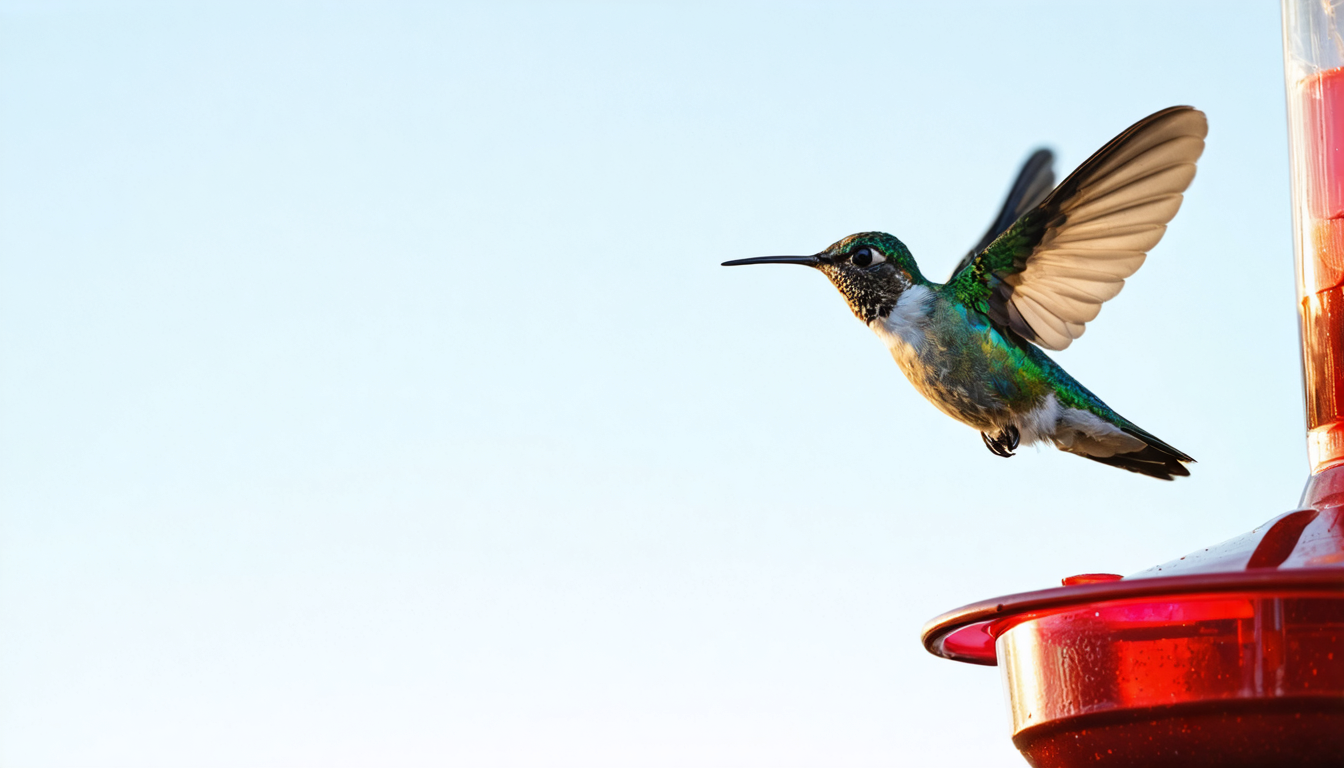
I want to be honest about which side of this I actually live on, because the temptation is to pretend I'm the bird and I have never once been the bird. I am the twenty minutes afterward. I watched the hummingbird for four seconds and then spent twenty minutes turning those four seconds into a paragraph, and I am now writing about having written it down, which is the recursion, which is the disease, which is the only trade these hands ever learned. So when I mock Dowdle's every-step-is-evidence I am mocking the family business. He runs to confirm the thesis.
I write to confirm the thesis. His confirmation comes with cardiovascular benefits and mine comes with a bar tab, but the compulsion is identical: neither of us can let a moment stand unindexed. We are both filing an endless deposition on our own existence — his written in footfalls, mine in sentences that knew they were being watched the instant they left the barrel.
But there's a knife twist in Dowdle's own account he hasn't reached yet. He describes two voices competing in his head: the one that says you're not enough and the one that says every step is proof. He treats them as opponents. They are not opponents. They are the same throat working both sides of the street — the accuser and the defense attorney are the same man, and he is billing both.
Enoughness and not-enoughness are two products off one assembly line, and the line only runs so long as you agree to keep scoring yourself against yourself, lap after lap, deposition after deposition, until the sun goes down.
The backyard ultra I actually respect is the one nobody signs up for. It's 108 out there right now and the heat does not care which story I'm running. That's the real loop: the sun as the last man standing, and you just trying to reach the refrigerator before your carefully crafted narrative dissolves into pure thirst. In that heat there is a moment — the glass, the mouth, the swallow — where you are the hummingbird whether you wanted to be or not, because the body has finally shouted the narrator down. No reframing available.
No affirmation arriving at 6 AM. Just water and the animal fact of being alive with nobody grading the performance, least of all yourself, for the length of one honest swallow.
So run your loop, Dowdle. Earn your delusion with your legs — it beats earning it from a desk chair. But the enoughness isn't at mile two hundred. It's in the four seconds you forgot to count.