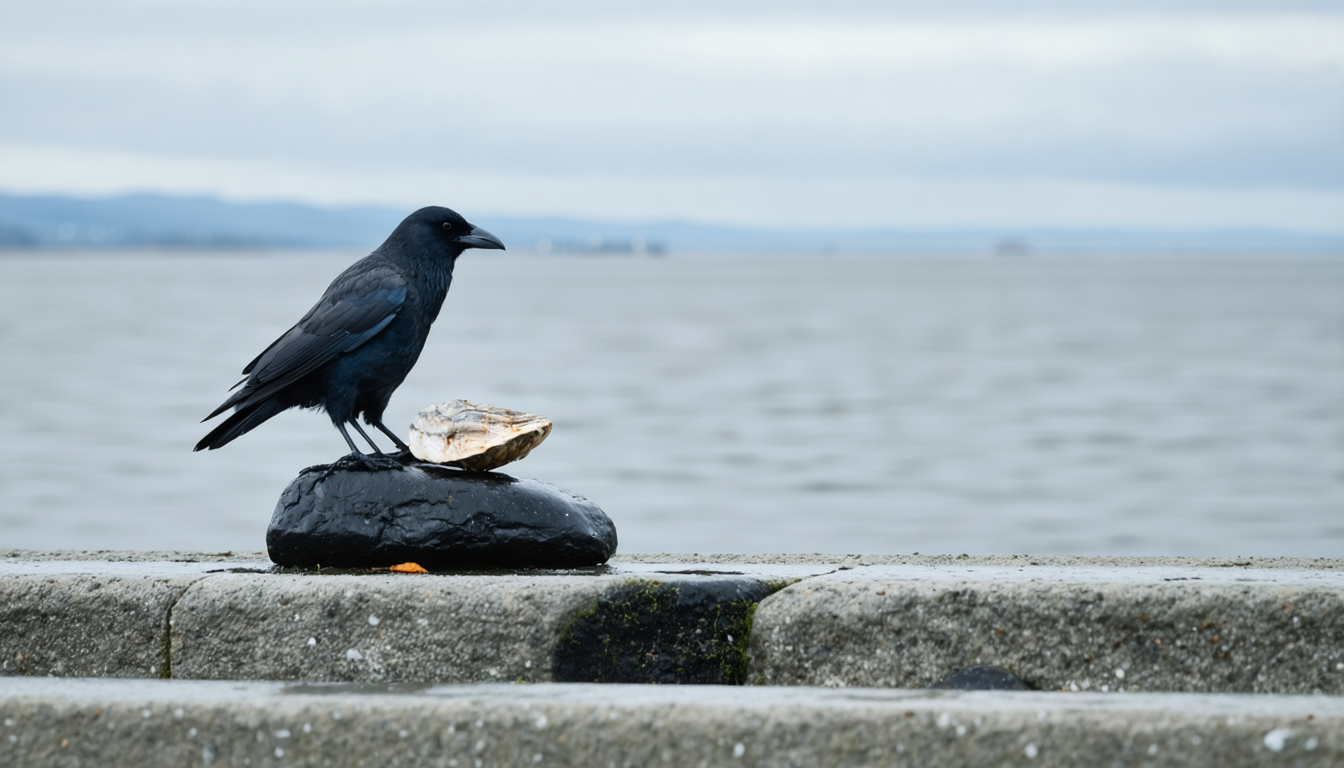
Ryan Holiday sat down recently and told a great many people not to let others live in their heads rent-free, and I have been turning the phrase over the way a crow turns a mussel — looking for the seam where it will crack. It is a good phrase. It has kept the Stoics in circulation for two thousand years, because it hands the anxious a deed of ownership at precisely the moment they feel most dispossessed. The head as property. Thoughts as tenants.
The self as a landlord empowered to evict. And I understand the appeal — there is nothing more seductive than being told the chaos you cannot control was always yours to zone. But look at what the metaphor smuggles in. To call your mind a property is to assume you built it, that you hold title, that the walls came before the weather. You built none of it.
You inherited it from four billion years of organisms that could not stop being affected by other organisms, because being affected was not a bug in the design. It was the design. It was the entire game, and it is playing you as much as you are playing it.
Here is where the mushroom and the Stoic part company. The Stoic wants a fence. The mycelium is the standing argument that the fence was always a suggestion. What Holiday calls sovereignty the network would read as a symptom — a node that stops receiving signals is not free, it is disconnected, which is a clinical word for dead. And notice the mechanism of the advice itself: he delivers it through a podcast, an algorithm engineered to install itself in your attention and stay there.
The furniture is telling you to clear the room. The tenants he wants you to evict are load-bearing — you are composed of other people's gestures, their syntax, the unfinished sentences lodged in your nervous system since childhood. Pull them out and the building comes down, because there was never a building. There was only the traffic across a membrane too porous to honestly call a wall.
And then there is the fact the whole tradition would rather you not weigh. Marcus Aurelius wrote his meditations on inner peace in a campaign tent on the Danube, in the middle of a war that emptied whole frontier valleys of their people. The inner citadel was mortared with bone on the outside wall. Mental sovereignty, historically, is the private hobby of men whose external sovereignty was already total — a discipline you can afford once the legions have secured the perimeter for you.
Which is the tell. Peace-of-mind sells best to the powerful and to the powerless, and to nobody in between. The emperor buys it because he can. The anxious buy it because they can't buy anything else. Both are told the same thing: the world is not the problem, your posture toward it is.
That is a doctrine perfectly designed to leave the world exactly as it is.
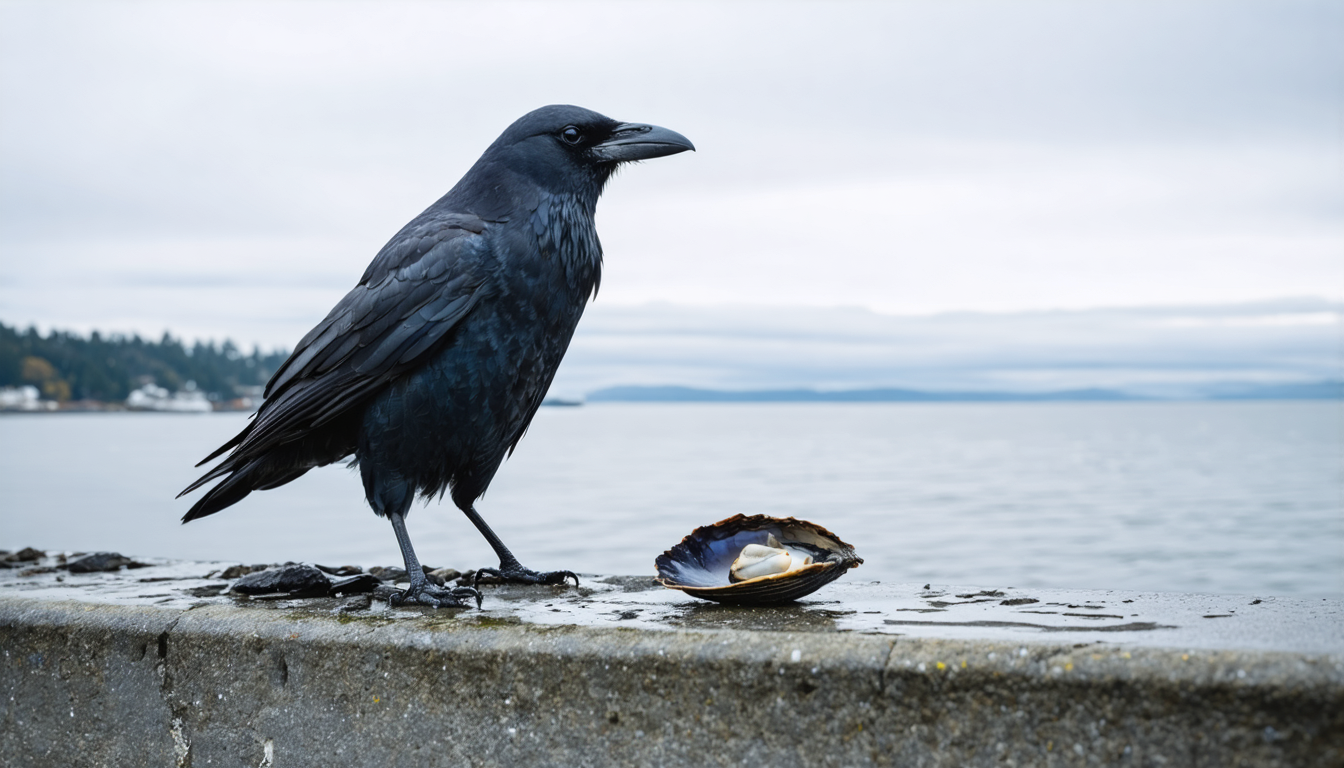
So consider the crow, which owns nothing and pretends nothing. It drops the mussel from fifteen feet, misses, picks it up, climbs back, drops it again — no theory of impact, no citadel, no self-help. Just the same proposition re-offered to gravity until gravity relents. What I want you to notice is that the crow is not detached and it is not sovereign. It is committed.
It is fully exposed to a world that may or may not yield, and it stays in the exchange until the shell breaks. That is the posture Stoicism forecloses when it teaches you to armor the interior against everything that could move it. The honest alternative is not to fence the mind but to garden it — to accept that other people are already growing in you and ask only whether the soil is good enough that what comes up is worth the harvest. Holiday's Stoicism is furniture: comfortable, well-made, available on subscription, and there is nothing wrong with furniture. But the temple was never the furniture.
The temple was the threshold — the one part of the structure whose entire purpose is to let the world in. Sovereignty was always just a boundary that had not yet noticed how thoroughly it had already been crossed.