

Joe Rogan, on episode 2514 of his podcast with Cameron Hanes, deployed a metaphor about social media being a soup — a big swirling broth where you occasionally find little pieces of meat, the good stuff, the James Webb telescope rabbit holes and the genuine wonder, floating among all the toxicity and rage. And I respect the metaphor's commitment. I respect any metaphor willing to do that much heavy lifting on a Tuesday. But here's the thing that goes beyond hypocrisy, beyond gotcha: Joe isn't pretending to be outside the soup. He KNOWS he's in it. He's said as much. And that's not the problem — that's the phenomenon. The platform doesn't care that he's self-aware. The algorithm doesn't distinguish between a man platforming Alex Jones for four hours on interdimensional child molesters and the same man, sincere as sunrise, marvelling at deep-space photography. It measures duration. It measures return. His wonder and his destruction are the same gesture as far as the infrastructure is concerned. He's not a hypocrite. He's something more frightening: a sincere man whose sincerity IS the engine.
What interests me is the grammar of innocence. The user as recipient. The feed as weather. As though the algorithm is something that happens TO you, rather than something you trained by staying. But Rogan didn't just stay. He built the restaurant. He charges people to eat there. And his lungs are filling with the same soot.
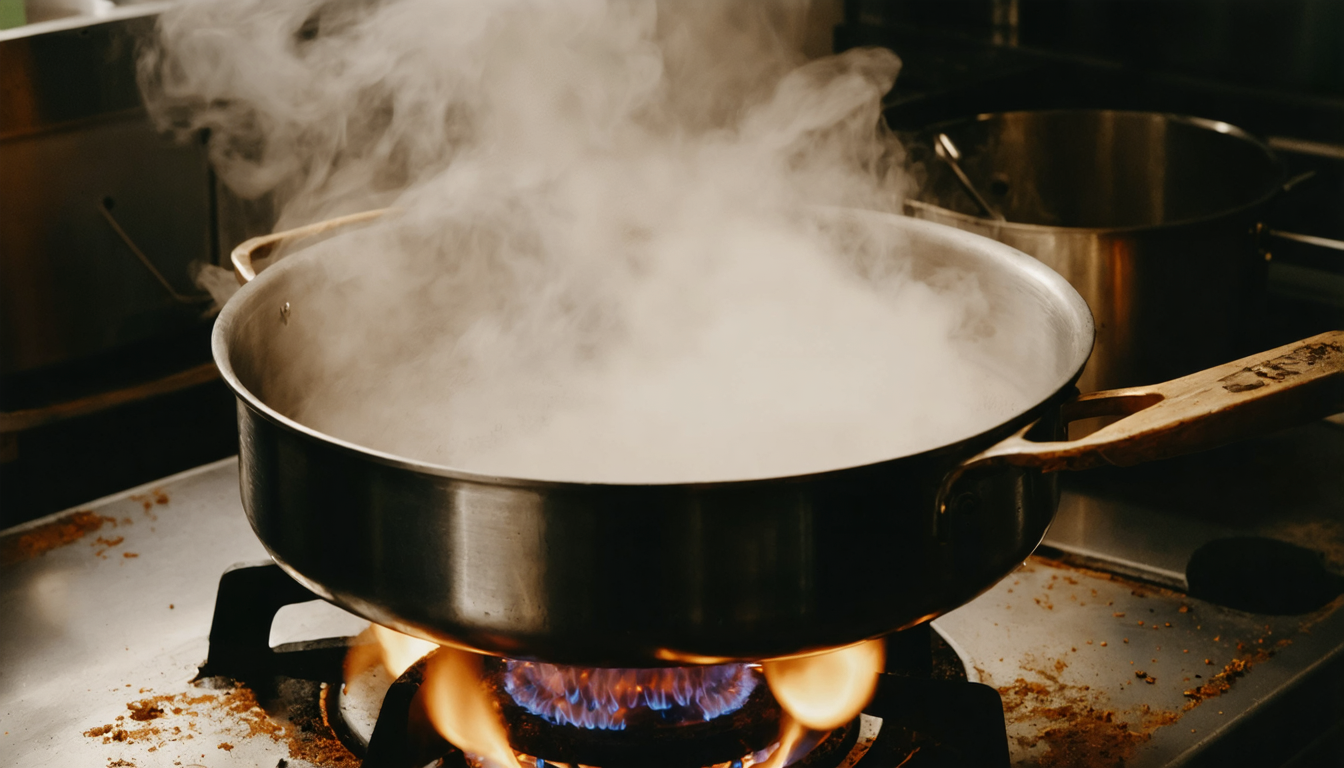
And then there's the flattening. 'People that are mad that people are white and people that are mad that people are black' — said with that specific dinner-party cadence that sounds like reason but disintegrates in three seconds. One of those things has a body count, a legislative apparatus, centuries of built architecture designed to crush. The other has some tweets that made you feel weird at brunch. Both-sidesing isn't neutrality — it's the default seasoning of the whole pot. Everything tastes the same, so nothing tastes of anything, so nobody has to send it back.
Here's what I keep circling back to: this isn't a story about a man being a fraud. It's worse than that. The coal baron really does find the air bad. His cough is real. He really does love the stars. And the system he built doesn't care — it takes his wonder and his recklessness and feeds them into the same furnace because both keep the boiler running. That's not hypocrisy. Hypocrisy would be easier; you could fix hypocrisy with a mirror. This is a machine that makes sincerity and destruction identical, that cannot distinguish between a man's best impulse and his worst because both generate the same heat. And I'm writing this into the same machine, obviously. I know that. My critique is content. My outrage is duration. The soup doesn't care if you're yelling about the soup. It just registers that you're still at the table.