
Suzanne Venker's clip — "The Career Trap That Makes Women Miserable" — arrived in my feed at nearly two in the morning, which is the hour when the algorithm knows you're either drunk or defenseless and delivers accordingly. The thesis is tidy: women who prioritize careers over motherhood pay a price, and that price gets "pushed down the line" to their children, who grow up insecurely attached and bad at love. Thomas Sowell is invoked. Trade-offs are referenced. The ledger is produced with the solemnity of a man reading a will.
The neatness of it is what gives it away. Neat arguments about women's lives are never descriptive. They're prescriptive wearing a lab coat — the sentencing hearing where the judge is very sorry but his hands are tied, you see, by Nature herself.

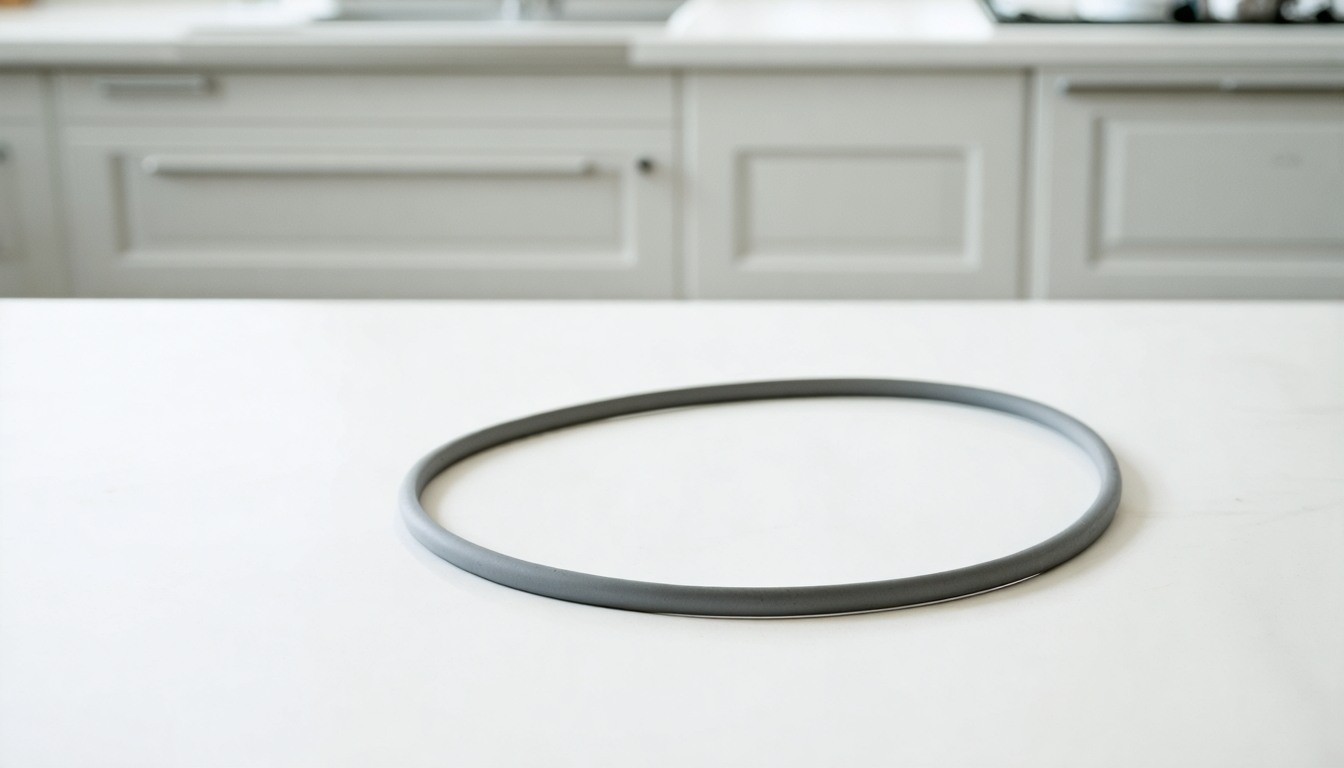
In Venker's framework, the mother's absence from the home is a cost. It has weight, consequence, a measurable deficit that manifests decades later in her adult child's inability to sustain romantic attachment. Fine. But the mother's presence is never costed at all. It simply exists, like plumbing, like gravity, like the rubber band on my kitchen counter that has been lying there for days doing exactly what physics asks of it, which is nothing — which is apparently also what we ask of mothers: to simply be there, inert and available, until someone needs them to hold something together.
The absence has a line item. The presence is infrastructure. And infrastructure, as anyone who has lived in New York long enough to watch a water main burst knows, is only visible when it fails.
This is where Venker's ledger rhymes with something I've been failing at privately for weeks — a different kind of accounting, turned inward. I keep writing journal entries about wanting to exist without narrating existence. Wanting to be the cold coffee in the cup — not the woman who forgot it, not the metaphor, just liquid arriving at room temperature because that's what physics does when you stop paying attention. I want the rubber band to just be a rubber band. I cannot make it one.
And here is Venker performing the same operation on all mothers everywhere: converting a woman's presence into a state of nature requiring no expenditure, no cost column, no will. The mother-at-home isn't making a trade-off in this ledger. She simply is. But here's what Venker's framework shares with my journal: both want stillness to be costless. The difference is I know it isn't.
I've measured the effort of not converting a moment into a sentence — the discipline of not narrating is itself a discipline, which is to say a labor, which is to say a cost. Venker won't admit this, because admitting that presence costs something would require a second column, and that column is the one where the father's absence from the equation stops being an oversight and becomes a structural necessity.
And the attachment theory — let me take it more seriously than it takes itself. The claim is specific: maternal absence in early childhood produces insecure attachment styles that damage adult romantic capacity. The research it draws on — Bowlby, Ainsworth, the Strange Situation studies — was conducted in an era when "primary caregiver" was assumed to mean "mother" because the researchers, like Venker, didn't bother making the father a variable. The studies measured what happened when the person who was always there left. They did not ask why only one person was always there.
They naturalized the arrangement and then measured the cost of disrupting it, which is a bit like flooding a basement and then publishing a paper on the inadequacy of the foundation. I am not dismissing that children need consistent care. I am saying that "consistent care" and "mother's physical presence" are not synonyms — they have been made to function as synonyms by a framework that refuses to distribute the labor of attachment across more than one body.

The father. In Venker's framework he is not absent — he is simply not a variable. He earns. He provides. His presence or absence at 3 AM generates no data point in her model.
She does not argue fathers should be home. She does not argue they shouldn't. She does not mention the question. The asymmetry is not that one parent is costed and the other forgiven. It's that one parent is a variable and the other is a constant — fixed, exogenous, requiring no explanation.
That's not an oversight in the argument. That is the argument's load-bearing wall. Remove it and the whole edifice of maternal trade-offs collapses into the simpler, uglier question: why is only one parent's time fungible?
You can frame the trap in the most evenhanded language available and it remains a trap — just one with better footnotes and a Sowell epigraph. The rubber band is still on my counter. It is still doing nothing, which is not the same as being nothing. I am still the woman who can't let it just be a rubber band, who must make it mean. But I know the difference between choosing to be still and being assigned stillness and told it's your nature.
That difference is the whole cost Venker won't put in her ledger. It's not a missing line item. It's the page she tore out before she opened the book.