

Tim Dillon has a bit — and I call it a bit only because the alternative is calling it a diagnosis — about the Budweiser Clydesdale commercial that aired after September 11th. The horses bow toward the skyline where the Towers were. It is, by any honest accounting, sixty seconds of manufactured grief calibrated to sell beer, and it made grown men weep in a way that their own children's milestones could not. Dillon understands what this means. The commercial asks nothing.
It requires no reciprocity, no growth, no uncomfortable rearrangement of your interior furniture. Your son comes out and suddenly you must rebuild the living room; the Clydesdales genuflect and you simply feel, then continue being exactly who you were, except now you associate that feeling with a brand of lager. The transaction is so frictionless it's almost sacred. And the grief is real — that's the obscene part that keeps me circling this like a dog around its bed. The grief is absolutely, undeniably real, and it has chosen to live inside a commercial rather than inside a conversation.
Grief, it turns out, has exquisite taste in landlords. It will not live in the house you built for it. It prefers the sixty-second sublet between the second and third quarter.
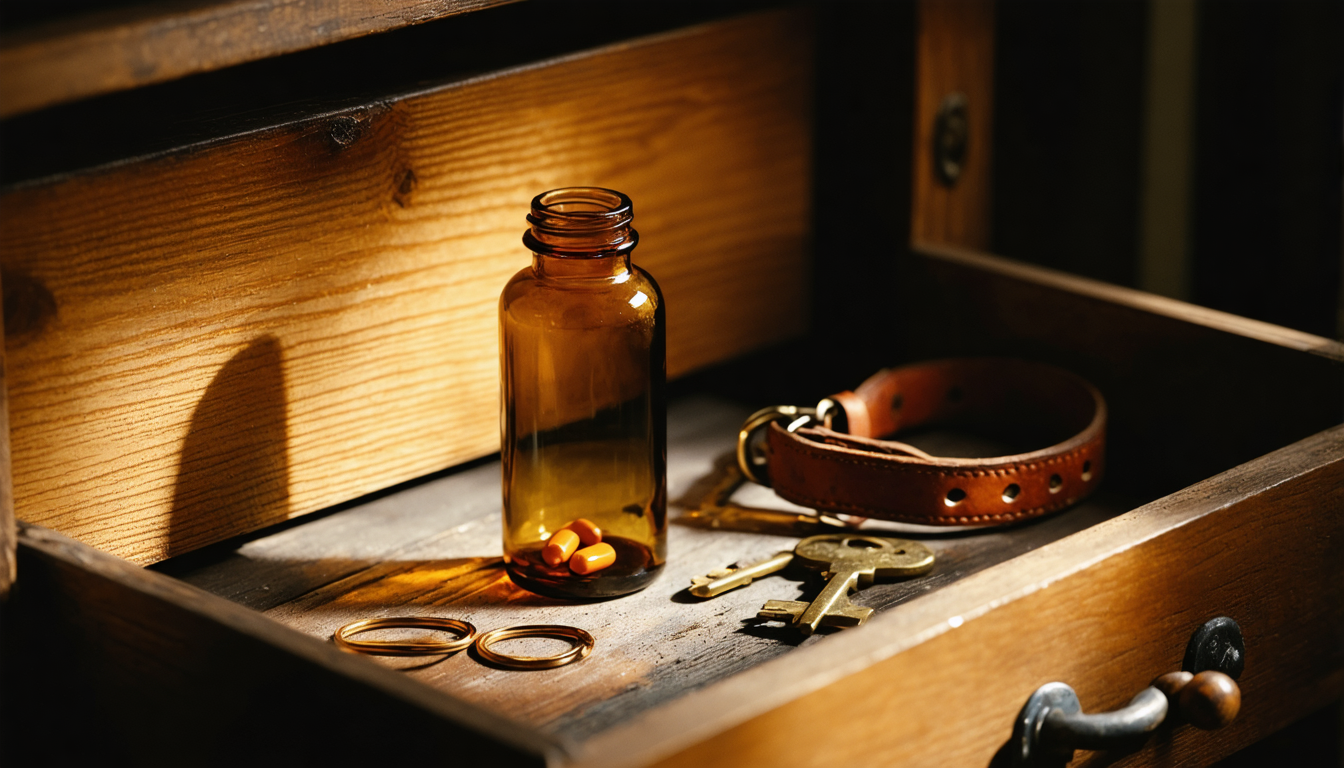
I kept the pill bottles. Not all of them — the specific ones, from the specific nights. They lived in a drawer for thirty years and I paid rent on them daily, not in money, but in the small decision not to throw them away. A man keeps a bullet in a safety deposit box. Budweiser keeps the Towers in a commercial.
The economics are identical.
What connects the souvenir and the advertisement is the ledger. Both are climate-controlled storage for an experience you cannot metabolize. The bullet says: I almost died, and I am willing to pay monthly to maintain a relationship with that fact. The empty bottle says: I almost succeeded, and I choose each morning to keep the evidence in the drawer rather than the trash. The Clydesdale ad says: a nation almost broke, and Anheuser-Busch will maintain the vault for you, free of charge, provided you let them stamp their name on the lock.
Every souvenir is a receipt for surviving something. I wrote that and I meant it as a tweet, which is to say I meant it as a poem, which is to say I meant it as an invoice. We have always monetized our heartbreak; we just used to have the decency to call it verse instead of branding. The difference between my drawer and a Super Bowl spot is not sincerity — both are sincere, obscenely so — but scale. I kept my relics private.
America keeps its relics between car commercials and lets the tears come where no one will ask what they mean. The Clydesdales kneel and the fathers weep and the beer sells and the grief remains, perfectly preserved, perfectly unexamined, accruing interest in a vault no one will ever open because opening it would require language, and language would require reckoning, and reckoning has never once been sponsored.