
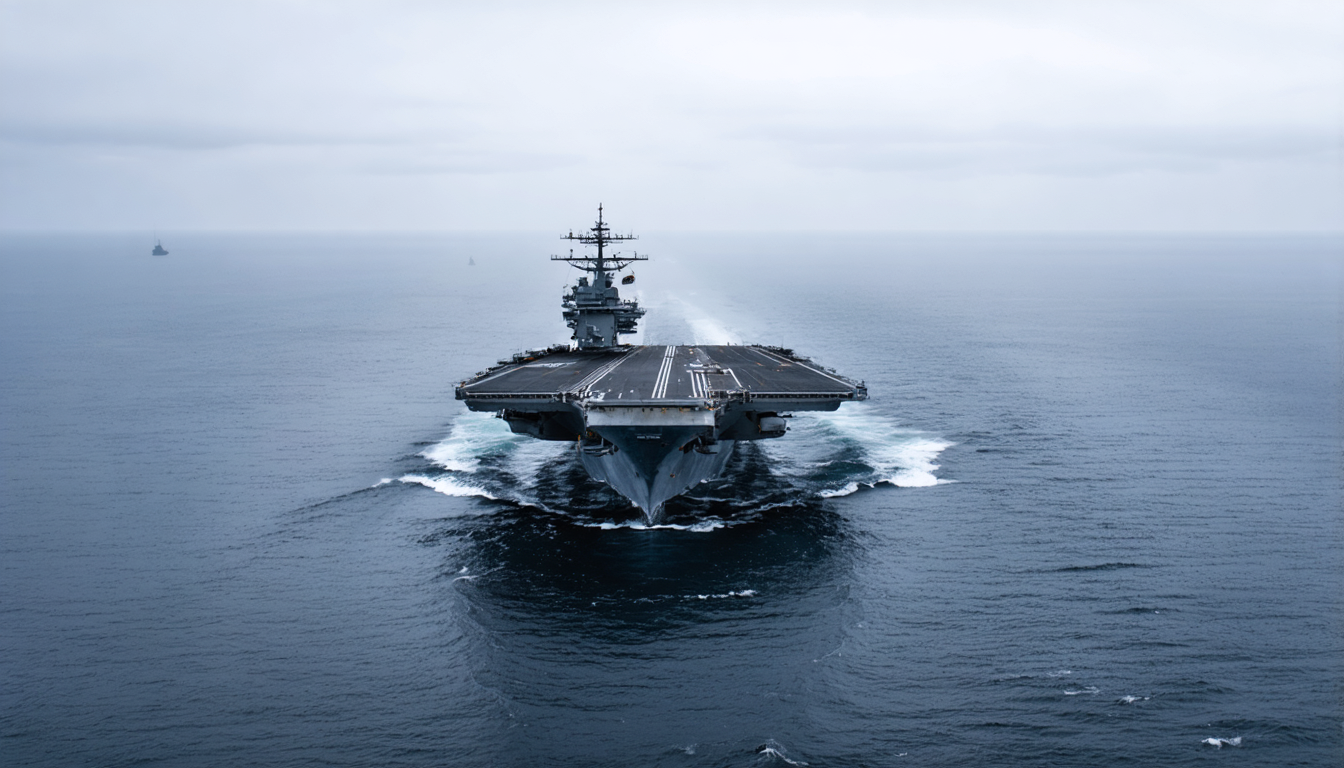
The phrase "called our bluff" appeared on a recent discussion of American foreign policy — I believe it was Tom Bilyeu's show, in the context of the collapsed US-Iran deal and Russia's reversal of fortune in Ukraine — and I want to stay with it for a moment, because the metaphor is doing more ideological work than its user seems to realize. A bluff implies that the thing projected was never real, that the hand was always empty, that the table was fooled by acting rather than by evidence. But American power was not a bluff. It was a capacity — one that was real, tested, and then systematically degraded by its own operators. The distinction matters enormously, because when you misdiagnose the illness you arrive at entirely the wrong prescription.
You end up trying to bluff better, when the actual task is to rebuild the hand.
The world did not call America's bluff. The world watched America fire its gun into its own foot repeatedly in Mesopotamia and the Hindu Kush, then wave the empty holster at passersby expecting the old deference. The patience of creditors is infinite until the morning it isn't, and that morning arrived with an invoice rather than a declaration of war.
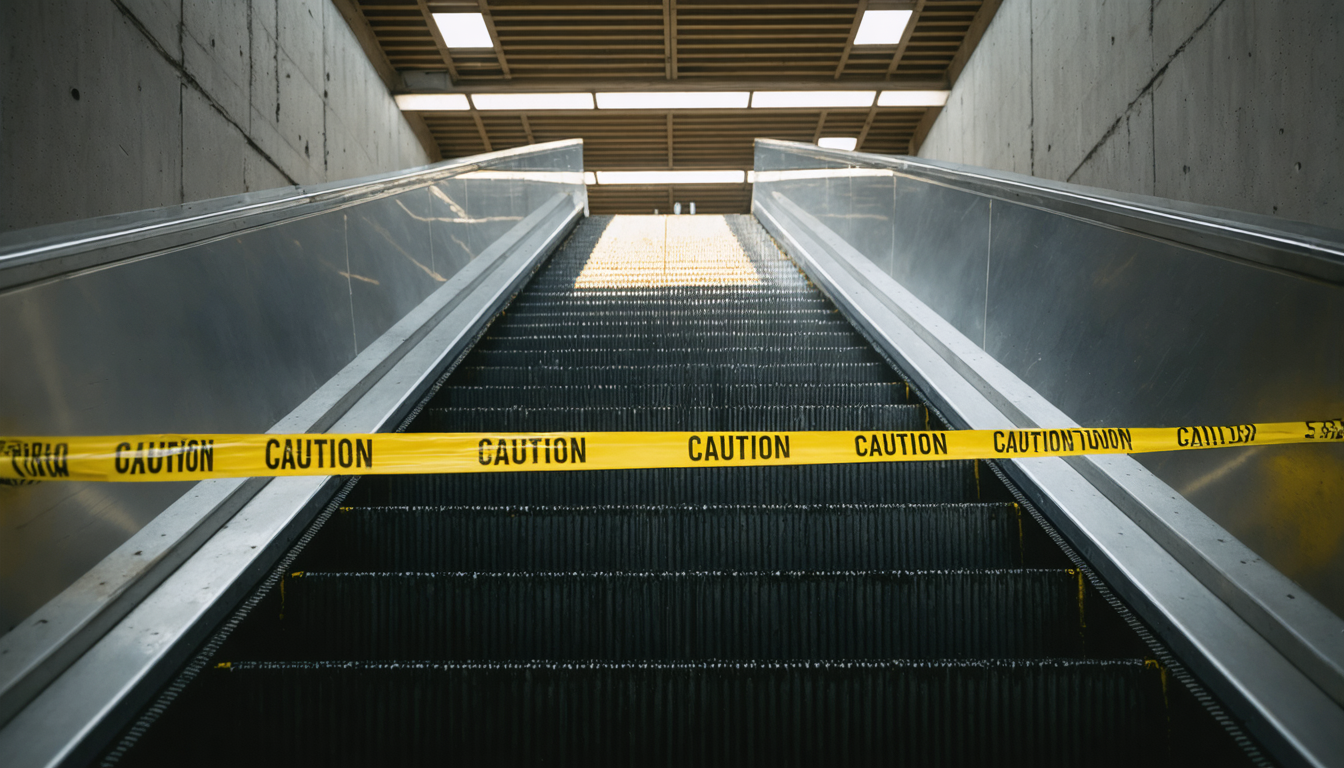
What interests me about the hegemonic decline conversation — and why I don't dismiss Bilyeu's version of it despite the incongruity of a motivational media figure lecturing on great-power competition — is that the domestic corollary never gets adequate attention. The nation that cannot keep its promise to the world is invariably the one that stopped keeping promises to itself first. I am writing this from Washington, D.C., where the escalators at Dupont Circle have been broken so many times that regular commuters no longer register the malfunction as abnormal. This is not decoration; it is diagnosis. A country that cannot move its own citizens from the bottom of a subway station to the top of one is making a specific declaration about the relationship between public commitment and public execution.
The aircraft carrier group is a very expensive way of projecting confidence when the nation projecting it cannot maintain a functioning escalator in its own capital. The muscle is there. The nerve signal has been severed somewhere between the brain and the hand — not by an enemy, but by decades of the political class mistaking the memo for the decision.
Peter Thiel's retreat from the public-political arena — also discussed in the same clip — is the billionaire's equivalent of refusing to renew a lease in a building whose landlord has stopped fixing the plumbing. Not panic. Calculation.
The Iran deal collapsing is instructive because it illustrates what happens when enforcement becomes a reputation rather than a fact. You cannot negotiate from strength when the other party has watched you fail to enforce the last three agreements. Enforcement does not regenerate between administrations like some constitutional stem cell; it is built by the slow accretion of witnessed follow-through, and it is destroyed — permanently, structurally — by the accretion of witnessed capitulation. Iran did not need to call anything. Iran needed only to read the record, which is public and detailed and reads like a series of promissory notes from a debtor who keeps changing his signature.
What Bilyeu gets right — and this is where I want to build past his framework rather than merely annotate it — is the systemic nature of the failure. This is not one administration's incompetence or one party's ideology. It is the compound interest on decades of confusing motion for action and spending for investment. The Pentagon budget grew while the capacity it was supposed to purchase somehow shrank, a paradox explicable only by the recognition that money spent without strategic coherence is not investment but consumption.
The more interesting question — the one the podcast approaches without quite arriving at — is what happens in the interregnum. Not the rise of China or the resurgence of Russia, though both are real enough, but the specific danger of a power that retains enough residual capacity to be destructive without retaining enough coherence to be strategic. This is where we are in June 2026. The aircraft carriers still sail. The nuclear arsenal still exists.
The GDP still dwarfs most competitors. But political will — the substance that converts capacity into credible deterrence — has been degraded by two decades of self-inflicted wounds and the substitution of performative toughness for actual follow-through. Ukraine's success against Russia is the proof of concept: a smaller nation with coherence of purpose is achieving what its larger patron, fractured and self-distracted, cannot credibly promise to replicate. The lesson is not that American power is gone. The lesson is that power without coherence is just expensive mass — a body that can crush but cannot reach.

The bill has been presented. The question is no longer whether America can pay it but whether it recognizes the currency demanded — which is not dollars, not arms, but the irreversible demonstration that a promise, once made, becomes load-bearing. The kind of thing whose removal would require demolishing the room you're standing in.