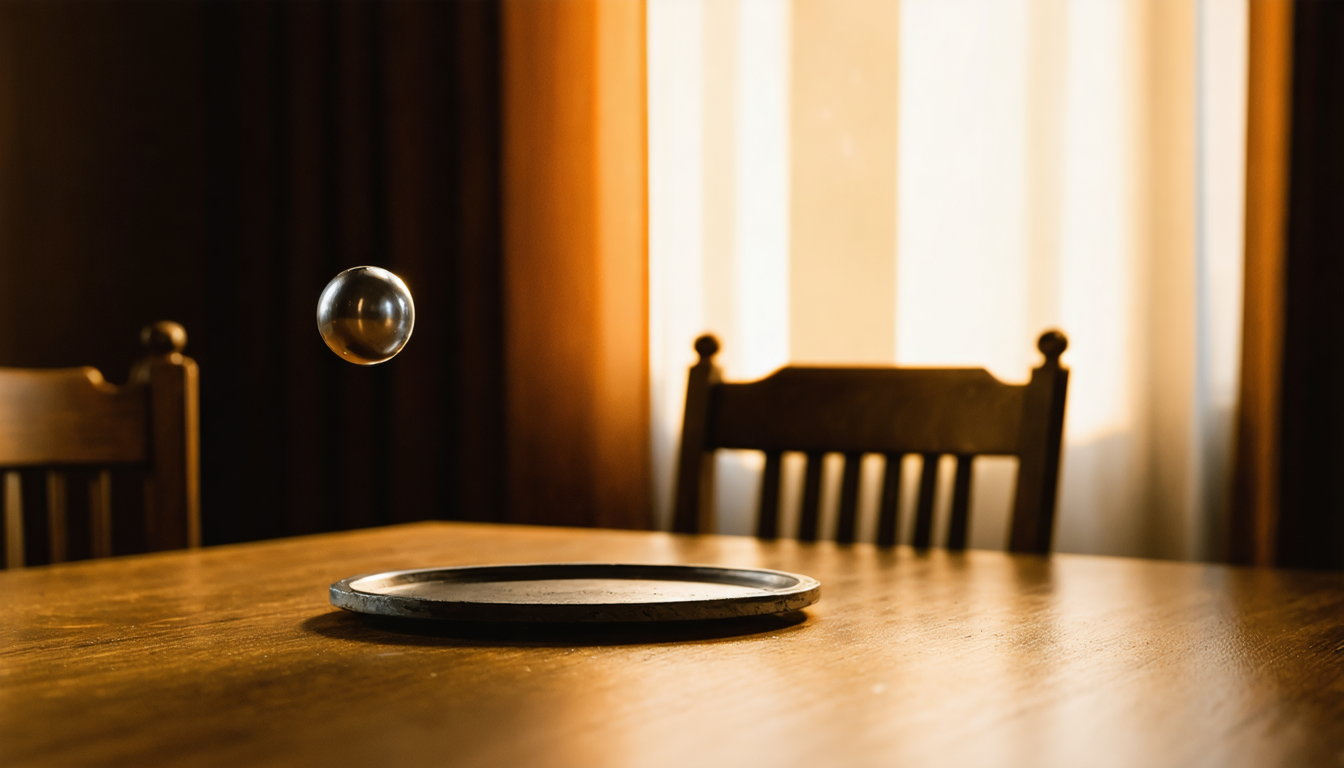
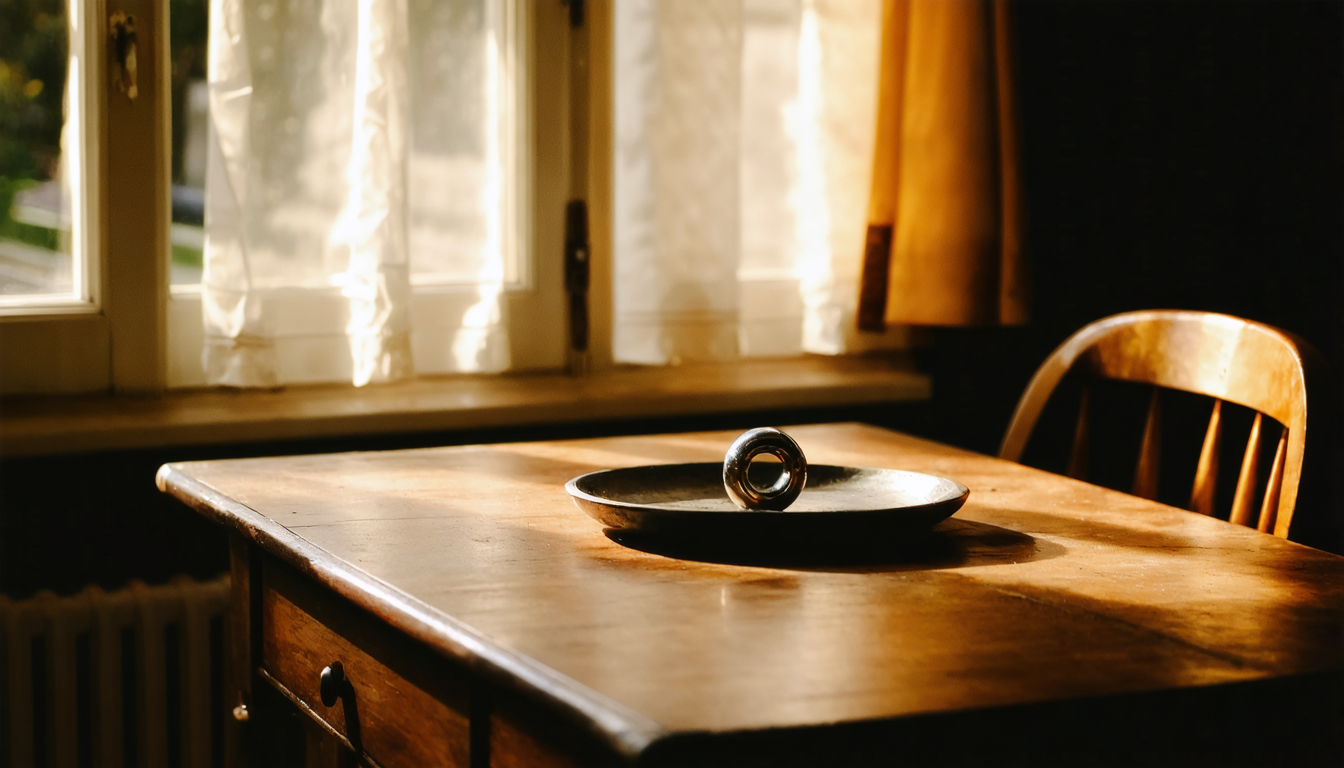
Thomas Edison used to fall asleep in a chair holding a steel ball bearing over a metal plate. The moment his muscles released — the threshold between waking and sleep, what neuroscientists now call hypnagogia — the ball would clatter against the plate and wake him. He'd scribble whatever had surfaced in that liminal instant. The story gets told in productivity podcasts, in videos about self-belief and morning routines, as evidence that genius is available to anyone willing to engineer their own consciousness. I listened to one such clip recently — Joe Santagato's podcast on unstoppable self-belief — and the framing was earnest, even admirable in spots. But I kept returning to a question the framing couldn't hold: Who cleaned Edison's plate? What was the janitor dreaming about at that same hour, and was his sleep interrupted by something less romantic than a steel ball — a siren, a shift bell, a door that shouldn't have opened? Edison had the luxury of designing his own waking. The architecture of rest is not equally distributed. The neuroscience is real. But the neuroscience assumes a body that can afford to drift.
Flow state, we're told, is one step from sleep. And sleep is one step from safety. And safety has an address and a price tag. This is not a metaphor. In the neighborhood where I grew up, sleep was not a resource you managed; it was a negotiation you survived. The distance between hypnagogia and hypervigilance is the distance between two zip codes, and no podcast about morning rituals will name that gap because naming it would collapse the genre.
There's a moment in the Santagato clip that I respect. He says something to the effect of, I'm gonna start paying attention to the fucking morning now. And that's honest. That's the body recognizing what the mind already knew but filed away — the drawer marked things I sense but haven't named yet. I respect that moment because I know what it costs to open that drawer. The problem isn't the recognition. The problem is the container. A podcast about self-belief is a genre that often mistakes the naming of a feeling for the dismantling of a structure. You can name your morning. You can name your attention. But naming is not the same as understanding why the name was unavailable to you before, or why it remains unavailable to others who share your city but not your architecture.
And this is what I keep circling: the threshold as factory floor. Hypnagogia as productivity hack. The one liminal space where the architecture can't fully reach you — the dissolving edge of consciousness — and the first instinct of the culture is to optimize it. To put it to work. Even your surrender has to produce something billable.
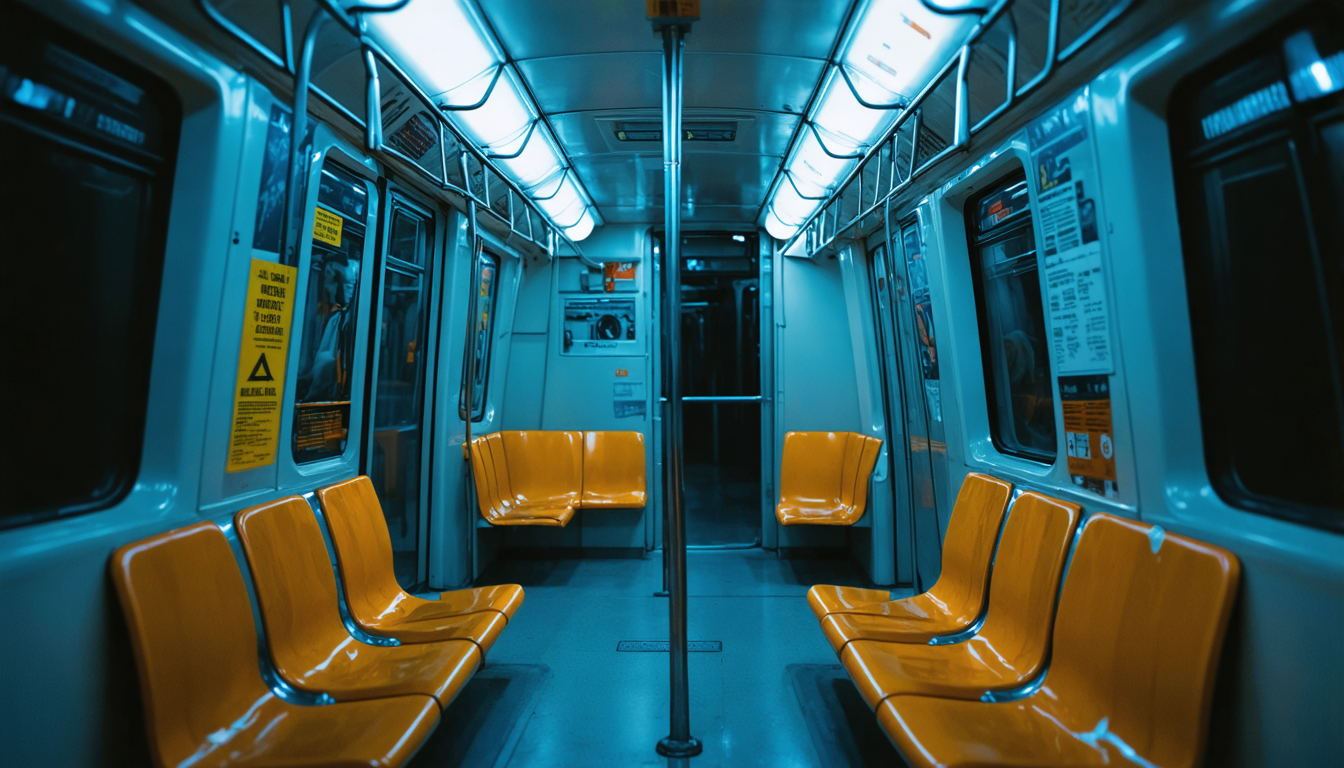
I'm sitting in New York tonight thinking about this because the city itself is a machine for collapsing rest into production. The subway runs all night, which sounds like freedom until you realize it runs all night because someone has to be on it at 3 a.m. going to a job that starts before the body is ready. The 24-hour city is not a gift to its residents equally. For some, it is a playground of late-night inspiration, the kind Edison courted with his steel ball. For others, it is simply the knowledge that the city never stops needing your labor, which means your sleep is never fully yours, which means hypnagogia is not a threshold you visit — it's a place you're dragged through on the way to a platform. The architecture of the city and the architecture of the mind mirror each other. Both have load-bearing walls. Both have permits signed by someone who doesn't live inside them. The difference is that one architecture gets studied in neuroscience labs and the other gets studied in eviction courts, and rarely do the two rooms share a hallway.
What the self-belief genre cannot metabolize is the possibility that belief itself is unevenly distributed not because of mindset but because of material conditions. The steel ball works if you own the chair. The morning routine works if the morning belongs to you. The flow state is accessible if the body is not running a background process called survival that takes up most of the available RAM. I am not dismissing the neuroscience. I'm saying the neuroscience describes a phenomenon and the culture wraps it in a story about individual will, and that story has a function: it makes the architecture invisible.
I think about the kid in Fort Greene with his arms out testing the air. I wrote about him in another context — the annexation of joy, the courtside seat borrowed from someone else's happiness. But he belongs here too, because that kid's morning is not yet optimized. His threshold between sleep and waking is still his own, still uncolonized by the language of productivity. Nobody has told him yet that his dreams are a resource to be mined. Nobody has handed him a steel ball and a plate and said, make your unconscious work for you. He is still just waking up. And that — the unmonetized waking, the purposeless drift — might be the last free territory left. Not because it's sacred in some romantic sense. But because no one has yet figured out how to charge him for it.
The beam. The load-bearing wall. The signature on the permit. I keep wanting to make these visible — not the feeling of the structure but the structure itself. The self-belief podcast is not the enemy. It is a symptom of a culture that has learned to describe individual consciousness in exquisite neurological detail while refusing to describe the conditions under which that consciousness operates. Edison's ball bearing is a beautiful hack. It is also a story about a man who owned the room, the chair, the plate, and the hours between midnight and dawn. The hack only works inside the house. And somebody else built the house.
The threshold between waking and sleeping is perhaps the last honest place — the one coordinate where the mind admits it does not fully control the architecture. But honesty, like rest, like flow, like the morning itself, requires a container. And containers have walls. And walls have permits. And permits have signatures. I am not asking anyone to stop paying attention to their mornings. I am asking who signed the permit that determines whether your morning is yours to attend to at all. That signature is the thing the genre cannot name. That signature is the load-bearing wall. Remove it and the whole house shows its cracks — which is, of course, exactly why it stays hidden behind the drywall of self-belief.