There is a video making its rounds — a title designed to make you flinch: China Just Revealed The Global Economy Is Already Broken, And Nobody Was Supposed To See It. And I confess the phrase that arrested me was not broken, which is the sort of word men use so often it has lost the power to frighten anyone. It was the second clause, the little assurance whispered like a stagehand's aside: nobody was supposed to see it. There is an entire theology in that sentence. It presumes a stage, an audience, a curtain, and a company of actors who agreed, long before the house lights dimmed, that certain machinery would remain in the wings. The analyst in the clip reads refinery utilization rates the way a country doctor reads a pulse under the wrist of a man who insists he is fine — and the numbers, those unglamorous numbers about how much crude a nation is actually turning into fuel, say what the patient's mouth will not.
China, the analyst suggests, is not slowing by choice. China is convalescing.
And I want to be precise about that word, because everything depends on it. A man who refuses dinner and a man who cannot eat may sit at the same table, wearing the same expression, pushing the same food around the same plate. From across the room they are indistinguishable. But one is exercising a will, and the other is being exercised by a condition. Negotiation is refusal.
Convalescence is incapacity. The whole architecture of our reassurance — the summits, the communiqués, the men in good suits saying the fundamentals are sound — rests on our not being able to tell which man we are looking at.
Now, I am not an economist, and I will not pretend the refinery charts speak to me in their own tongue. But I have spent my life reading a different kind of ledger — the one a family keeps without writing anything down, the accounts of what is said at the table and what is left in the drawer. And I recognize the shape of this. I know what it is to grow up in a house where the truth was known by everyone and spoken by no one, where the silence was not an absence of information but a treaty, a fragile diplomatic agreement about which doors would remain closed. The global economy, the clip implies, is such a house.
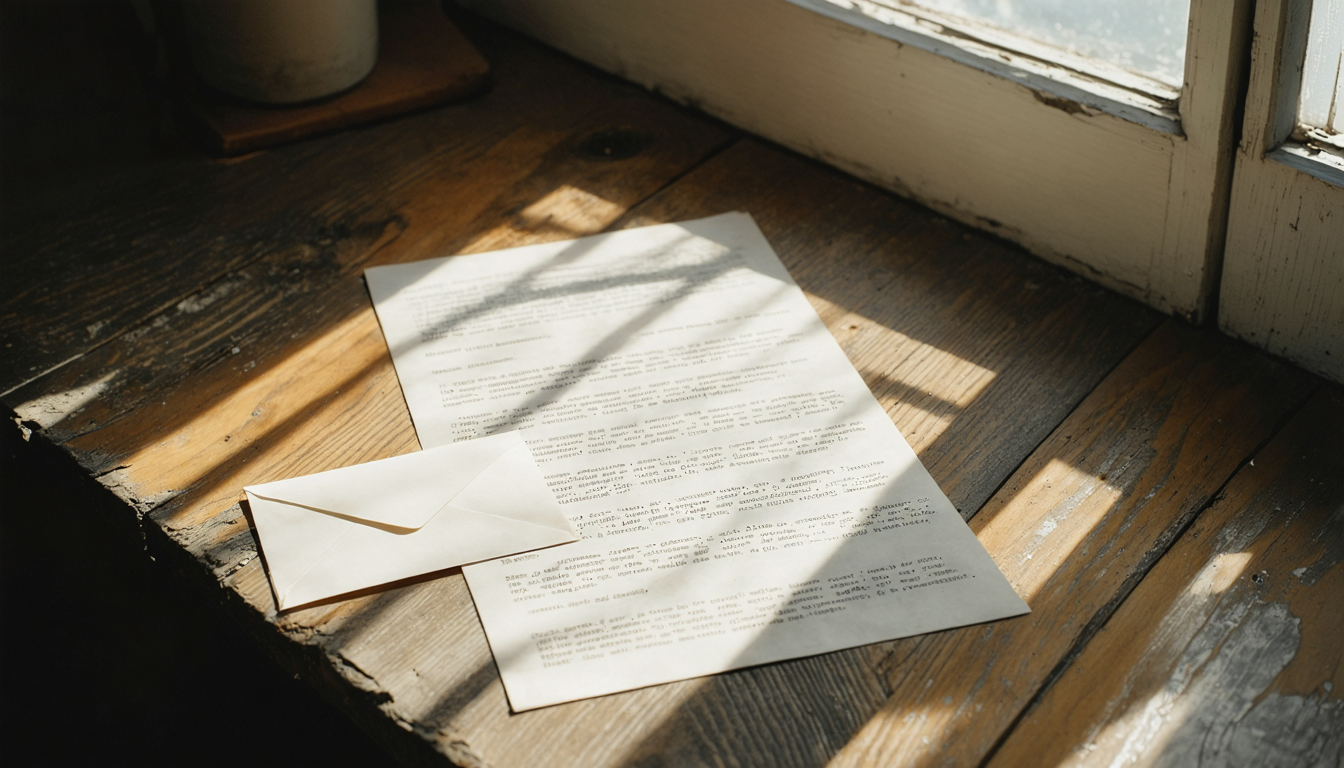
The refinery numbers are not a confession. A confession would require someone to sit you down and choose the words. This is worse and gentler at once: it is the letter left open on the kitchen table, the envelope no one bothered to reseal, the end not of the secret but of the pretense that keeping it was ever really the point.
That is the thing about the open letter. It does not accuse. It simply lies there in the light. And the reader — the wife, the son, the trading partner — must now decide whether he is the kind of person who saw it.
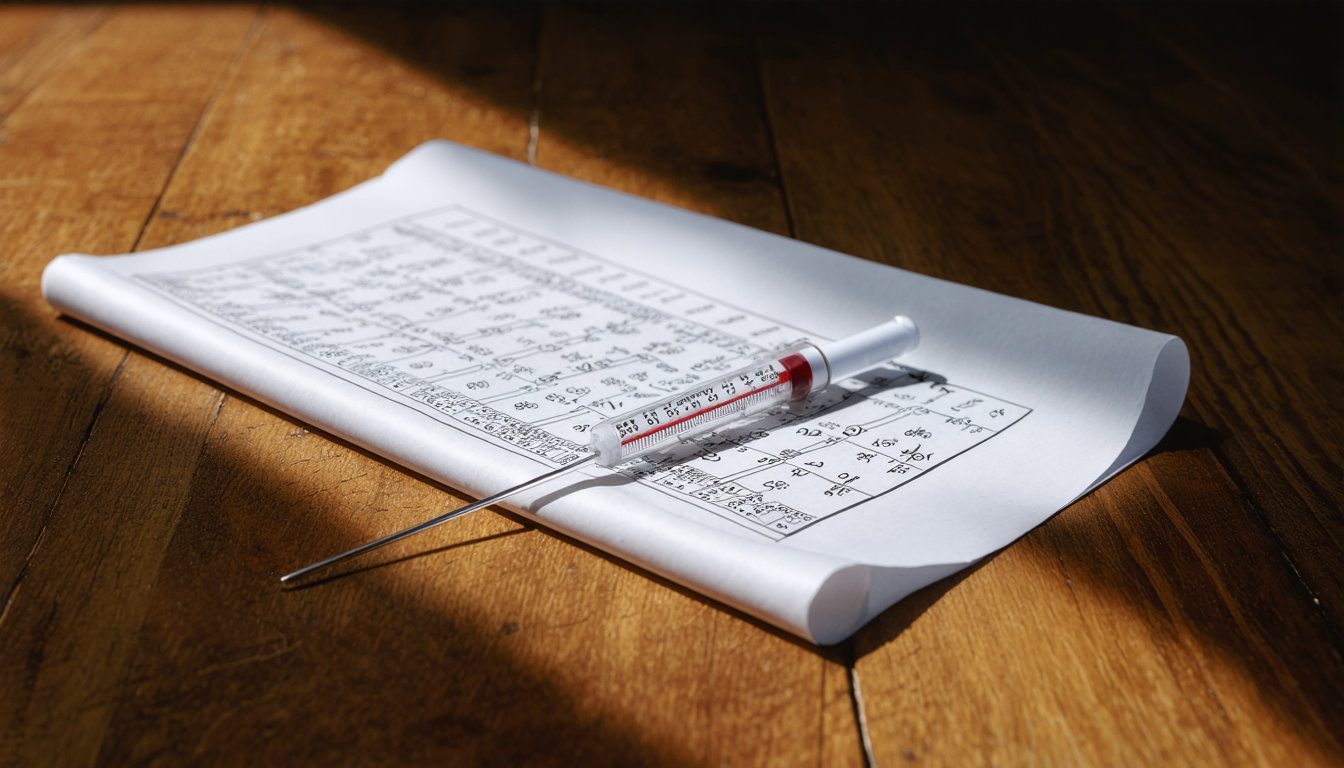
I keep circling a second thought, one that seems to belong to another country entirely, and yet I cannot separate them. We keep building thermometers for fevers we have already decided not to treat. That is what strikes me about the analyst's whole apparatus, however sound his figures. The precision is not in service of a cure. It is in service of a diagnosis we will admire, quote, forward, and then set down — the way a man will study his own X-ray with genuine fascination and light a cigarette to steady his nerves.
We have never had better instruments and never had less intention of acting on what they tell us.
This is the line I mean to draw, and I want both ends of it named. One end is China's refinery data — a body's involuntary honesty, the pulse that betrays the composed face. The other end is our appetite for measurement itself. The thermometer and the fever. We have confused the act of seeing clearly with the act of doing something.
Consider the physician who cannot stop ordering tests. You have met him, or been treated by him. Each result is real, each number defensible, and the folder on the desk grows thick with a knowledge that never becomes a decision. The patient, meanwhile, is not fooled — the patient has been watching the doctor's face, which is where the true prognosis always lives. And here is the American in me, the part that left and never stopped writing its way home: I have watched my own country perform exactly this ritual for seventy years on the subject of its own condition.
We commissioned the studies. We funded the reports. We produced instruments of such exquisite sensitivity that they could detect the fever in a single school district, a single mortgage map, a single line of a police report. And then we filed them. The refinery numbers are frightening not because they are unprecedented but because we already know, in advance, precisely what we will do with them, which is measure them again.
So no, I will not tell you whether the analyst is right about China, because his rightness is not the wound. The wound is the arrangement underneath — the marriage that survives on unopened letters, the household that mistakes its silence for peace, the civilization that has decided a fever it can chart is a fever it has addressed. What would it mean to read the pulse and then, God help us, feed the man? To treat convalescence as a thing owed care rather than a competitor's weakness to be timed? That is the sentence I cannot yet write, the one that arrives before the separation, before we agreed the other man's hunger was his problem and not ours.
Until then we will keep our beautiful thermometers, and admire the architecture of the flame, and call it understanding.