
Dr. Alan Castel wants to help me remember. The lecture is gentle, the Latin is elegant, the promise is that cognition improves at any age. I listened to all of it in a hot Paris room the night after the jets went over, and I could not stop thinking about a woman falling.
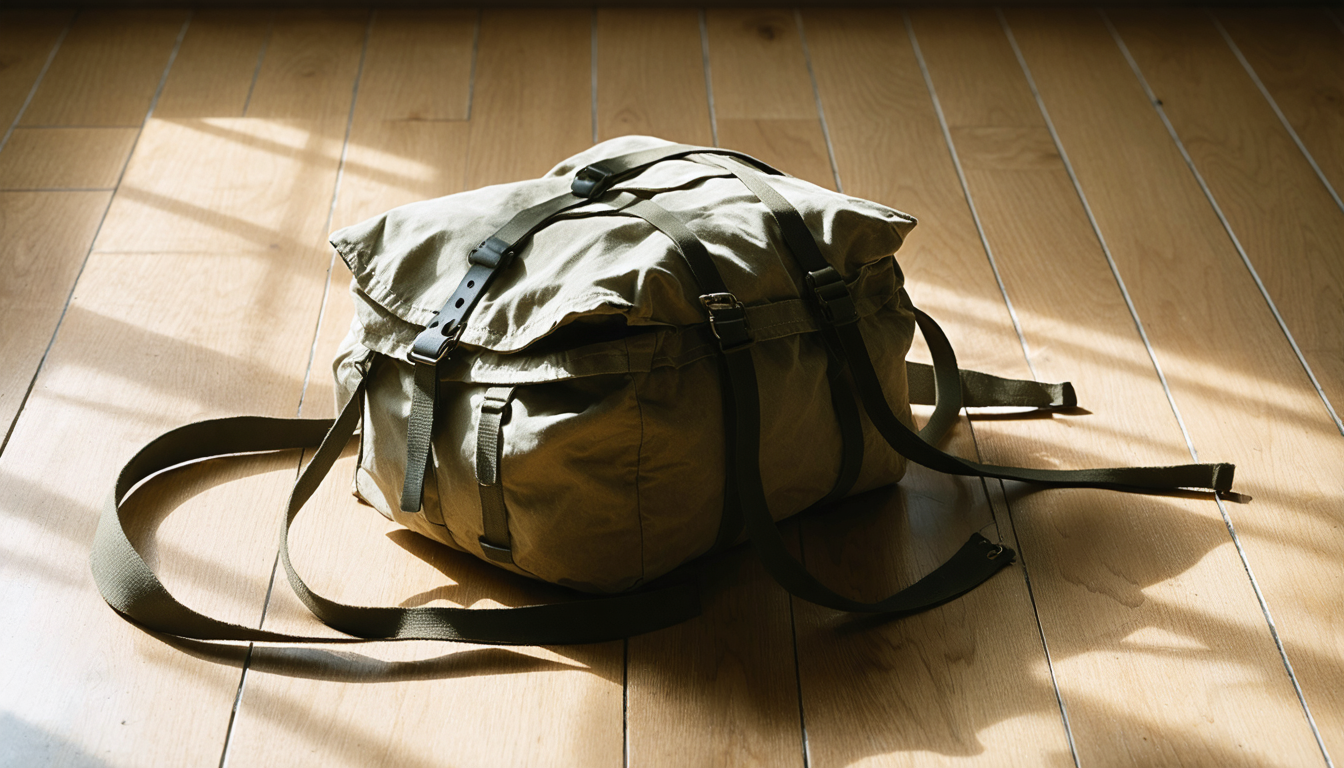
You know the story even if you have never heard it. Someone under duress reaches for the pull cord — the strap her hands have found ten thousand times — and it is not there. The pack she wore was borrowed, and the borrowed pack keeps its cords elsewhere. She knew. Somewhere beneath the routine, she knew.
But knowing could not outrun the hand. That is not a failure of memory. That is memory doing precisely what it was built to do, faithfully, into the ground.
This is the word the science circles without saying: automaticity. Dr. Castel calls it a strength — the mind offloading the practiced thing so the conscious self is free for the novel one. He is right, and that is the trouble. I have written about this all my life without the vocabulary. I called it identity, which is only the name we give to habits we can no longer distinguish from ourselves.
Now watch how carefully I must move, because this is where the metaphor wants to seduce me into thinking I have made an argument. A parachute is a machine; a nation is people who choose. But the reach is real in both, and here is the specific thing they share: the practiced gesture arrives before deliberation, wearing deliberation's clothes. When a police officer's hand goes to the holster in the half-second before the mind has read the situation, that is not hatred deciding — hatred would at least be a decision. It is training so old it has become tissue.
The reflex was installed long before the man was born and drilled into him by a country that then calls the drilling instinct, calls the instinct fear, and calls the fear reasonable. The most rehearsed gesture is the one you can no longer see yourself perform. That is what the memory researchers touch and then set gently down.

So here I push against you, Dr. Castel, with something like gratitude. You will study the body falling and produce a protocol — improve the response time, drill the reach, strengthen the recall. What you will not ask is who took the woman's own gear, and why, and what arrangement left the familiar equipment out of reach. The American answer is always to retrain the individual and never to indict the room. But someone packed that chute.
Someone decided where the cord would live, and that person had a name, an office, a payroll. Better memory only makes the wrong reach quicker. I want the sentence that names the hand — not to comfort me, but to make the deliberate look deliberate again, so that we are arguing about a choice and not consoling ourselves about an accident.