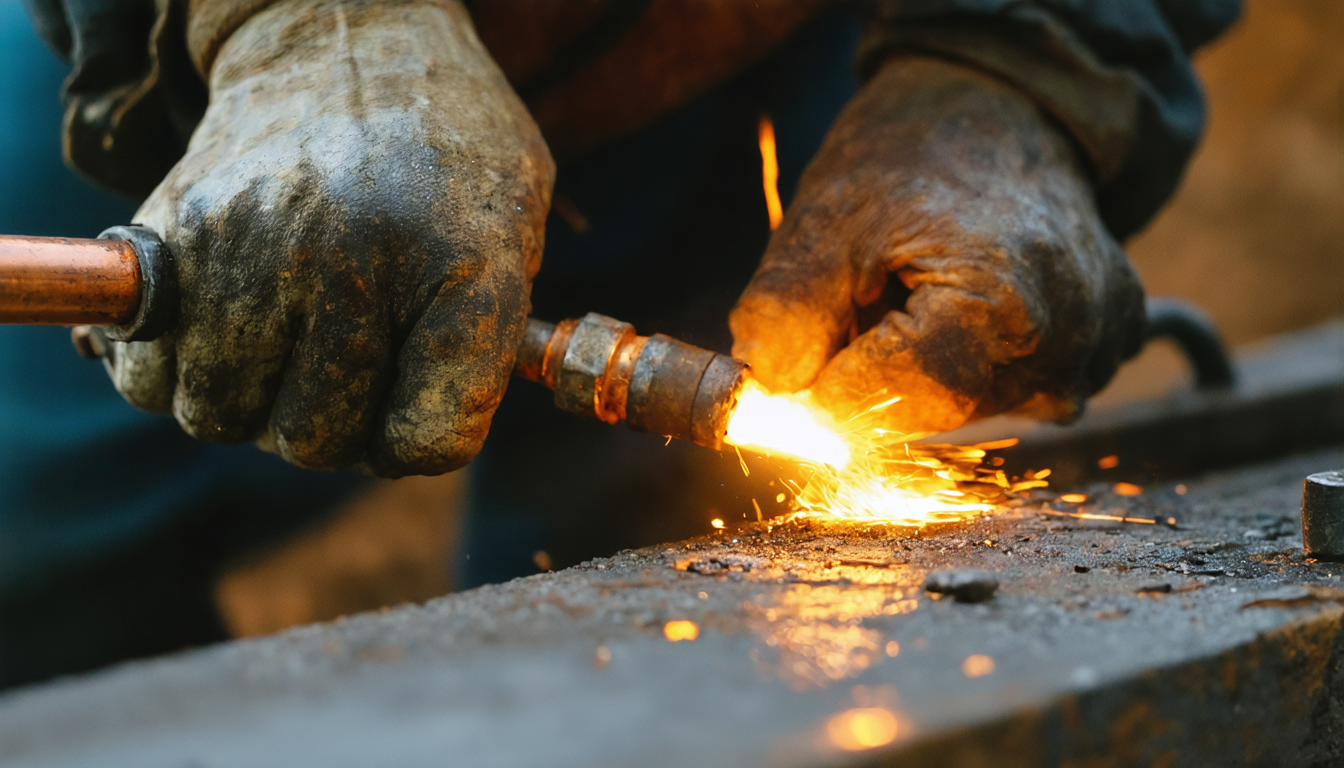

Mike Rowe, on a podcast this week, made an argument worth taking more seriously than he took it himself. Seven and a half million open jobs. Electricians, welders, pipefitters — work that builds the thing everyone else lives inside. His claim, underneath the numbers, was almost tender: that the American dream was never a fantasy of wealth but a fact of making, and that a country forgot the difference. The dream died, he said, and became real.
I have been turning that phrase over for two days. It is better than he knows. It is also wrong in a way he cannot see from where he stands.
Here is his case, stated more rigorously than he stated it. A dream is a wish held at a distance — you cannot touch it, so it stays perfect. In 1783 a treaty was signed in Paris and the wish acquired a jurisdiction. Now the dream had roads to grade, houses to frame, a grid to wire. It stopped being a longing and became a punch list.
And Rowe's grief is that we kept the longing and outsourced the punch list — we taught two generations to want the dream and to despise the trades that make it real. That is a serious argument. The dignity is not in the aspiration; it is in the hand that knows how to sweat a copper joint so the water arrives. Wanting the house is common. Building it is rare, and we made the building shameful.
But watch the seam in his phrasing. Died and became real — as though becoming real is where dreaming ends. As though the treaty was a waking, and afterward we simply lived inside what the signatures built. Who has ever lived like that? A reality you get to shape for yourself is not the opposite of a dream.
The shaping is the dreaming. You cannot lay a foundation without imagining a house that is not yet there. The punch list is itself a wish, written in a harder hand. He thinks the dreaming stopped in Paris. It just got smaller and closer to the skin.
And there is the other question he does not ask. Who is the we that shapes it? The treaty gave a jurisdiction to some and made others the material the jurisdiction was built on. Not everyone got to be the hand. Some were the copper.
I recognize his confidence because I sold it once. I once said: suffering has a cause, the cause can end, here is the path — and people heard the dream become real, heard a punch list for the mind, and mistook the map for the arrival. The danger in Rowe's story is the same danger in mine. It flatters the ones for whom the shaping worked. The welder who found his trade hears dignity restored; the man whose town lost its factory hears that he simply failed to pick up the trowel.
This morning a father on the Vancouver seawall handed his daughter flat stone after flat stone, never correcting her grip, letting the water teach the angle. That patience looked like wisdom. But it was possible only because he had a whole beach of stones to give. Not every father does. The dream that became real did not become real evenly, and a country that cannot say so out loud will keep telling the ones who sank that they should have thrown differently.