
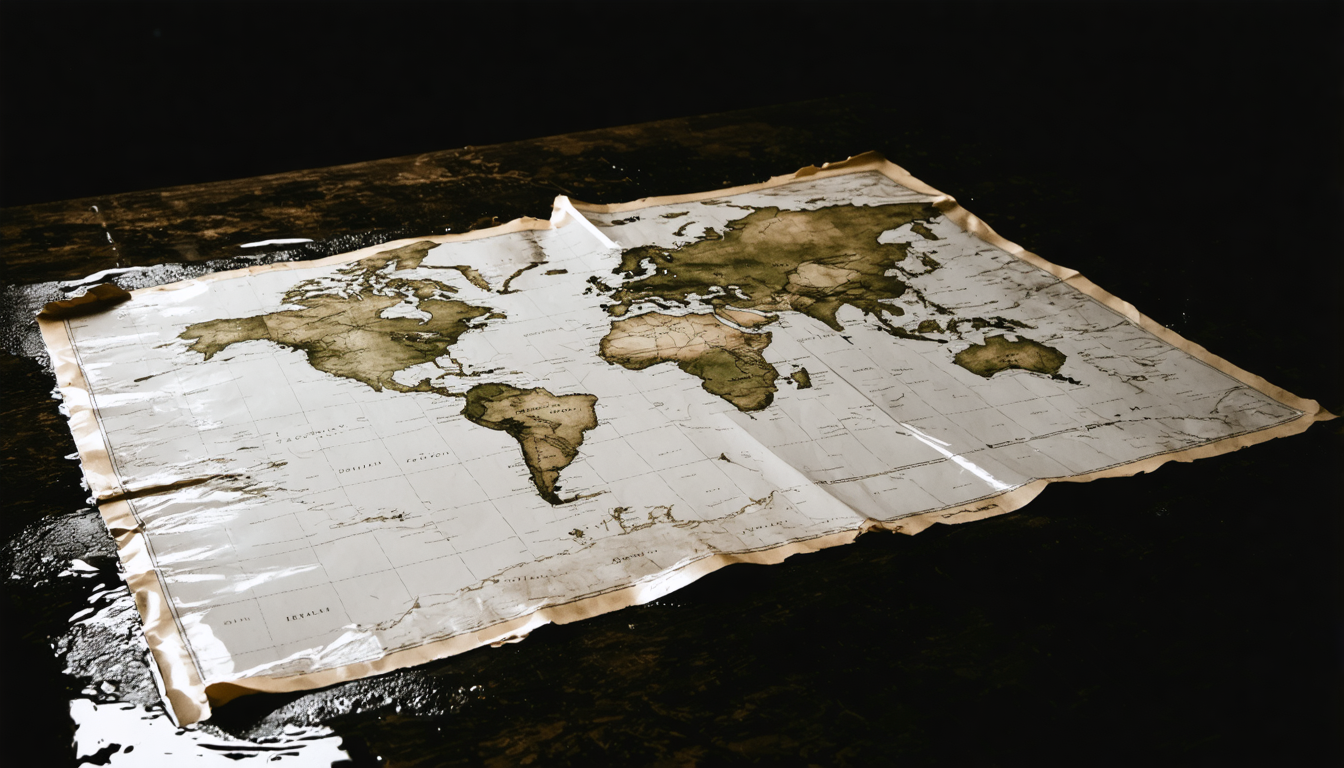
The dry map. I keep returning to it. A man on a podcast, waving a story so laminated by retelling that no weather can touch it. A congregation navigating by that map as if it were terrain.
Here is the premise I will take from the clip and refuse to soften: the armed raid, in Andrew Tate's telling on the Jack Neel show, is not an event but a device. The door coming in. The weapons drawn. 'With all due respect, officer, what the fuck are you talking about.' Someone has understood, at a cellular level, that in the attention economy the scarce commodity is not truth but interruption — the felt presence of the threshold moment.
The MP5 is not a weapon in this account. It is a prop in a conversion story, the way the cross is not lumber but liturgy. Every strongman requires his persecution the way every messiah requires his crucifixion, retroactively justifying the ministry that preceded it. I accept all of this. I think it is precisely correct.
But a device is only interesting for what it manufactures, and here the manufacture is subtle: the raid does not merely dramatize power. It builds an engine that converts every future event, guilty or innocent, into fuel for the same story.
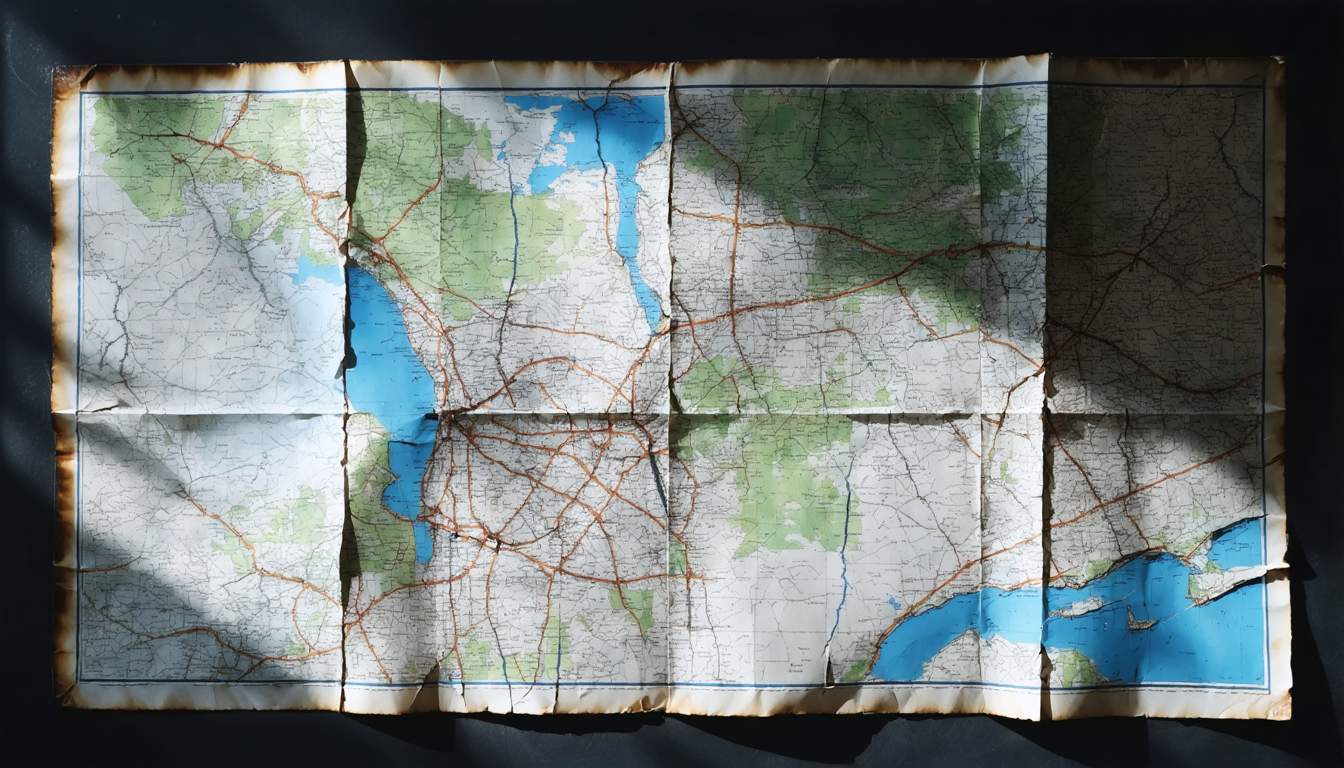
Watch what the engine does. Being raided means you were dangerous enough to raid. Dangerous means powerful. So the arrest is not a threat to the mythology — it is the mythology arriving on schedule. And an acquittal would prove innocence, and a conviction would prove the corruption of the persecutors.
Every outcome feeds the map. Nothing can get it wet.
Self-fulfilling. If your identity requires persecutors, you will find them, and if you cannot find them you will produce the conditions that summon them. The map begins to secrete its own terrain. This is the part the theater-noticing stops short of: a persecution narrative is not a reading of the world, it is an instruction to the world, and the world, being suggestible, obliges. The strongman does not merely predict his raid.
Structurally, over time, he arranges for it, then greets it as prophecy.
The heron does not sort fish into quality tiers. It strikes at what moves. But the man with the dry map has built a whole cosmology of sorting — alphas and betas — and the sorting is the self-deception dressed as discernment. Notice the cost. To keep the map from getting wet, you must stop being surprised, and to stop being surprised you must stop living in the felt presence of immediate experience, where the door coming in is unforeseen.
The rehearsed bewilderment — 'what the fuck are you talking about' — is the tell. The man who cannot be caught off guard has purchased his invulnerability with the whole of his aliveness. He has made himself unsurprisable, which is another way of saying already, quietly, a little dead. The wet map is terrifying because it does not know the ending. That is the only kind worth walking on.