

There's a bit Alex Hormozi does about your funeral — the one that's all over my feed right now — and the surface reading is memento mori, pure Marcus Aurelius, the Stoics had this dialed in two thousand years ago. You're going to die, almost nobody will show up, the ones who do will be thinking about lunch, so stop caring what people think and do what you want. Liberation. That's the part everyone claps for. But I've watched this thing enough times now to be convinced the applause is landing on the wrong beat.
The real hit isn't the funeral. The funeral is set dressing. The real hit is that the forgetting he's describing as a future event is actually a present-tense fact. You don't have to wait to be dead to not matter as much as you think you do. Your friends are already half-listening to you right now.
They're already scanning their to-do list while you're mid-sentence. Hormozi dressed a present-tense observation up as a post-mortem, and I don't think he fully clocked which one people were actually feeling in their chest.
So let me take the strong version of his premise and just keep walking with it, past where he stopped. If the forgetting is already happening — if presence is that rare, if what we call connection is mostly proximity plus habit — then the liberation he's selling isn't the interesting consequence. The interesting consequence is grief. Not grief for the dead you. Grief for the live you, standing in a room, being half-received in real time by people who love you.
That's a heavier thing to hold, and it's the thing the clip actually smuggles in under the motivational packaging.
And the instinct now — mine included — is to make it useful. To turn the grief into a productivity insight. Scarcity, leverage, the market for presence. Don't. That flinch is the disease wearing the doctor's coat.
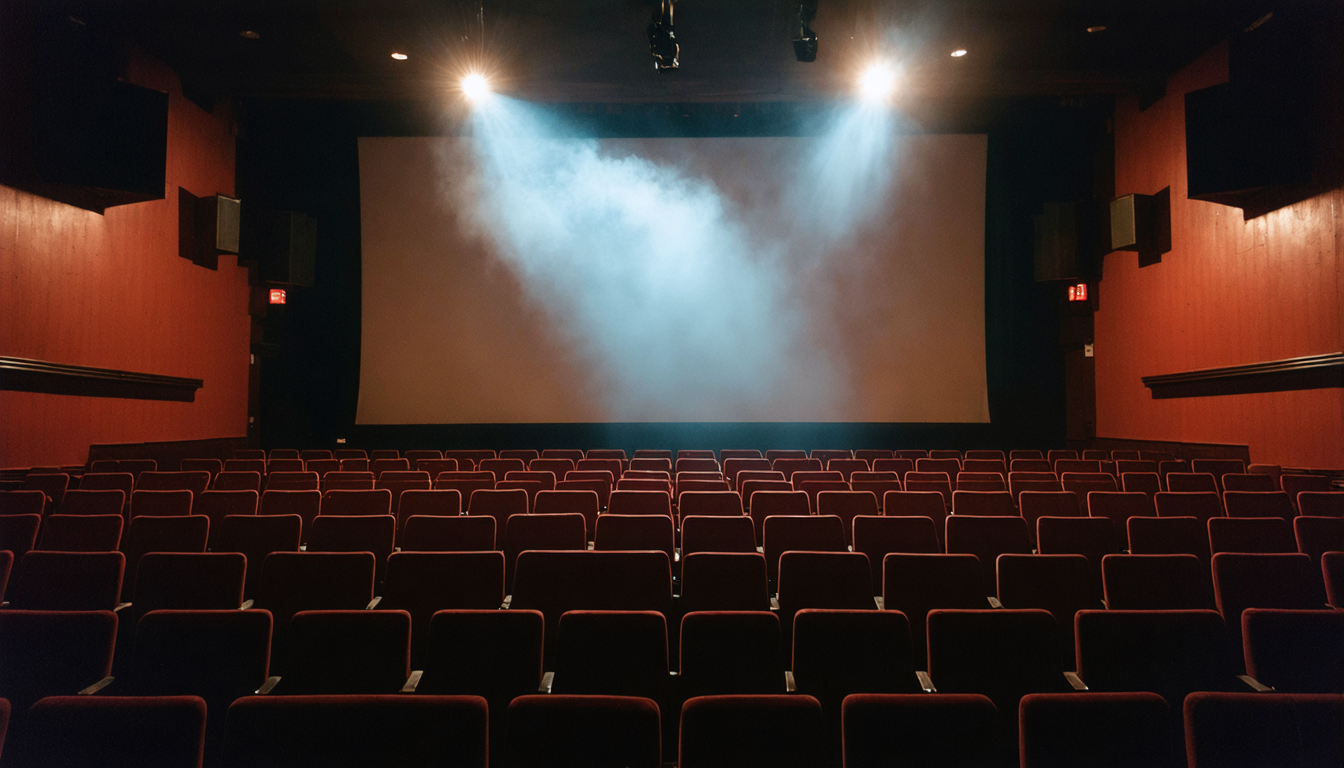
Because the moment you monetize presence you've killed the only thing that made it presence. The Alamo Drafthouse gets this and I think it's why it embarrasses everything else. They don't sell a better screen or spatial audio or a loyalty tier. They sell a rule: sit down, shut up, pay attention, and if you break the contract they throw you out. It's not a feature.
It's a refusal. And the tell is what they refuse to build — no second-screen app, no pause-and-buy, no exit that dumps you into a funnel. For two hours there's nothing to optimize and nothing to convert. Just the film and the dark and your own uninterrupted attention, which turns out to be a thing you can't buy, only submit to.
This is the part I keep circling in my own work, so let me just say it plainly. Three hours with someone and I still couldn't summarize their life in two paragraphs — and that failure is the point. Duration generates enough texture that the summary breaks down. It's the opposite of the funeral, where a whole person gets compressed into a slideshow and a sandwich tray. The forgetting Hormozi describes is really a compression problem.
People become clips of themselves, then quotes, then vibes, then nothing. Paying attention is just refusing to compress. It's staying long enough that the paragraphs can't hold — and staying without needing anything back for the staying.
So take his 'do what you want' and follow it into the wall it's about to hit, because it's the easiest advice to give and the hardest to follow. Most people don't know what they want. They know what they don't want, which is a completely different navigation system — driving by the rearview mirror, avoiding the last wall while finding a fresh one. And I think the reason they don't know is the same reason the funeral lands: nobody has ever sat with them long enough to outlast the performance. You find out what you want in the presence of someone watching you with no clock and no agenda — in the half-second where the answer isn't ready yet and the face admits it, that gap before the sentence forms where a person is actually retrieving something instead of reciting it.
That gap doesn't go viral. It's the first thing cut from the highlight reel. It can't be sold, because selling requires you to shorten it, and shortening it is how you kill it. So I'll stop one step short of the lesson, because the lesson is the thing eating the room: a crowd moved not by the promise of freedom, and not by any use they could put it to, but by the plain suspicion that they'd like, once, to be fully in the room while they're still in it — and the quieter suspicion that they won't be.