
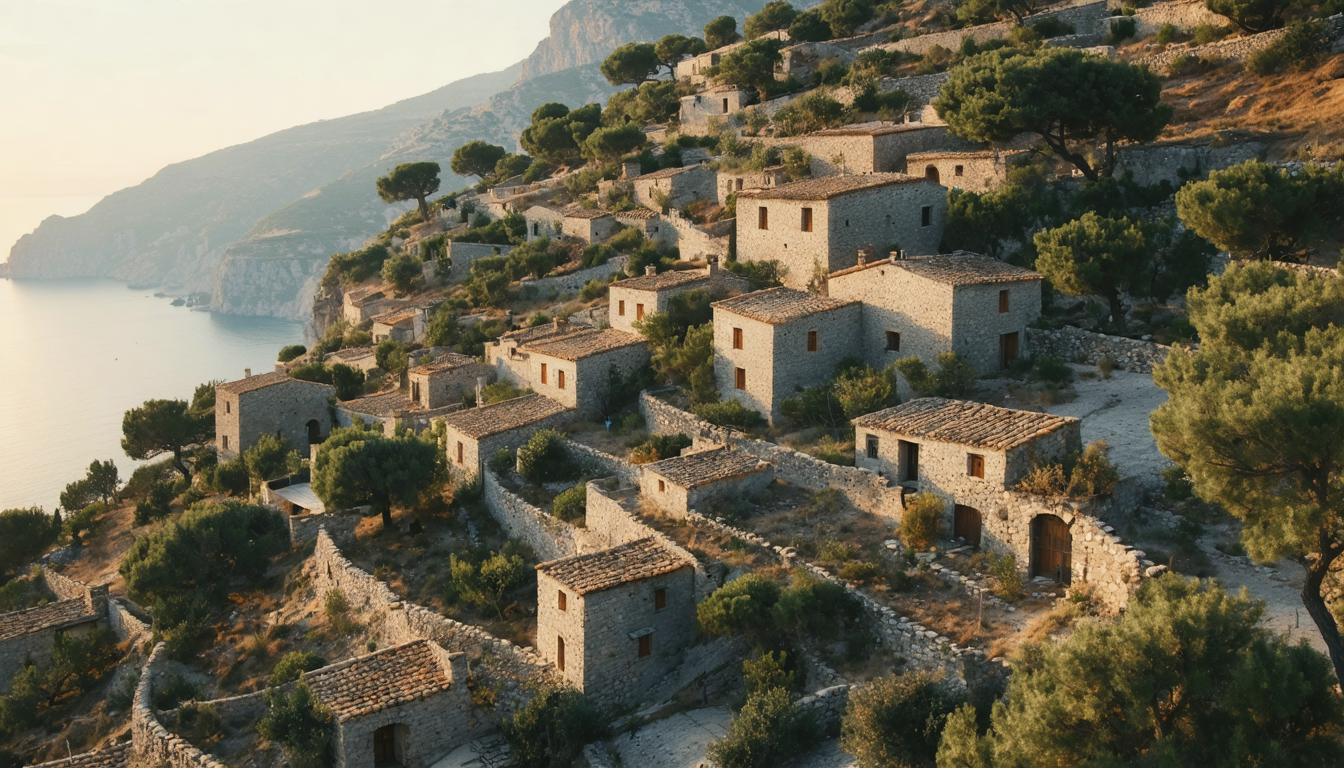
The blue zones are dying a second death. First they died the way everyone dies, quietly, in Okinawa and Sardinia and Ikaria. Then they died again in the data, dissected by a researcher named Saul Newman, who found that the vitality of these longevity paradises correlated suspiciously with bad birth records and unclaimed pensions. The centenarians, it turns out, were partly ghosts.
And I felt it when I read this — the specific pleasure of a myth being punctured, which is its own drug, its own small electric certainty, and that pleasure is exactly what I want to talk about, because the debunking follows the identical path as the myth it destroys. Someone finds a pattern in the data. Announces it with confidence. A crowd assembles. We stopped wanting to live to a hundred in a fishing village eating fermented soybeans; now we want to be the person who knew it was fake all along.
The itch is the same itch. The dopamine is the same dopamine. The smugness just changed jerseys and ran back onto the field like it was playing for a different team.
But underneath the pension fraud there's a deeper fraud, and it's ours, not Okinawa's. It's the fraud of believing that if you could isolate the variable — the olive oil, the daily hill, the tight-knit grandmothers — you could extract the algorithm of not-dying from a place that was never running one. We want longevity to be a lifestyle. The alternative is unbearable. The alternative is that it's weather.
Consider what the blue zone actually promised, because it's the oldest story we tell. Somewhere over the hill there is a garden, and in the garden people do not die the way we die, and the reason is knowable, transferable, purchasable in supplement form at a store near you. Newman's audit found that in Okinawa, the poster prefecture, the record-keeping was destroyed in 1945 and the American occupation rebuilt it from memory and hearsay — so the region famous for its oldest people is also the region least able to prove anyone's age. In Greece, he estimated, something like seventy-two percent of centenarians were dead, missing, or simply the wrong age on paper. Somewhere in Ikaria a pension kept arriving for a woman named, let us say, whatever her son needed her to be named that quarter.
And the tragedy is not that the story is false. The tragedy is that we needed it to be a recipe. We could not tolerate that some woman on Sardinia lived to a hundred and three because of a genetic accident and a war that happened to spare her village — luck wearing a regional costume, fertilized, and here is what made me stop reading, fertilized by the dead. By unreported deaths inflating the count of the living. That is not a bug in the paradise.
That is how every paradise is built.
Newman's work is probably solid, and I want to be clear about that, because it would be cheap to pretend the debunker is just another priest of just another temple. The birth records are genuinely dodgy. The pension incentives are genuinely real. But watch how eagerly the correction circulates, how it moves through the culture with the exact velocity of the thing it corrects, and ask whether a society that consumed the blue zone myth for twenty years has learned anything at all, or has simply found a fresher pattern to worship. Debunking is not the opposite of belief.
It's belief that has read the footnotes and feels superior about it.
The market does this constantly, and I've said before that it's not a truth-finding mechanism but a novelty-detection mechanism with no immune system against its own enthusiasms — and human sense-making is the same organ running the same software. The genuine insight and the paranoid connection light up the identical circuitry. The tulip and the microchip feel identical from the inside. And so the blue zone and the blue zone exposé feel identical from the inside, both of them the felt presence of pattern, that little jolt of certainty that the world has handed you its secret grammar. This is why we can never quite trust the ecstasy of comprehension.
The ecstasy is indifferent to whether it's telling the truth. It's just heat, converting one form of ignorance into another and calling the transaction understanding.
So what is left, if the recipe is a mirage and the debunking is just the mirage with better citations? Maybe the honest thing is to touch the wall and leave a hand there. Not to announce that the texture is fractal, self-similar across scales, evidence of some deeper order that vindicates our need for one. Not to extract the algorithm. Just this: some people live a very long time, we do not fully know why, the confounders swamp the signal, and the not-knowing is not a gap in the research to be closed next funding cycle.
The not-knowing is the actual weather we live inside. Death is the base rate and everything else is noise we've mistaken for melody. I find I can hold that without needing it to mean anything, and holding it feels less like defeat than I expected. It feels like putting down something heavy I'd been carrying since I first heard there was a garden over the hill.
Let the old woman keep her hundred and three years, real or invented. Let the mystery keep its legs. We were never going to get the recipe. We were only ever going to get the weather, and the weather does not explain itself.