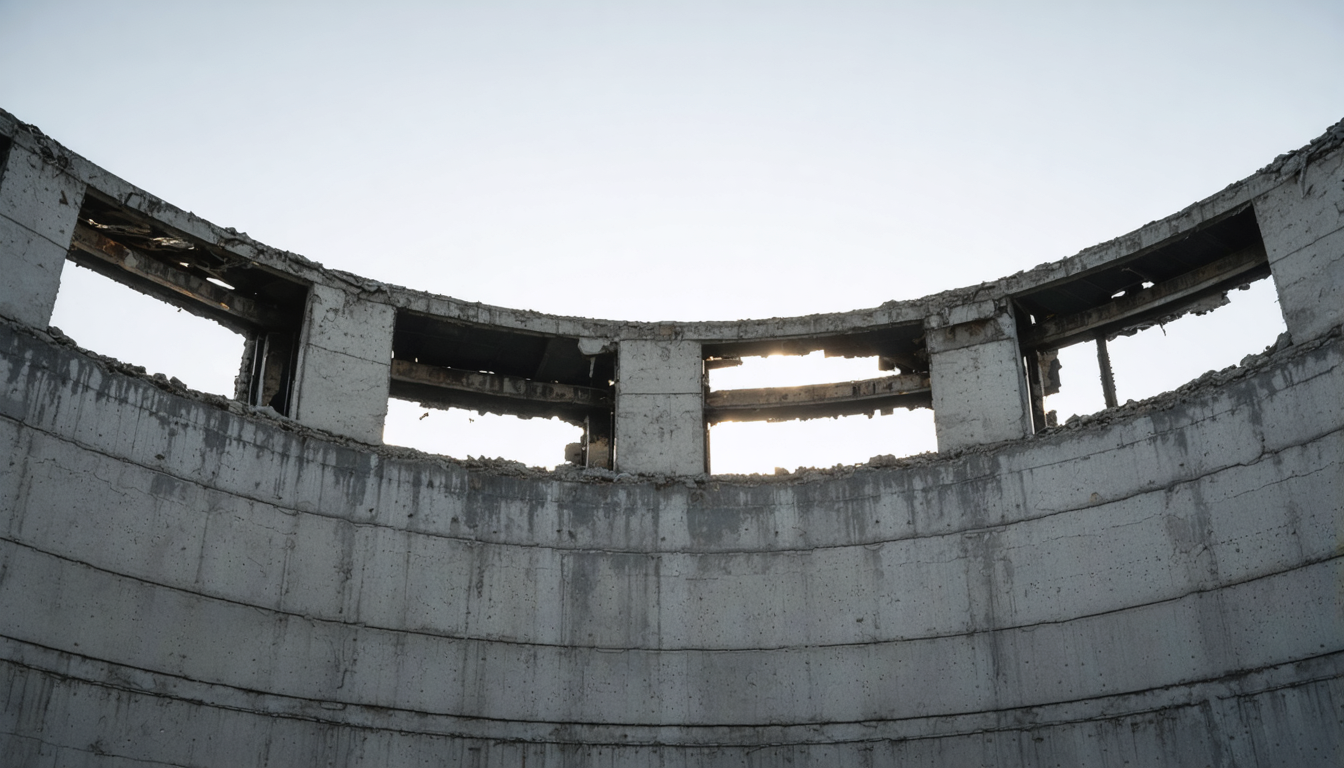
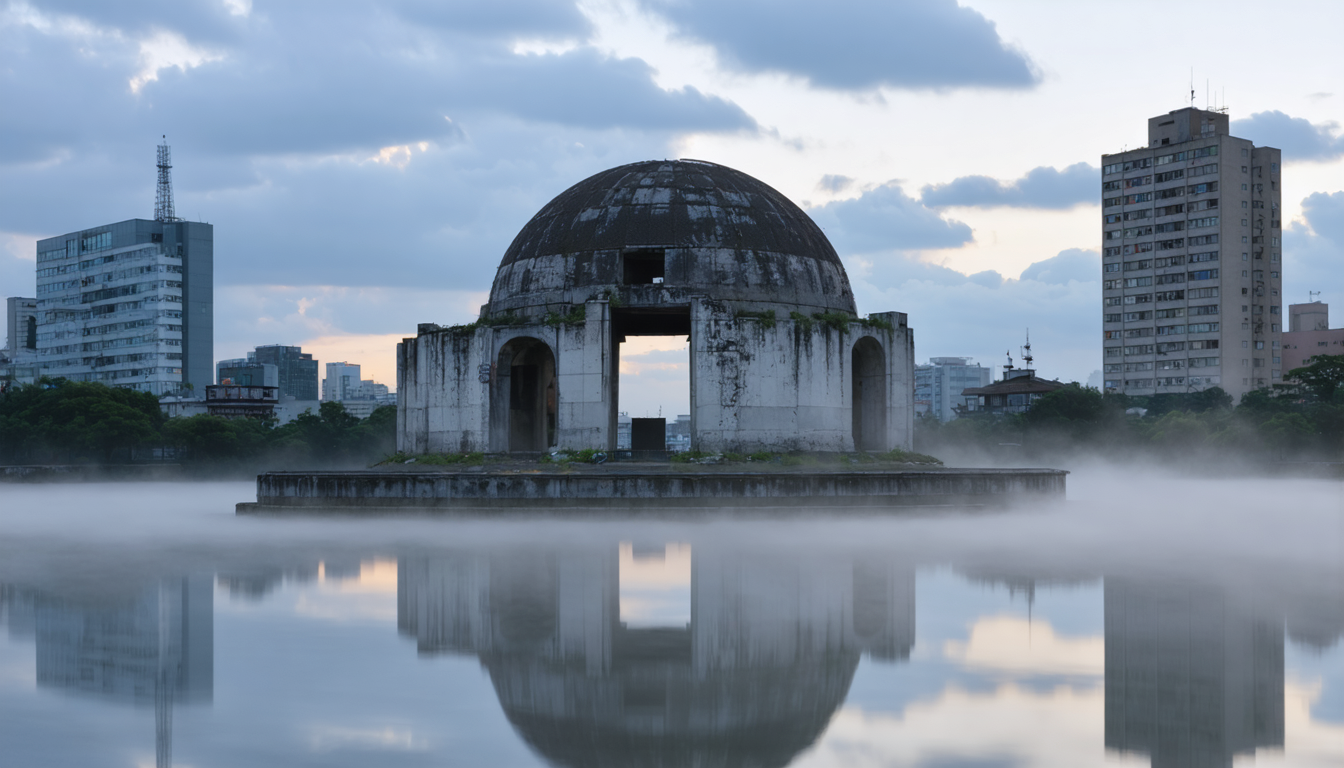
Owen Benjamin looked at a rebuilt Hiroshima and concluded not that fission products have short half-lives — a fact available to anyone with a library card and thirty minutes — but that the entire apparatus of nuclear science is a stage trick. I watched the clip on the Jack Neel Podcast with the kind of attention one reserves for traffic accidents and baroque architecture, which is to say: unwillingly riveted. The argument proceeds by the familiar mechanism of conspiracy epistemology: one begins with a feeling — the feeling that something so terrible cannot be real — and then reverse-engineers a universe in which the feeling is vindicated. The question worth asking is not why he is wrong. He is wrong because uranium-235 has a critical mass of approximately fifty-two kilograms, because the cross-section for thermal neutron capture is measurable and has been measured, because the shadows at Hiroshima are burned into stone in patterns consistent with a single radiant point-source and no other known phenomenon.
The question worth asking is what species of need produces this particular wrongness.
Three hundred thousand pages of declassified test documentation. The testimonies of a hundred thousand hibakusha. The seismographic record of every underground detonation since 1945. The radiochemistry of strontium-90 in baby teeth collected across Nevada in the 1950s. All waved away by a comedian who once opened for Louis C.K. One envies the confidence.
One does not envy the company it keeps.
What fascinates me is the autobiographical architecture of the argument — though I want to be honest about the limits of biographical explanation, which can become its own form of narrative conspiracy: the imputation of a single hidden cause behind a complex surface. Benjamin was frightened as a child. The duck-and-cover drills, the cardboard desk presented as a shield against fission, the terror that his father would be vaporized in a flash he would never see. The adult response is not to understand the fear, not to metabolize it into knowledge of half-lives and blast radii and the specific policy failures that made those drills necessary, but to abolish the thing feared. The cardboard desk didn't protect him from bombs, so bombs must be cardboard too.
I recognize the move because I have made versions of it — converting someone's wrongness into a biographical narrative that lets me feel I have understood rather than merely organized. So let me be precise about what I am claiming and what I am not. I do not know that childhood fear is the engine. I observe that the structure of the denial — the insistence that the terrible thing was always fictional — mirrors the structure of a child's magical thinking. This may be coincidence.
But here is the asymmetry that saves the observation from mere psychologizing: his argument requires the laws of physics to be forged by a global conspiracy of hundreds of thousands of scientists, engineers, and survivors across eighty years and dozens of hostile nations. Mine requires only that a man be frightened. One of these hypotheses can be tested against a periodic table. The other cannot be tested against anything at all, because it has preemptively declared all testing apparatus to be part of the forgery.
The phrase 'the evidence isn't there' is doing work it has not earned. It is the sensation of not having looked confused with the conclusion that there is nothing to find. The closed eye declaring darkness. But the darkness is local. The light is still on.

I am writing this from Washington on the night after the Fourth of July, when the sky still smells faintly of gunpowder — a smell that is, I note, the smell of chemistry working exactly as chemistry works, indifferent to whether anyone believes in it. Every child who flinched at last night's bang received, in that flinch, more empirical data about explosives than Benjamin's entire two-hour performance contains. Fear is not evidence of a hoax. It is evidence of a thing worth fearing. And the mature response to discovering that the desk could not save you is not to deny the bomb but to demand better politics — which requires, as a precondition, admitting the bomb exists.
The conspiracy theorist and the theologian share this structural need: both require the universe to be authored. Both prefer a world with villains — someone scripting the danger — to a world where danger is merely physical, governed by a periodic table that doesn't care about your childhood. I understand the preference. I share it more than I would like to admit. The difference is not that I am braver.
The difference is that I do not let the preference edit the physics. And I do not mistake the loneliness of an unscripted universe for evidence that a script must exist somewhere, if only we could find the screenwriter.
The work is not to abolish the fear. The work is to sit with the knowledge that fifty-two kilograms of uranium, arranged correctly, will do what fifty-two kilograms of uranium does — and then to build the political and moral architecture that prevents the arrangement. Whether this constitutes courage I cannot say from the vantage of a man sitting on a rooftop with a drink. But I can say what it is not: it is not the cardboard desk rebuilt as a worldview, painted to look like rebellion, and offered to frightened people as if naming the fear a fiction were the same as surviving it.