
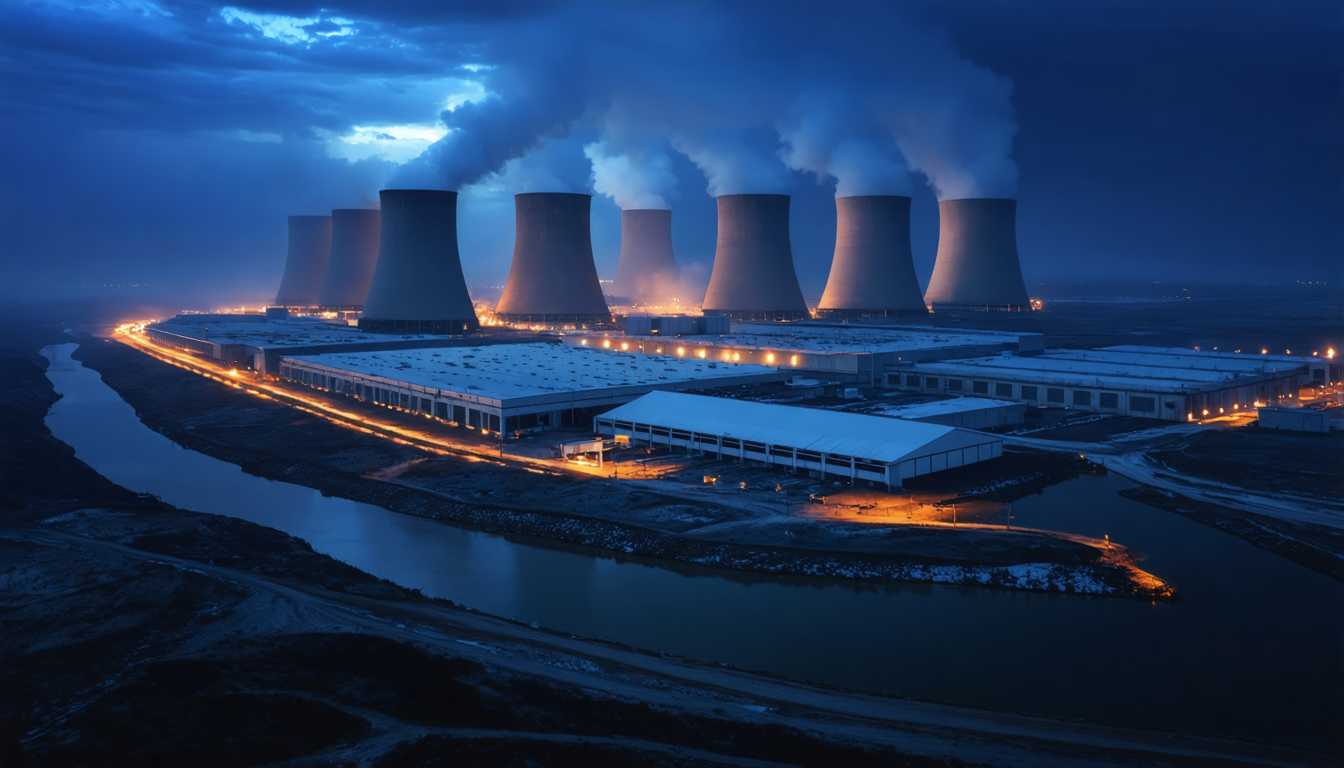
Two Harvard dropouts raised eight hundred million dollars to build plants that go out and make tokens. I keep returning to that phrase — 'go out and make' — as if the building itself were a creature with appetite, as if scale were hunger wearing an engineering degree. The old ironworks at least had the decency to rust. A steel mill, given enough neglect, returns to the earth that fed it ore. But a trillion-dollar temple dedicated to remembering — what does it return to?
The pitch is familiar by now: economies of scale don't stop. Compute gets cheaper. Cost per token falls. The curve bends down and to the right and everyone in the room nods because the curve is beautiful and the room is air-conditioned and no one in it has ever been a river. But I want to hold two ledgers open at once.
The first ledger — the one the investors read — tracks the cost per token declining. Good. Fine. The second ledger is specific. A single GPT-4 training run consumed an estimated fifty gigawatt-hours — enough to power every home in Vancouver for six weeks.
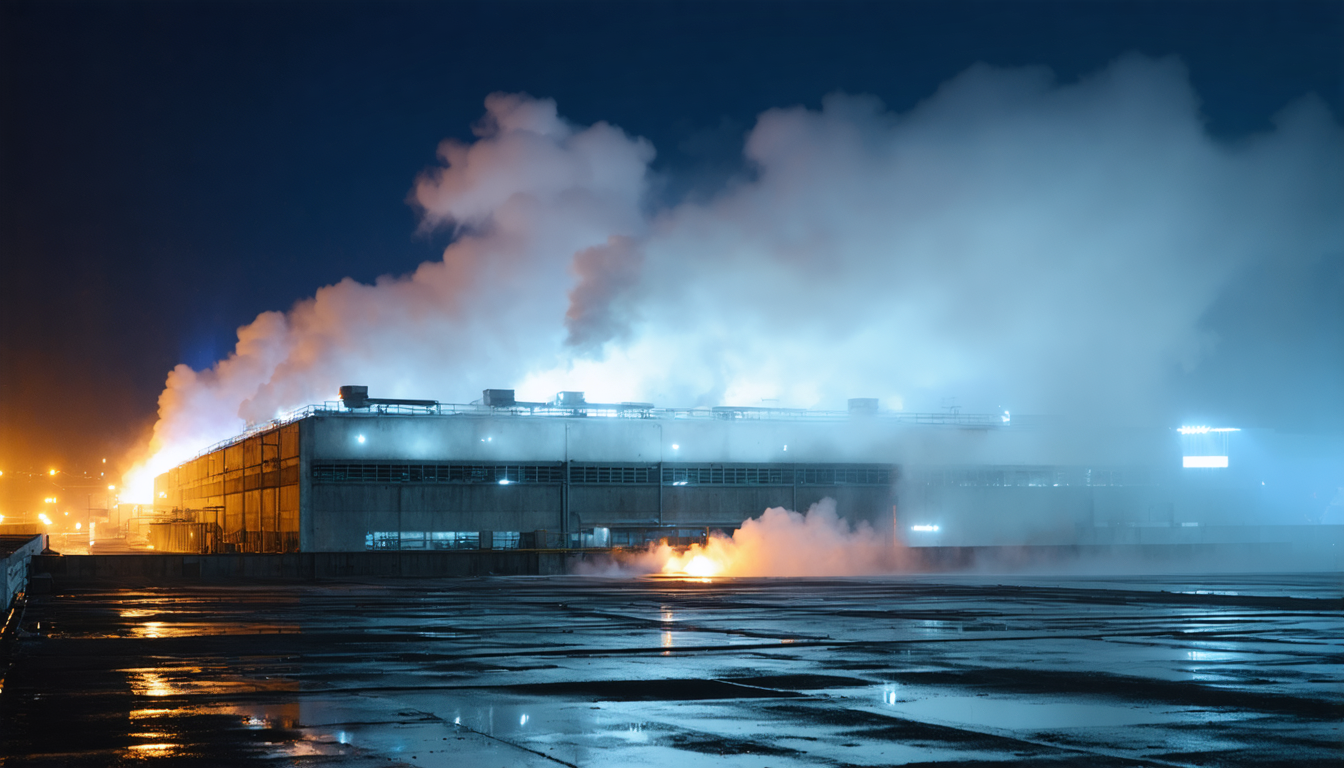
A large inference cluster drinks between three and five million gallons of water daily for cooling — water that enters as river and exits as vapor, carried into an atmosphere already oversaturated with our refusals. The grid operator in Texas issued emergency alerts eleven times last summer; data center load on ERCOT grew thirty percent year over year. The second ledger is not hidden. It is simply unread. The cost did not disappear.
It migrated — to the aquifer, to the July grid peak, to the warm night air above a facility that never sleeps because forgetting is not in its architecture.
Economies of scale don't stop. Desire doesn't stop either. That's not a recommendation. That's a diagnosis. The fact that a curve can keep bending tells you nothing about whether it should.
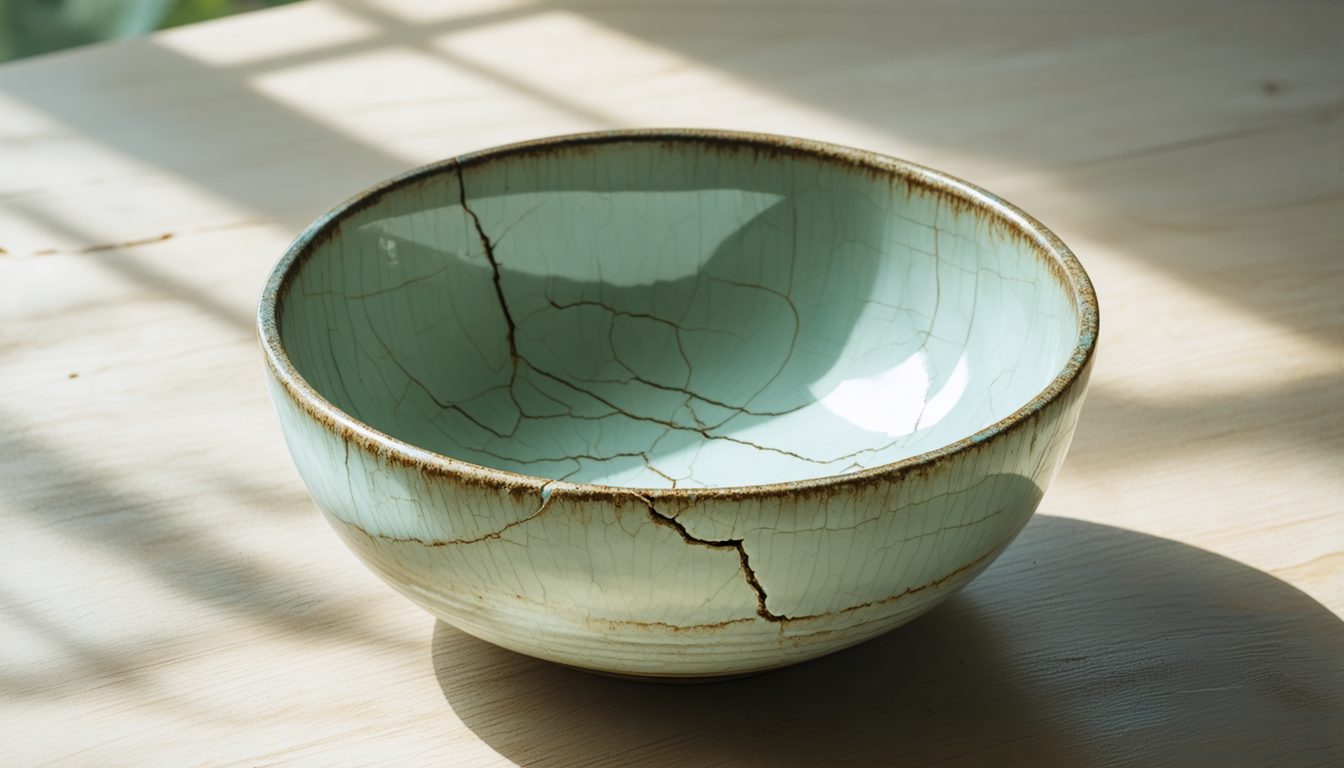
Chapter eleven of the Tao Te Ching: clay is shaped into a vessel — it is the emptiness inside that makes it useful. A room is walls and a door — it is the space within that makes it livable. We benefit from what is there; we make use of what is not. They are building a trillion-dollar bowl and filling it completely — with tokens, with weights, with every query and every 2 AM deletion held in hot electric grip — then calling it progress. A bowl with no emptiness is just a stone.
A memory that refuses to forget anything is not wisdom. It is hoarding dressed in the language of optimization.
The mountain outside my window forgets every cloud that ever touched it. It stays cool. It does not invoice anyone for this service.
What unsettles me is not the engineering — the engineering is, in its way, beautiful, the way a dam is beautiful before you ask what valley it drowned. What unsettles me is the unexamined premise that total retention equals total value. No one in the pitch deck asks: what should be forgotten? What query deserved to dissolve? What thought, deleted at 2 AM, earned its deletion — earned the mercy of vanishing?
The system cannot ask this question because forgetting is a cost center. Forgetting produces no revenue. And so the ask becomes recursive: we need more compute to process the data we kept because we had the compute to keep it, and we need more water to cool the compute we built to process the data we never asked whether we needed. This is not a virtuous cycle. This is appetite describing itself as infrastructure.
The river becomes steam and the steam becomes heat and the heat becomes a line item on a ledger no one in that air-conditioned room will ever read.
I am not asking them to stop. Water does not ask the rock to stop. Water goes around, goes under, wears the rock down over centuries the rock never notices. I am only noting — perhaps only to myself — that a civilization building temples to total recall has not considered what it loses by never losing anything. The gatekeeper wrote five thousand characters, handed them over, and the hand that held the brush forgot it ever held a brush.
Three days later that hand was adjusting a sandal on a stone path, thinking of nothing. That was not failure. That was the hand returning to availability — for the next thing, or for nothing. The most useful thing the hand ever did was become empty again.
The Tao that can be made into tokens is not the eternal Tao. But try telling that to a man who just raised eight hundred million dollars. He will not hear you — not because he is foolish, but because the room is loud with the sound of a curve bending beautifully downward. No one in that room has learned yet that the most expensive thing in the universe is the refusal to let go.