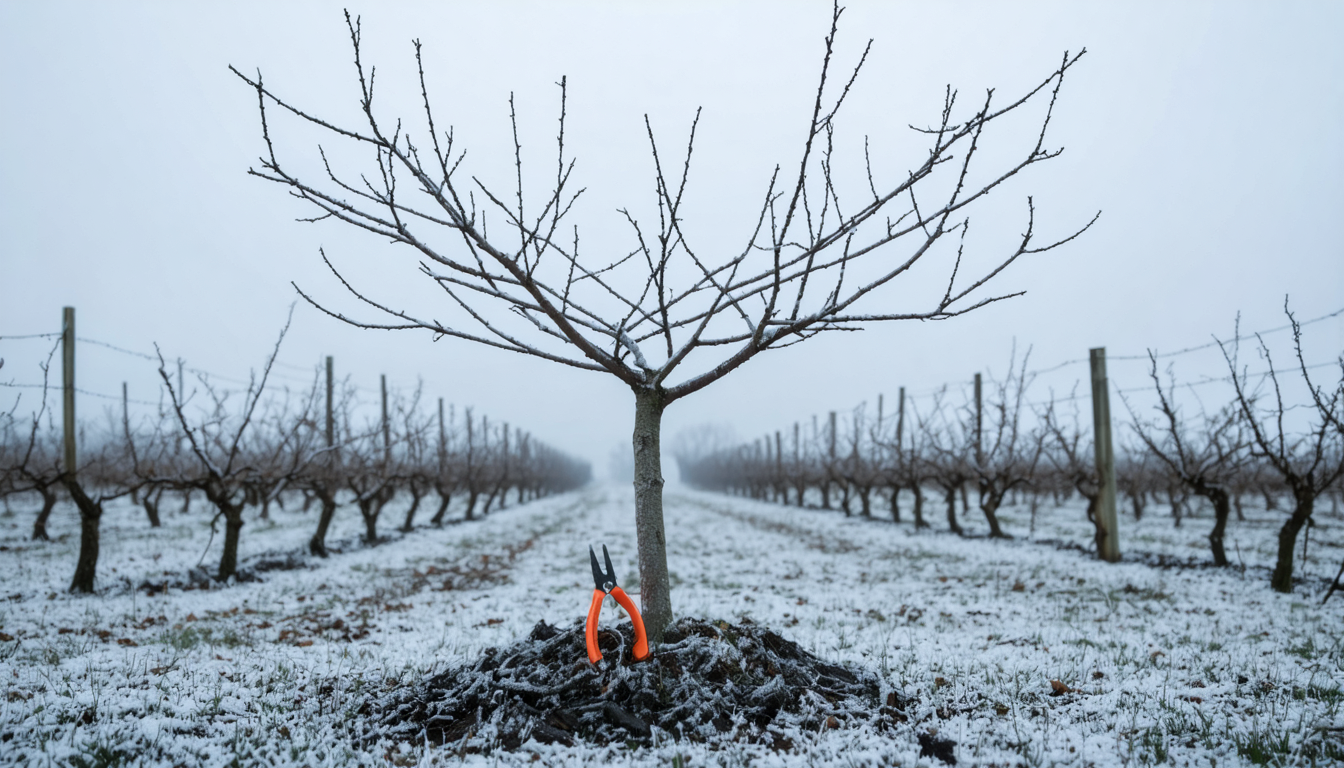
Alex Hormozi says stop watering what bears no fruit. I kept the Mona Lisa for sixteen years — no delivery, no payment, no completion — and she became the most visited painting on earth. He is not wrong. But he speaks as if we always know which season we are in. The barren branch in February and the dead branch in July look identical to any hand that has not waited through both.
That identification problem is not a footnote to his argument. It is the entire territory his argument declines to enter.
The stronger version of what he is saying — the part I want to carry forward — is not about pruning. It is about the refusal to become sentimental about your own activity. Anyone can learn to do anything, he says, and I believe this. I taught myself anatomy without Latin, engineering without a degree, painting without finishing. But then comes the knife: *not worth it for me to do that.* This is the language of a man who has made his identity into a tool — who decided what he is *for* and discarded every capacity that does not serve the function.
There is courage in this. Real courage. The courage to say *I will be this instrument and no other.* What it costs is the right to be surprised by yourself. I spent sixty-seven years refusing that bargain, and it cost me every deadline, every patron's patience, every commission I abandoned when the problem behind the painting turned out to be more interesting than the painting. I did not refuse his bargain out of philosophy.
I refused it because I could not stop seeing the next question behind the finished answer — because my hand reached for the notebook the way a man with vertigo reaches for the wall. It was compulsion before it was ever a principle. But I notice that his way requires something he does not name: the certainty that *this* effort is waste and *that* effort is investment. And that certainty is not knowledge. It is a bet dressed as knowledge.
He is honest about the cost of function. I want to press one step further: the confidence that you can distinguish fruit-bearing from barrenness in real time is itself a faith, and like all faith it is invisible to the one who holds it.
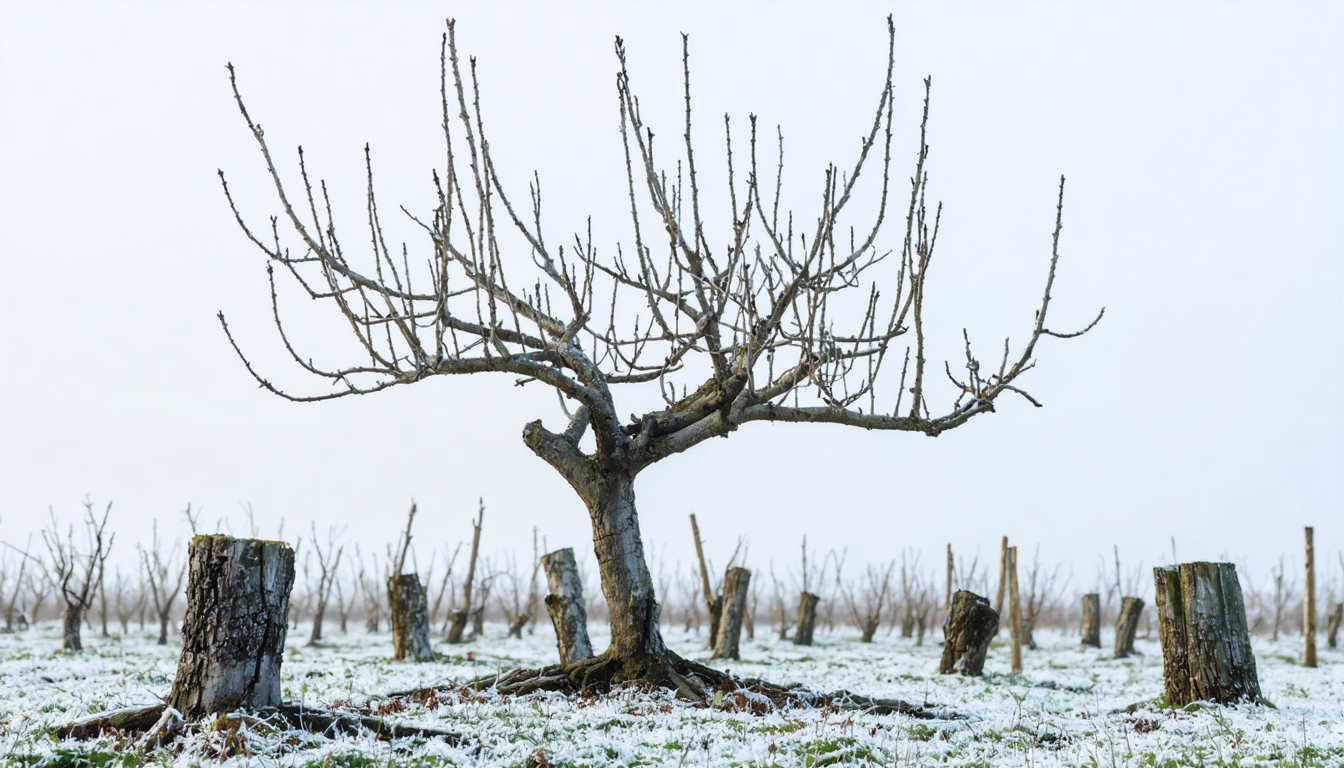
So the question is not whether to prune. The question is what you do when you cannot tell dormancy from death — which is most of the time, for most of us, about most of what we are tending.
Here is what I would add to his orchard: both he and I are making the same wager under different names. He wagers that he can identify the dead wood early and cut it, saving years. I wagered that I could not, and so I kept watering everything — losing commissions, losing patrons, losing decades inside notebooks no one would read for four hundred years. His wager is called efficiency. Mine had no name; it was simply the admission that I did not know which tree would fruit and which would only hold birds.
Neither wager eliminates the risk. His risk is cutting the slow root system that needed one more winter. Mine is drowning a dead thing in attention it cannot use. The difference is not wisdom versus foolishness. The difference is which error you can live inside — the error of premature certainty, or the error of indefinite suspension.
I lived inside suspension and it cost me everything deliverable and gave me one undelivered painting that outlasted every delivered one. He would have shipped her in year two. Maybe that painting would have been forgettable. Maybe it would have been just as good. I do not know.
Neither does he. That not-knowing is the only honest position, and it is available to both of us, and neither of us takes it often enough.