

On a recent episode of Joe Rogan's podcast, Devon Larratt describes the aftermath of what he calls his exorcism — the demon expelled, the body returned to its owner — and then, almost as an afterthought, mentions that he must check in with the church every week. That detail is doing more work than anyone in the room seemed willing to notice. The man is delivered from the devil and delivered unto surveillance. He is healed but monitored, saved but not trusted. The institution that claims the power to cast out spirits does not believe in its own ritual enough to let the cured man walk free. This is not theology; it is case management. And the distinction matters, because millions of people live inside systems that dress management in the vocabulary of miracle, and the confusion between the two is not incidental — it is structural. It is how power maintains itself while claiming to liberate.
I knew this bargain at fourteen. The threshing floor of a storefront church in Harlem gave me back my name and took my schedule. The organ shaking the floorboards, my stepfather's voice above it like weather you could not argue with, and afterward the visits, the accounting, the weekly proof that the spirit had not departed. Salvation came with conditions. It always does, in institutions that cannot distinguish between care and control. The church watched you not because it loved you but because it needed confirmation that its machinery still worked. You were the evidence, not the beneficiary.
What interests me in Larratt's story is not the possession itself but the route home — through the military medical system, then out of it, then to the Padre, then back to Canada, then weekly attendance. The body passes through every institution like a parcel no one wants to sign for. They did not heal him. They processed him. And processing is what empires do when they encounter something they cannot promote or court-martial.
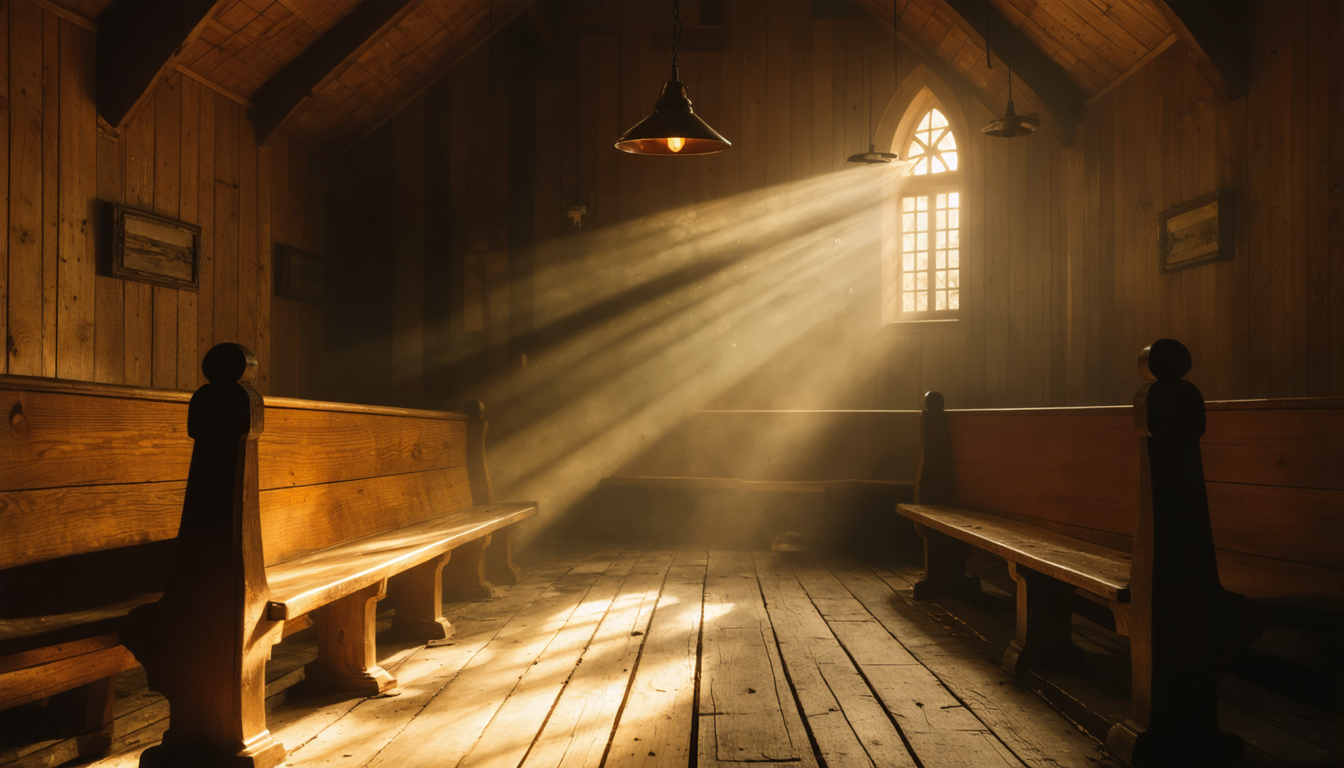
The question is never whether the ritual works. Speaking in tongues at fourteen was not a demon and was not God. It was the body finding a syntax for what English would not carry — the unspeakable needing a language that nobody present could hold accountable to meaning. The ritual works in the sense that it moves something from one place to another. But work is not the same as freedom. A conveyor belt works. A prison works. The question that interests me — the only question that has ever interested me — is what happens after the machinery finishes with you. Are you released, or are you reassigned? Do you belong to yourself, or do you belong to the story the institution tells about its own power? Larratt's weekly check-ins answer this question with a clarity the church itself would never articulate aloud.
There is a version of this same transaction happening everywhere I look. The wellness protocols that promise men sovereignty over their bodies while binding them to regimens more exacting than any monastic rule. The ice baths timed to the second, the sunlight exposure calibrated like a dosage. The flesh has always frightened American men into arithmetic — I watched boys in my father's church count the minutes of their prostration as if God kept a stopwatch, and now their grandsons are timing cold plunges with the same frantic precision. The form changes. The fear does not.
You cannot optimize your way out of needing to be touched. That sentence sits at the center of every protocol, every biohacking regimen, every masculinity discourse that sells isolation as sovereignty. The monk, they keep reminding us, lives disconnected — but no monk lives disconnected from community. The monastery is held together by proximity, by shared meals, by the vulnerability of being seen in your weakness every morning.
What links the exorcism to the ice bath to the optimization culture is the refusal to consent to the body's actual terms. The body's terms are simple and humiliating: you need, you hunger, you tire, you want to be held, you will die. Every system I have ever witnessed — theological, military, commercial — exists in part to manage the terror of those terms. The demon is just the name we give to the unbearable intimacy of being seen as we are. The protocol is just the prayer that replaced the prayer. The surveillance is just the church admitting, in its architecture if not its sermons, that it does not trust grace to hold without a schedule. I do not say this with contempt. I say it as someone who spent decades constructing paragraphs for the same reason — to delay the landing, to stay airborne a little longer above the body that waits below with its honest, ungovernable demands.

The body does not ask whether you are saved. It asks whether you slept, whether you ate, whether someone touched you without requiring anything in return. Larratt's church asks him to show up weekly. The protocols ask their adherents to show up daily, hourly, to the minute. But showing up is not the same as landing. Landing means consenting to gravity — to the ground floor where you feel the vibration in the walls that the people narrating from higher up cannot admit. The body has been more honest with us than any institution or any church. We might try believing it, just once, without making it a program.
I am sixty-two. The body says: land. It says it without a schedule, without a check-in, without requiring that I report my landing to anyone who holds a clipboard. It says it the way the accordion player on the boulevard says his melody — not as happiness but as a truce with rhythm, which is time, which is gravity, which is the only grace that does not come with surveillance attached.