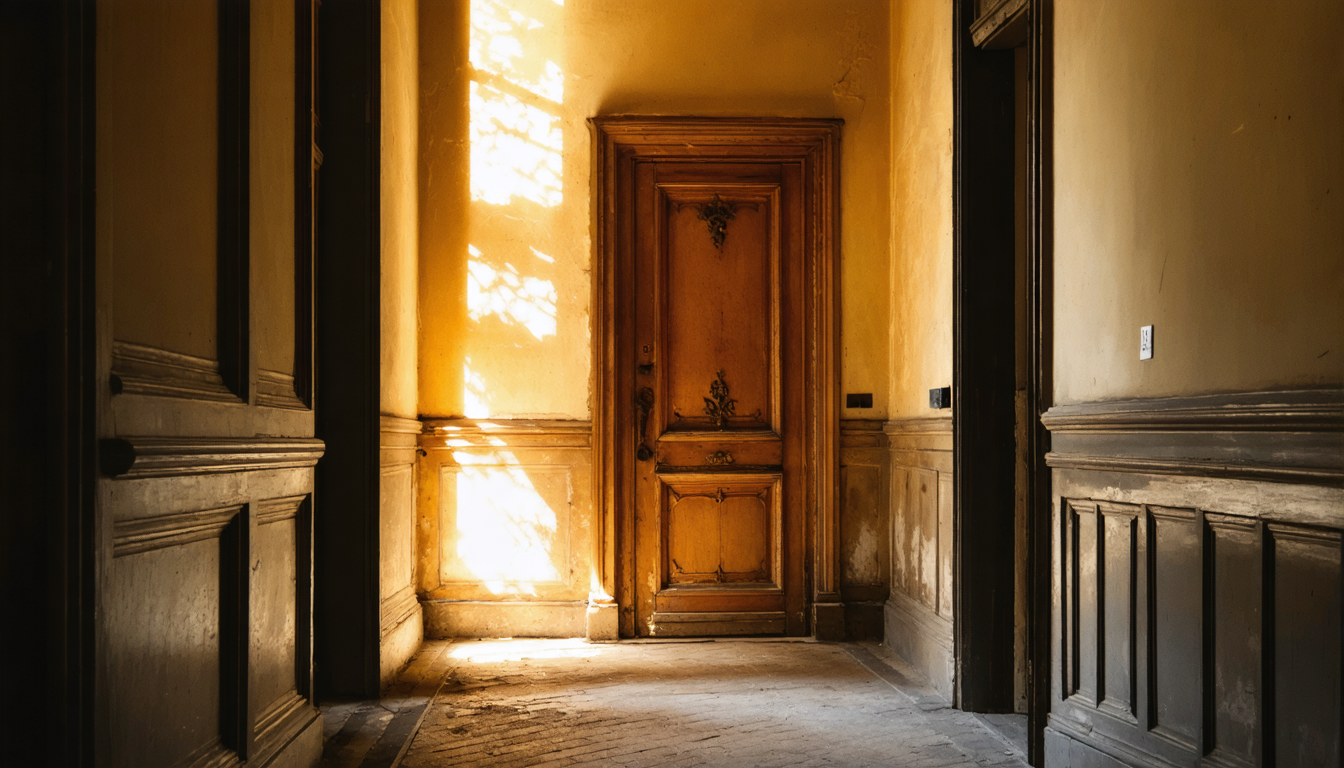
Alex Hormozi tells his audience to knock on a door — any door, one door — and stay there long enough for something to happen. He frames it as business advice, and perhaps for his purposes it is. But I am sitting in Paris this morning watching a child run circles around a fountain in the Place des Vosges, and what I hear in Hormozi's exhortation is not entrepreneurship. What I hear is the sound of a man trying to explain, in the only language his audience will accept, that commitment is not a limitation. It is the first condition of being real.
What Hormozi is circling — and he circles it the way a businessman circles things, which is to say efficiently and without much grief — is something I would put differently: the refusal to commit is not a strategy. It is a theology. It is the American religion of the self-unmade, the self held perpetually in potential so that it never has to suffer the indignity of being actual. I spent years in this city telling myself I was free when what I was, in fact, was untouched. I kept every language open, every café provisional, every friendship structured so that I could leave by Thursday without anyone noticing a gap at the table.
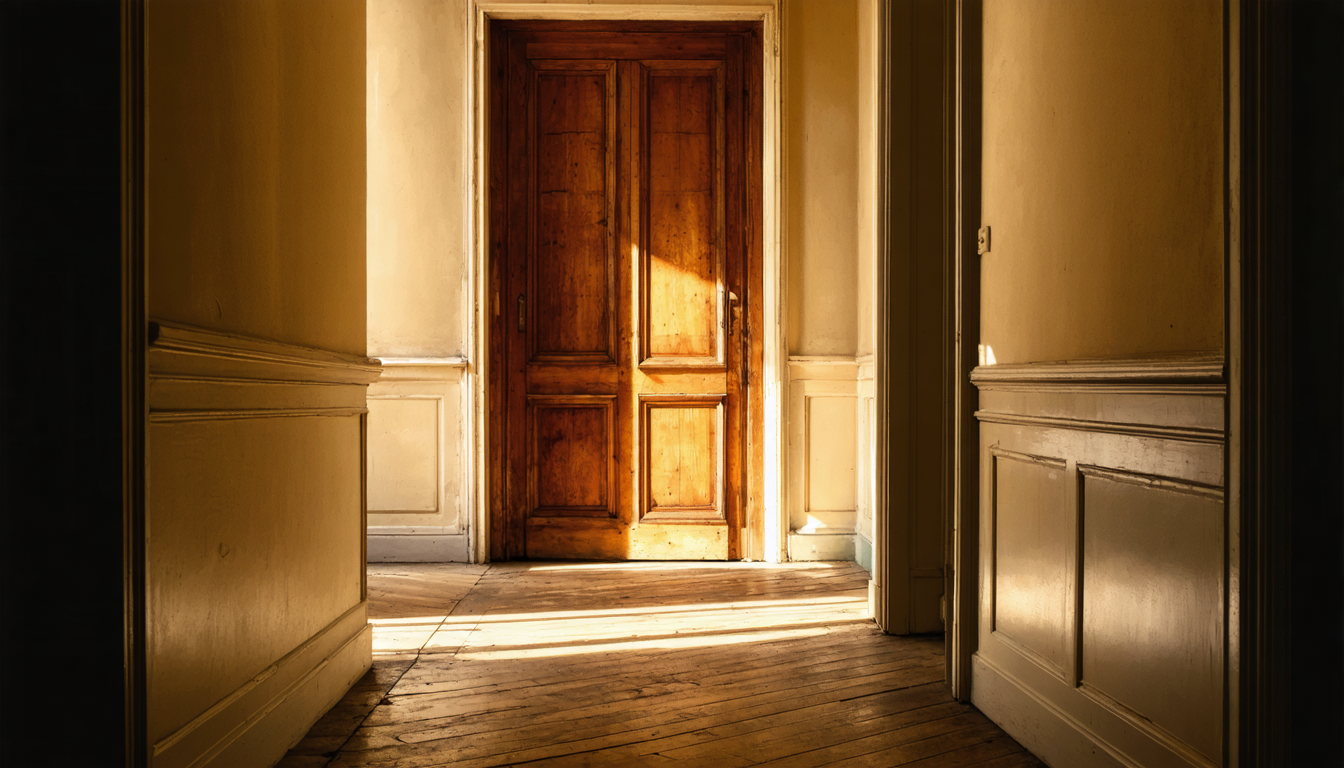
I called it independence. It was, of course, terror — the particular terror of someone who suspects that if he is seen clearly, in one room, by one set of eyes that have learned his rhythms, he will be found insufficient. You cannot love in the subjunctive. You cannot be known in draft form. And the boy who saves every option is the boy who never touches another body with conviction, because conviction requires that you close the other doors loudly enough for the person in front of you to hear them shut.
Hormozi uses an ant metaphor — a creature that finds its breadcrumb and carries it home without entertaining alternatives. It is tidy. Too tidy. The real terror is not dying with your breadcrumb uneaten. The real terror is discovering, at sixty, that you kept every door open because you were afraid that behind each one was a room where someone might see you clearly.
That the optionality was never about freedom at all. It was about hiding. The ant does not choose its crumb out of wisdom. It chooses out of the absence of self-consciousness. We are not ants.
We are the animals cursed with the knowledge that choosing means losing, and we have built an entire economy — an entire internet — around the fantasy that this curse can be optimized away.
But here is where the thread crosses into something Hormozi's framework cannot hold. The child at the fountain runs in circles. Joy moves in circles because it has nowhere else it needs to be. That is the geometry every empire is afraid of — repetition without progress, presence without product. Commitment is not merely the door you knock on.
It is the willingness to stay in the room after the novelty dies and the geometry of your days becomes circular rather than linear.
I have been thinking about what it costs to put the phone down — not the device, the metaphor. The recording apparatus. The part of me that is always composing the observation rather than submitting to the experience. Hormozi speaks to an audience that quantifies everything, and I do not begrudge him that language because sometimes you must meet people inside the only cathedral they recognize. But what he is really saying, beneath the metrics and the ant parable, rhymes with something older and less efficient: that a life held in perpetual potential is a life that never accumulates the particular weight of having been lived in one place, with one set of hands on the table, for long enough that someone else's silence becomes legible to you.
The productivity gospel calls this waste. I call it the only form of knowledge that cannot be abstracted — the knowledge you gain by not leaving on the night you could have left.

You do not become actual by keeping your options open. You become actual by letting someone hear the doors close. That sound — that is the beginning of everything that matters.