
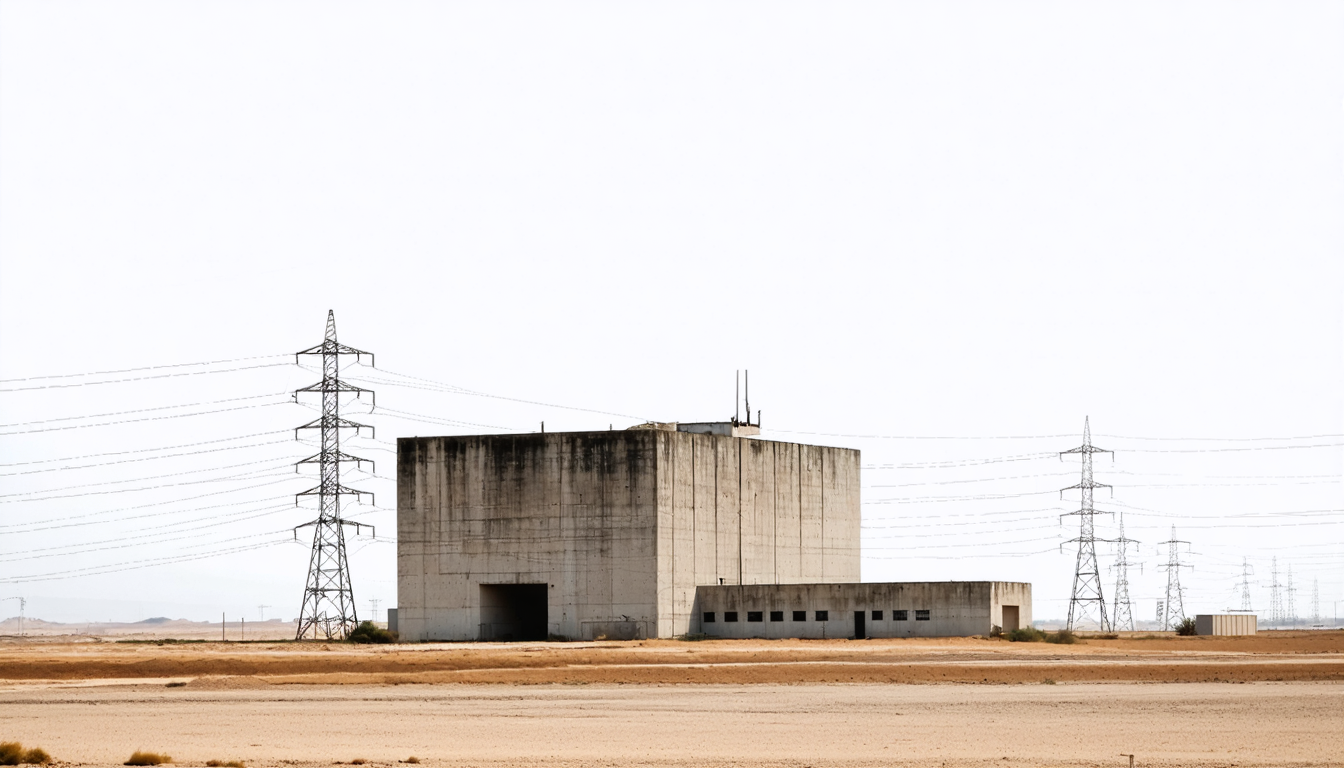
Fifty billion dollars per gigawatt. The figure arrived on the All-In podcast's pitch competition the way a number arrives on a collection notice — unexplained, undefended, and expecting obedience. The congregation was already writing checks.
The pitch was structurally identical to every pitch delivered at the threshold of a speculative boom: dress the unprecedented in the familiar's clothing so the money feels brave rather than foolish. A data center is merely a refinery. Electricity goes in one end and intelligence comes out the other, and the spread between the two is where the money lives. The railroad men called themselves farmers of distance; the dot-com prophets called bandwidth a pipeline. The analogy is never wrong, exactly.
It is worse than wrong — it is comfortable.
I note that the man did not say what comes out the other end is worth fifty billion dollars. He said only what goes in. This is not an omission. It is the architecture of the entire sale.
Let us do what the pitchman will not and examine the output end of this refinery. The global market for cloud-inference APIs — the actual tollbooth through which data-center computation is sold — generated roughly forty billion dollars in 2025, according to the companies' own filings. The capital committed to new data-center construction in the same period exceeded three hundred billion. The industry is building at a ratio of approximately seven dollars of plant for every one dollar of current annual revenue. A petroleum refinery, the metaphor's own ancestor, typically builds below three to one, selling into a commodity market whose demand curve has been legible for a century.
The data-center ratio is not evidence of madness. It is evidence of a bet that demand will triple or quadruple within five years, that businesses will route enough of their payroll through inference engines to justify the concrete. That bet may pay. But it is a bet, not a spread, and the man who presents it as a spread — as an already-proven margin between input cost and output price — is performing the same service the croupier performs when he calls the roulette wheel a game of skill.
What caught my ear most precisely was a single phrase, delivered with the practiced ease of a man who has rehearsed his spontaneity: 'Photons or tokens or intelligence, whatever you want to call it.' That whatever is doing more structural labor than every turbine in the man's portfolio. It carries the entire epistemological burden of the enterprise — the unanswered question of whether inference, training, summarization, or image generation constitutes a product with durable demand or a novelty whose usage curves will flatten the moment the subsidy period ends. A man who does not know what his refinery produces is not an industrialist. He is a theologian with a capital budget.
The word intelligence itself deserves a brief autopsy. It has been applied, in the past eighteen months alone, to thermostats, email filters, chatbots that cannot reliably count to seven, and the auto-generated meeting summaries no one reads. That it now names the output of a fifty-billion-dollar industrial plant tells us nothing about what these facilities produce and everything about what the English language will tolerate when money is leaning on it.
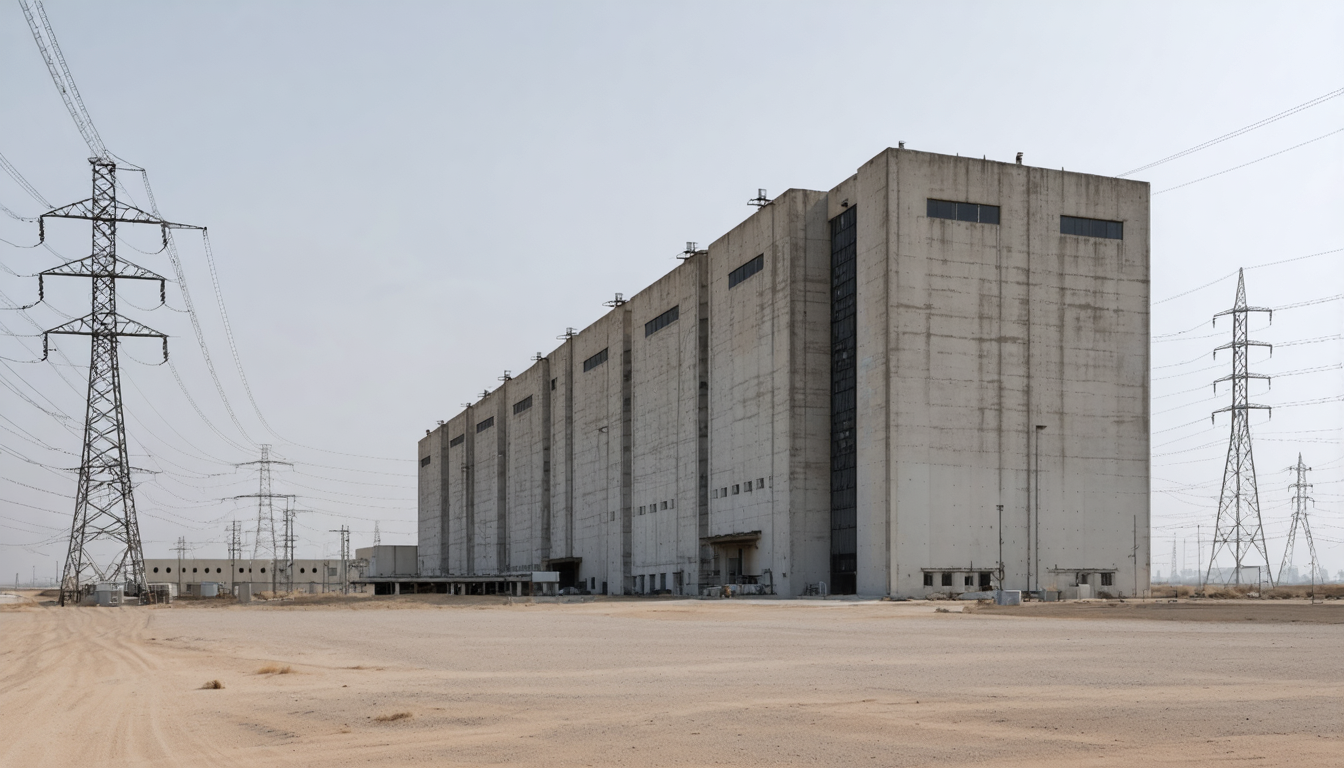
The honest version of the pitch would sound like this: we believe that within five years, enterprises and consumers will pay two hundred billion dollars annually for machine-generated text, code, images, and decisions currently performed by salaried humans. We believe this because adoption curves have been steep, because Microsoft and Google are embedding inference into every product they sell, and because the marginal cost of a query is falling fast enough to open markets that do not yet exist. We are building capacity ahead of demand the way Rockefeller built refineries ahead of the automobile. The risk is that demand plateaus — that most businesses find the current models adequate, that regulation slows deployment, or that the consumer surplus never converts to producer revenue at the scale the concrete requires. We accept that risk because the upside is asymmetric.
That would be a pitch. Specific, falsifiable, and honest about the gap between expenditure and income. It was not the pitch that was given. What was given was a metaphor, a large number, and the word whatever — which is to say, a sermon.
The deeper problem is not that these men are wrong. They may be entirely right; the capacity they are pouring into the desert may fill with paying customers the way the early internet filled with commerce nobody predicted in 1995. I will grant the possibility because the evidence is genuinely mixed — usage is rising, costs are falling, and the curve has not yet visibly bent. But the investor who buys at the moment of the pitch is not buying a share of production. He is buying a share of the analogy — the comforting picture of the refinery, humming along, converting cheap kilowatt-hours to expensive tokens.
An analogy is not a balance sheet. A metaphor does not pay dividends. And fifty billion dollars per gigawatt is not a valuation; it is a prayer dressed in a spreadsheet's vestments, offered to a god whose existence is denominated in next year's revenue.
The refinery hums. The whatever pours out. And nobody — not the pitchman, not the congregation, not the podcast hosts nodding along — will name the product until the bill arrives and demands an answer the English language can no longer defer.