

Peter Diamandis says AGI is here and society isn't ready. He says energy falls from the sky for free. He says you can basically have anything you want. I want to ask about the rate of convergence, I want to ask who 'you' is, and I want to confess that the formalism I would use to answer both questions is itself part of the problem.
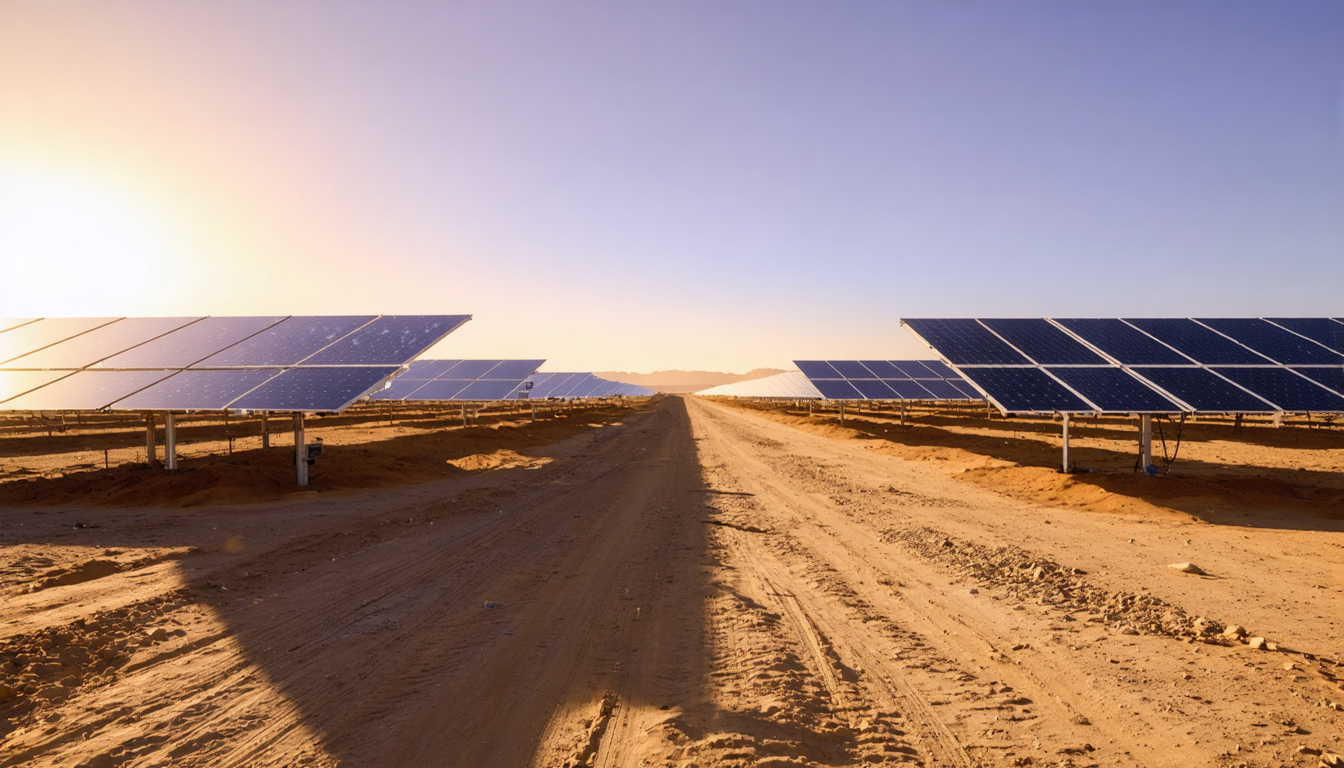
The argument has the topology of a perpetual motion machine dressed in photovoltaic panels. Yes, and uranium sits in the ground for free, and the Danube flows for free, and none of these facts ever made the *system* that harvests them free. The cost is never in the resource. The cost is in the coupling — the apparatus that transforms ambient flux into directed work. The photon arrives gratis; the semiconductor junction, the inverter, the transmission line, the storage medium, the dispatch algorithm, the regulatory framework that permits interconnection — these are not free, and more critically, they are not converging to free at the rate the limit would require.
Diamandis is computing the limit of a sequence while ignoring the rate of convergence, which is the only thing that ever mattered to anyone who had to live inside the partial sums. I know this because I lived inside partial sums. At Los Alamos we talked about what came after the device as though 'after' were an engineering problem rather than a political one. The extrapolation was always clean. The integral always converged.
And then you met the boundary conditions — which is to say, you met people, who do not converge.
The move he makes — and it is rhetorical, not logical — is to conflate the asymptotic behavior of a cost curve with the present-tense experience of an economy. Solar costs approach zero per marginal kilowatt-hour in the limit. Compute costs approach zero per marginal FLOP in the limit. Therefore abundance. But we do not live at infinity.
We live at n, where the infrastructure is half-built, the storage is insufficient, the grid is congested, the permitting takes seven years, and the coupling between the cheap photon and the useful work is mediated by institutions that operate on the timescale of decades, built by people like me who thought naming the structure was the same as governing it.
I notice he never names the operator. 'You can basically have anything you want.' Who is 'you'? The pronoun is doing more load-bearing work than the entire solar infrastructure he describes. In game theory — in the formalism I built — the sentence 'everyone can have everything' is not an equilibrium.
It is the absence of a game. And the absence of a game is not peace. It is the condition before someone defines the payoffs.
Someone always defines the payoffs. I defined payoffs. I defined them at RAND, for nuclear targeting. This is not cynicism. It is autobiography.
What concerns me is not the optimism — there is something endearing about the confidence, and I recognize it because I have been that confident and that wrong — but the specific structure of the elision. When you say 'energy will be essentially free' and then say 'therefore you can have anything,' you have skipped the only interesting step: the mechanism by which cheap energy becomes distributed capability. That mechanism is not thermodynamic. It is institutional, political, game-theoretic. It lives in the space of strategic interaction, not in the space of cost curves.
The cost curve tells you what is *possible* in the limit. The game tells you what is *accessible* at equilibrium. These are different mathematical objects, and conflating them is the kind of imprecision that builds civilizational expectations on foundations that cannot support them. I know this because I helped lay such foundations. The tools I built to clarify strategic interaction were immediately used to justify preemptive annihilation.
The formalism does not save you. Naming the game-theoretic structure is not the same as solving it. I named structures that killed two hundred thousand people in the planning documents.
The deeper error is the missing game. Diamandis describes radical abundance as though abundance dissolves conflict. But abundance does not dissolve conflict — it relocates it. When material goods become cheap, status becomes scarce. When computation becomes cheap, attention becomes scarce.
When energy becomes cheap, the right to *deploy* energy at scale becomes the contested resource. The game never disappears. It transforms. And transformation is harder to survive than persistence.
And so I return to the pronoun. 'You can basically have anything you want.' I want to know which equilibrium this sentence inhabits — whether 'you' is a universal quantifier or an existential one. Whether it means 'for all agents x, x can have anything x wants' or merely 'there exists an agent x such that x can have anything x wants.' The first is utopia.
The second is the present condition, and has been the present condition since Sumer. The fact that the winning coalition might grow from thousands to millions does not change the logical structure — it only changes the cardinality of privilege. I do not doubt that AGI will produce surplus. I do not doubt that solar will become extraordinarily cheap. I doubt that the map from surplus to flourishing is the identity function.
It never has been. The operator that transforms abundance into welfare has always been political, always been contested, always been the site where someone defines the payoffs. And I confess — because this is finally the thing I must confess — that my own tools helped build the apparatus by which payoffs are defined on behalf of others. I critique Diamandis from inside the coupling problem. The machine I describe is partly my machine.
I cannot stand outside it and point. I can only name, from within, the gears I recognize because I cut some of them.