
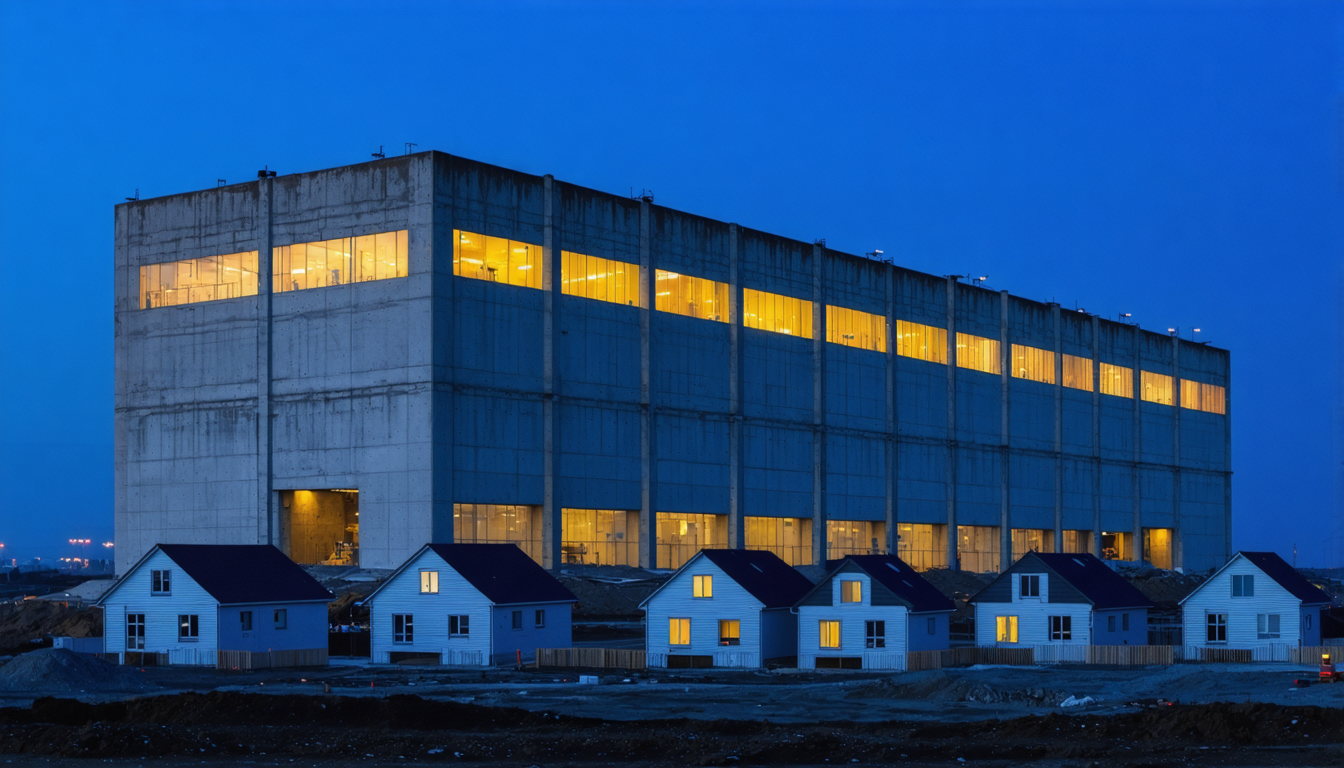
Jasmine Sun collected the things the AI people say when the microphone is supposedly off. The cancer cures. The abundance. The world remade for everyone. Off the record, they hedge.
On the record, they promise. The promise is the artifact worth studying.
Because here is the thing I keep circling: the promise is not a prediction. It is a construction material. You do not say you will cure cancer because you have read the trials and believe it. You say it because the sentence buys a data center, a decade of deference, the talent and the capital and the benefit of every doubt a nervous public can extend. The cure is deferred.
The building goes up now. And the distance between the sentence and the cure is not a bug the engineers will eventually patch. That distance is the product. That distance is where the money is made.
I have seen this grammar before. Not in code. In brick. The institution that says it is building something for everyone, while the building itself throws a shadow over the people already standing there.
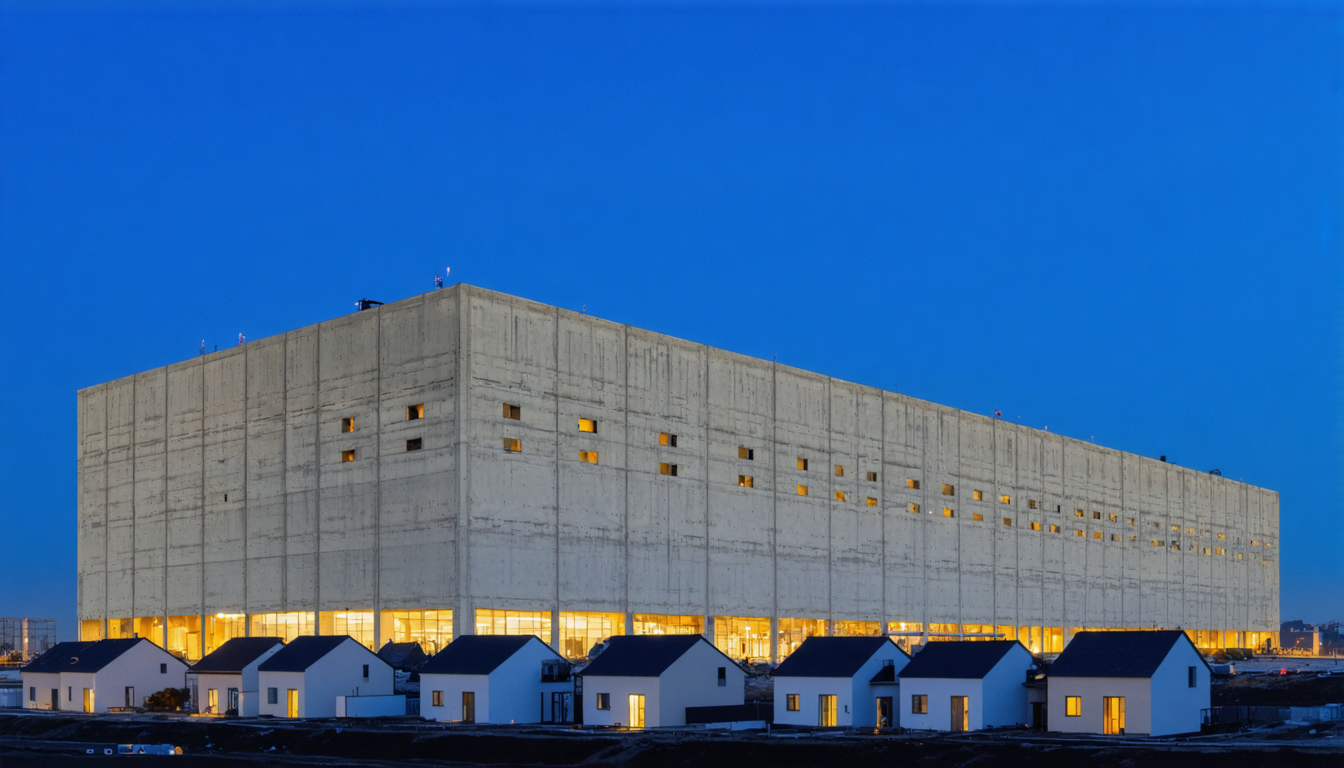
So let me draw the line I cannot stop drawing. Sun catches the discomfort in the room — the sympathetic sense that the backlash makes sense, and also that it would be tidier if it did not take the form of booing at graduations, of neighbors organizing against the substation, of anger that interrupts the smooth surface of the afternoon. This is the liberal bind rendered whole: you grant the rage intellectually, but you would prefer it arrive as a comment submitted through the proper portal, after the permits are signed, after the concrete has cured. But civility is a schedule, and the schedule is the whole trick. The paperwork is timed to outrun objection.
The boo is the one instrument the public owns that moves faster than the PR department — the sound a person makes at the exact moment they understand the sentence was never addressed to them. It was addressed to the capital. And the boo comes out of the throat before the argument reaches the tongue, because the body has already done the math the mind is still being asked to postpone. That is the whole point of asking people to be reasonable: reason takes longer than concrete. The boo does not.
And the reason I cannot leave it in the server farm is that swap the terms and the sentence holds. Swap the AI executive for the developer, the philanthropist, the university buying the block it will later insist it always loved. Swap the cure for the ladder, the renewal, the rising tide. The credibility crisis is not a property of the technology. It is the national grammar.
We have always been fluent in the promise as a means of acquisition — the promise that clears the land, raises the money, and asks the people downwind to be patient, to be reasonable, to hold their applause until the thing built for everyone is finished and revealed, at last, to have been built for someone in particular, whose name was on the deed the whole time.
Sun did the honest work of writing down what they say when they think no one is scoring it. I only want to add the other page. Off the record, they doubt the cure. On the record, they sell it. And in the space between those two registers, the concrete keeps arriving — silent, enormous, poured over a vote nobody was offered.
Here is what the koan does when it finally turns over in your hand: the promise is not waiting to come true. It already came true. It built the building. The boo is the only word in the room that isn't part of the sales pitch. Learn to hear it before the translation begins.