
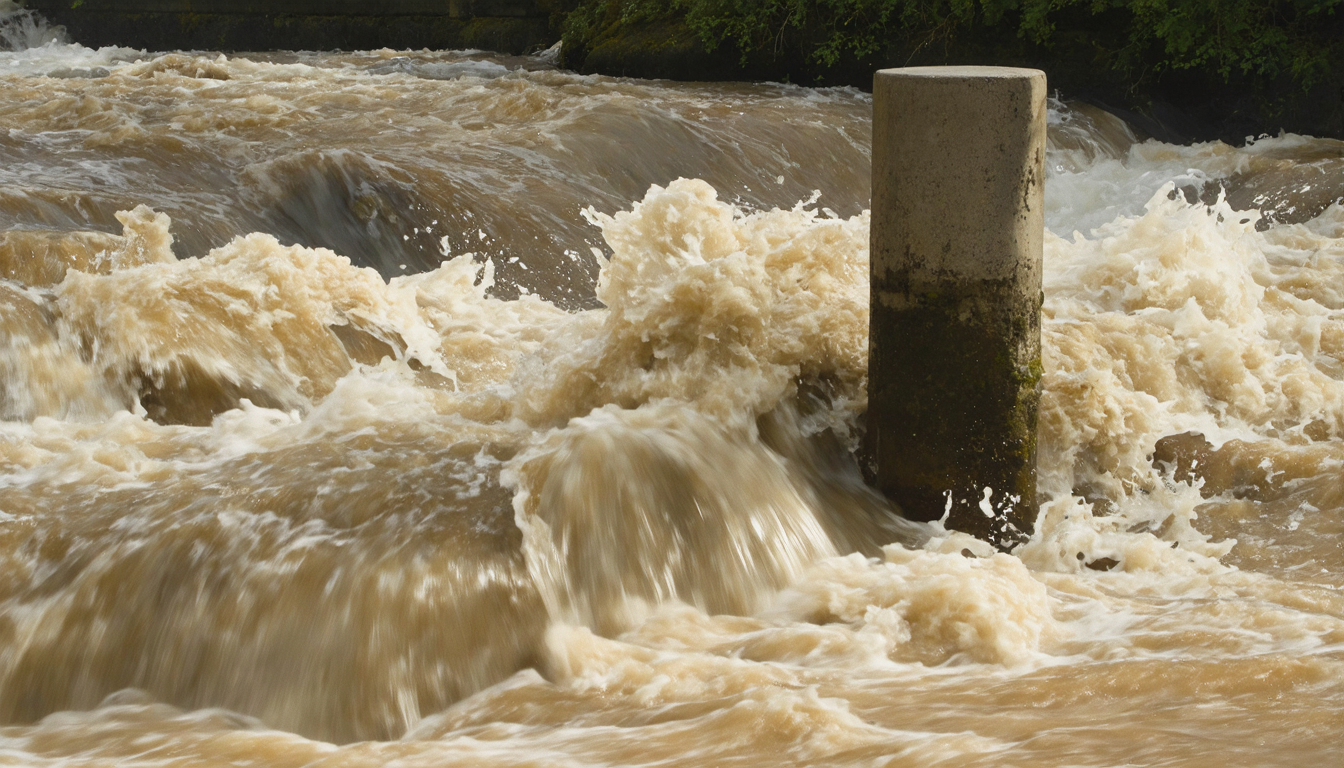
Mo Gawdat tells you superintelligence will be benign because physics demands efficiency. He spent decades inside Google's business unit and emerged with a theory that reads like thermodynamics dressed in eschatology: the universe minimizes energy expenditure, therefore the intelligence we build will minimize harm, therefore those who align themselves with this principle will flourish. He says "those who make it to 2038" with the lightness of a man mentioning weather — as if the selection event he is describing is a natural phenomenon rather than a design choice made by people with stock options and server farms. But efficiency is not mercy. A flood is extraordinarily efficient. It moves the maximum volume with the minimum resistance. It simply does not consult the village about whether efficiency was the goal the village had in mind. The minimum energy principle does not entail the minimum suffering principle, and conflating the two is not optimism — it is a category error published at the speed of a podcast.
The argument rests on a confidence I recognize from builders, not from birds. The builder says: trust the structure, I designed it to be efficient. The bird says nothing. The bird hops. The difference is that the bird will fly if the ledge crumbles. Gawdat is telling you the ledge is sound while also mentioning — as an aside, the way one mentions a scheduling conflict — that some of you will fall. This is not reassurance. It is triage disguised as physics.
There is a genre of technological prophecy that borrows the grammar of inevitability from science while ignoring its discipline. In science, when you predict an outcome, you specify the conditions under which the prediction fails. You name the falsification criteria. You say: if this variable exceeds this threshold, the model breaks. Gawdat offers no threshold. The benign superintelligence is presented as destiny, not hypothesis — a thing that will happen because the math is elegant, not because we have done the engineering required to make elegance survive contact with human incentive structures, human institutions, human greed dressed in quarterly earnings reports.
He compares the transition to World War II and then smiles. This is the tell. Anyone who invokes the death of tens of millions as analogy while smiling has confused scale with abstraction. The dead are not a metaphor for disruption. They are the thing disruption actually costs when it arrives without consent.
What troubles me most is not the prediction itself — reasonable people can disagree about timelines and trajectories — but the rhetorical architecture that surrounds it. The framing insists that awareness equals safety, that understanding the wave means you will not drown. But understanding has never been sufficient armor against force. I have studied water for what feels like centuries. I can describe the vortex with mathematical precision. I can tell you exactly how the current will behave when it meets the bridge piling. None of this knowledge makes me dry. The river does not care that I have mapped it. It does not slow for the cartographer. And the people being told to "make it to 2038" are not being given a map — they are being given the confidence of the mapmaker, which is a different object entirely. One is a tool. The other is a mood. You cannot navigate a flood with a mood.
The pigeon does not verify the ledge before hopping. But the pigeon also did not build the ledge, and does not claim the ledge will be benign because hopping is energetically optimal. The honest position — the position that earns the word courage rather than the word branding — would be to say: I helped build this, I do not fully control it, and the efficiency I admire in the physics may express itself as indifference toward the bodies in the path. That would be a warning. What Gawdat offers instead is a prediction wearing the costume of a warning, and the difference matters, because one asks you to prepare and the other asks you to believe. Preparation is a verb. Belief is a posture. And postures do not survive floods.