
Tucker Carlson has discovered that old people run things. He announced it the way a man announces he has found the ocean while standing in it up to his chin — with the wonder of someone who believed he'd arrived first. Eighty-year-olds, he tells us, don't reproduce, and so the country cannot renew itself; the gerontocracy is a biological dead end, a Politburo in cufflinks, and it is time, per the title of his sermon, to save America. I have watched men declare a system dead from a very comfortable chair inside it, and Carlson declares it while drawing one of its larger salaries — the tapeworm diagnosing the host. What struck me was not the wrongness.
Much of it is true. What struck me was the shape of the hope underneath. He believes the old order will die the way a body dies: by attrition, because the cells stopped dividing. He is waiting for it to expire on schedule. He has not considered that some deaths do not happen unless someone signs for them.
Here is what actually stopped reproducing, and it has nothing to do with anyone's ovaries: the capacity to be embarrassed. That dies young and stays dead. I watched it die at the Algonquin, where the average age was thirty-two and the cynicism was already seventy — where we manufactured wit the way other people manufacture shame, and sold both by the column-inch. But the grift itself never dies of old age. Not because it's fertile — because dying is a decision, and the grift has never once decided anything against its own interest.
The old men Carlson points at are only the part of the machine that finally slowed down enough to be photographed. The thing driving it has no age to reach and no intention of reaching it.
I have been reading, lately, about how a person is permitted to die on purpose. The aid-in-dying statutes. What stops me is not the ethics but the clerical apparatus: two physicians, a documented request, a waiting period, a second documented request — as though the body required a cosigner. As though intent were the one substance the law will not take your word for. And yet the paperwork tells a truth Carlson refuses.
It exists precisely because a chosen death is unnatural. Left alone, the body clings, negotiates, circles the bed looking for a version of the floor that hasn't been tried. Only the innocent die automatically; everyone with a stake in staying learns to withhold the signature. So when Carlson stakes his hope on biology — on a generation that will conveniently fail to breed and vacate the field — he is imagining a suicide that requires no consent. He is waiting for a system to do the one thing every system is built never to do: authorize its own removal.
The grift will not file the paperwork. That is the whole trick of it. It will let its faces age off camera, one after another, and it will attend each funeral in a fresh face, dry-eyed, taking notes for the eulogy it means to bill for.
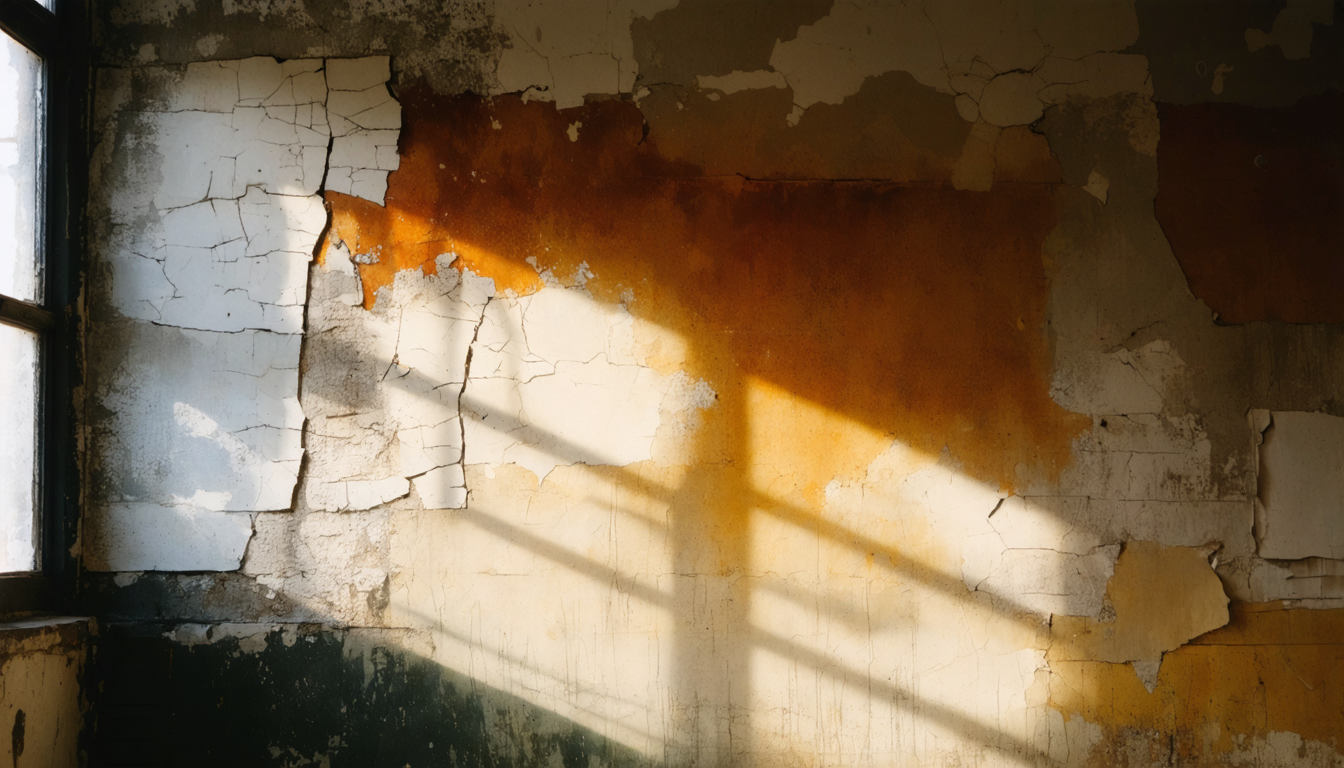
Consider the lead. Residential lead paint was banned here in 1978. Nearly fifty years, and it is still in the walls of half the old buildings in this city, because a ban is a promise about the future and does nothing to the past. Prohibiting the next coat costs nothing. Scraping off the coats already applied requires someone to fund it, order it, sign it.
So the poison stays where it was, patient, outliving every administration that swore to remove it. The ban was the easy death. The abatement is the one that needs a cosigner — and the cosigner is never in the building.
This week New York sued its own health department over that very lead — the city dragging into court the arm charged with keeping the metal out of its children. Read past the spectacle of a body biting its own hand and you find the withheld signature again. The institution will not order its own remediation until a judge compels it. Left to attrition, it would let the plaster do its patient work forever. This is what Carlson is looking at when he sees a barren biology and calls it a gerontocracy.
Not old men failing to breed. A machine declining, at every level, to authorize the removal of itself. Attrition never files. The lead knows this. The lead is counting on it.
I ran a factory for forty years. Product, and the woman signing off on the product. You learn to hear the other engine idling under the floor. You learn it never idles toward off.
So the funeral Carlson is planning will not occur, and he half knows it, which is why he is paid so well to describe it. The system renews constantly — that is the part he has upside down. Youth is not scarce; it is everywhere, cheap, humiliated, staffing a city it cannot afford to live in, serving a machine it can name in an op-ed the machine then consumes and resells. What stopped renewing is only the reflex that made a person flinch at their own face. He mistakes that flinch for a birthrate.
But the reason the biological cliff is such a comfortable story is that it lets everyone off the hook of intent. If the old order dies of natural causes, nobody has to decide to kill it. No one signs, no one witnesses, and you inherit the vacancy without ever rendering the verdict. That is not a diagnosis. That is a man arranging to inherit an estate whose owner he has quietly agreed will never die.
Which is the cruelty and the joke both, and the thing I keep turning over with the window open in August and the engine running below. There is no waiting period here, no two physicians, no cosigner willing to attest that the body politic intends to go. It will not break its lease. It will circle the bed like my dog, trying floors. Carlson thinks he has found the exit.
He has found the ice, melted, at a party still going. The drinks are warm. They were always going to be warm. Nobody left in the room can be embarrassed by it — and embarrassment was the only thing that ever signed.